
Scientists Whose Absence Would Greatly Alter Our Way of Life
The Renaissance Minds

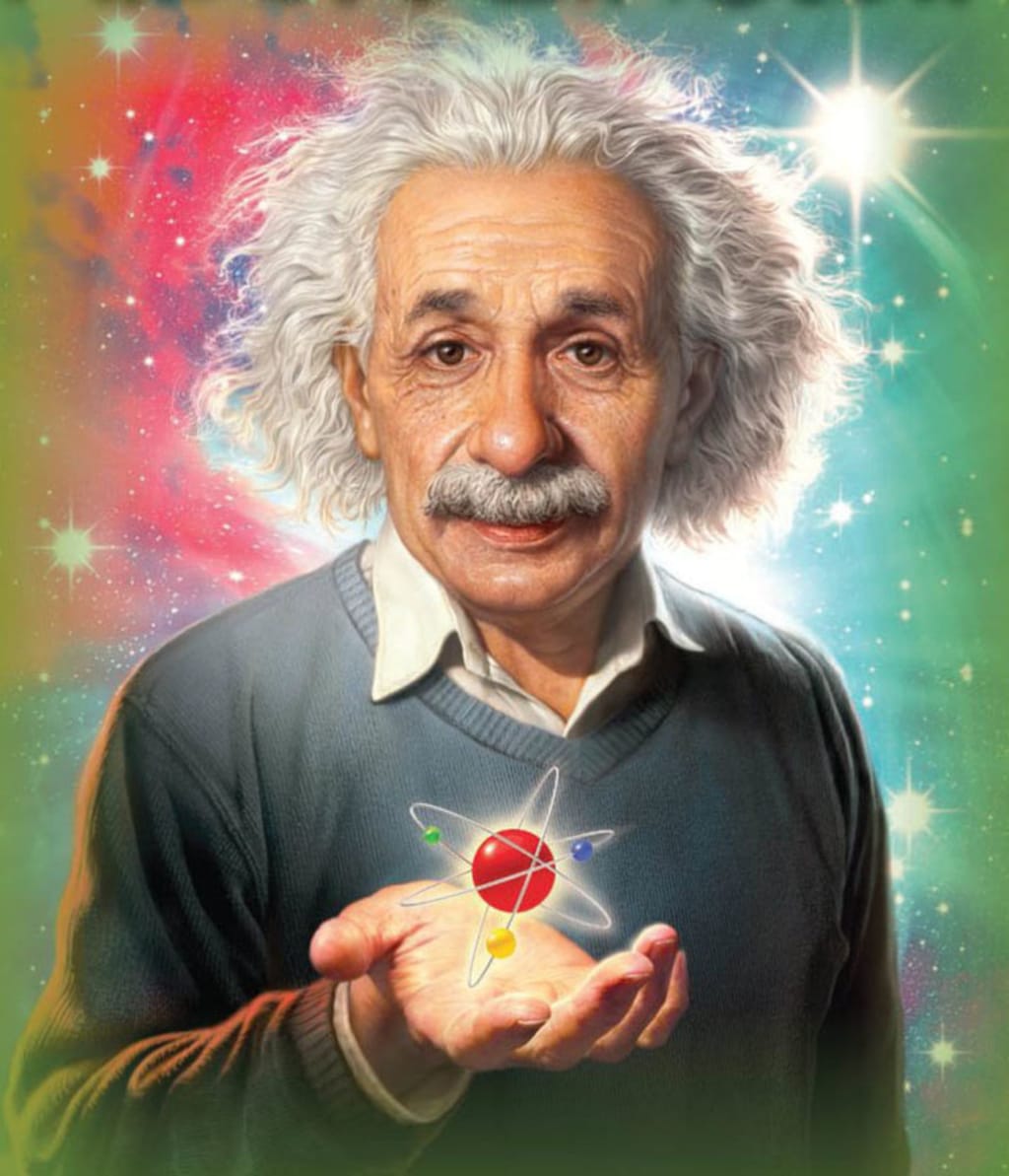
Welcome to our blog on the top 10 most influential scientists of all time. These individuals have not only made significant contributions to the field of science, but have also had a lasting impact on our daily lives. From the theory of evolution to the invention of the printing press, these scientists have shaped the way we understand and interact with the world around us.
Albert Einstein: The Genius of Theoretical Physics
Albert Einstein's theory of general relativity fundamentally changed our understanding of gravity and space-time. His contributions to the field of theoretical physics, such as the famous equation E=mc², have had a lasting impact on science and technology.
Galileo Galilei: The Father of Modern Science
Galileo Galilei is widely considered the father of modern science for his pioneering work in the fields of astronomy, physics, and mathematics. His use of the telescope to observe the heavens led to groundbreaking discoveries such as the phases of Venus and the moons of Jupiter. His work laid the foundation for the scientific revolution and continues to shape the way we understand the world.
Isaac Newton: The Father of Modern Physics
Sir Isaac Newton's contributions to the field of physics, including his laws of motion and the law of gravity, laid the foundation for modern physics. His book "Principia" is considered one of the most influential books in scientific history.
Johannes Gutenberg: The Father of Printing
Johannes Gutenberg's invention of mechanical movable type printing revolutionized the way information was disseminated. It allowed for mass production of printed material and remained the biggest advance in communications until the advent of mass media and the internet.
Archimedes: The Greatest Mathematician of Ancient Times
Archimedes was a polymath who made significant contributions to fields such as mathematics, physics, engineering, and astronomy. He is known for his principle of determining the volume of irregularly shaped objects, and many of his designs and theories still stand the test of time.
Leonardo da Vinci: The Renaissance Man
While best known as an artist, Leonardo da Vinci was also a brilliant scientist. His drawings, such as the Vitruvian Man, are examples of ideal human proportions and he made numerous designs for inventions like flying machines, tanks, and plant studies.
Nikola Tesla: The Father of Alternating Current
While Thomas Edison is often remembered for his work in electricity, Nikola Tesla's contributions were equally important. He developed the alternating current electric power system, which was crucial in industrial development and still in use today. He also made significant contributions to fields such as robotics, nuclear physics, and radio.
Marie Curie: The First Woman Nobel Laureate
Marie Curie was a trailblazer in the field of radioactivity, coining the term and developing techniques for isolating radioactive isotopes. She made groundbreaking discoveries, such as the elements polonium and radium, and her work in X-rays has had a lasting impact on medicine.
The Wright Brothers: Pioneers of Aviation
Orville and Wilbur Wright are widely credited with being the first to successfully build and fly a manned aircraft. Their invention revolutionized transportation and had a profound impact on industries such as tourism, defense, and logistics.
Charles Darwin: The Father of Evolution
Charles Darwin's 1859 book "On the Origin of Species" proposed the theory of evolution by natural selection, which continues to be a fundamental principle in the field of biology. Despite initial resistance, his ideas have been widely accepted and continue to shape our understanding of the natural world.
About the Creator
Keep reading
More stories from Sahaj singh Parmar and writers in Education and other communities.
Diamonds Aren't Forever: The Truth About the Gemstone You've Been Believing In
Diamonds hold a special place in our hearts and minds, particularly for women. Despite its questionable logic, daily conditioning and societal norms have led to our love for this carbon form. Diamonds are often associated with wealth and luxury and are used in beautiful and expensive jewelry as well as status symbols. In many cultures, diamonds are given as symbols of love and commitment, such as in engagement rings, and they are often a key part of traditional weddings.
By Sahaj singh Parmar3 years ago in Journal
Atlas Aluminum Corp Parts Catalog: Aerospace Manufacturing, Aviation Hardware, and Industrial Aluminum Components
Introduction: My Research Into Atlas Aluminum Corp Parts Catalog While exploring aerospace hardware suppliers and industrial component manufacturers, I came across the Atlas Aluminum Corp Parts Catalog listed on the NSN platform. What fascinated me most was how manufacturers like Atlas contribute to the broader ecosystem of aerospace engineering, aviation structures, and industrial aluminum components.
By Beckett Dowhan5 days ago in Education
Millions Have ADHD — Here's What That Means
ADHD is a neurodevelopmental condition that manifests with symptoms of inattention, hyperactivity, and impulsivity, often interfering with various aspects of daily life. It is most commonly diagnosed in childhood but can persist into adulthood, affecting how people function at work, in school, and in personal relationships.
By Madhuri Janviabout 16 hours ago in Education


Comments
There are no comments for this story
Be the first to respond and start the conversation.