
Designing 40 Ton Gantry Cranes for Extreme Cold Environments
Critical Design Considerations to Maintain Safety, Durability, and Efficiency in Extreme Cold Regions

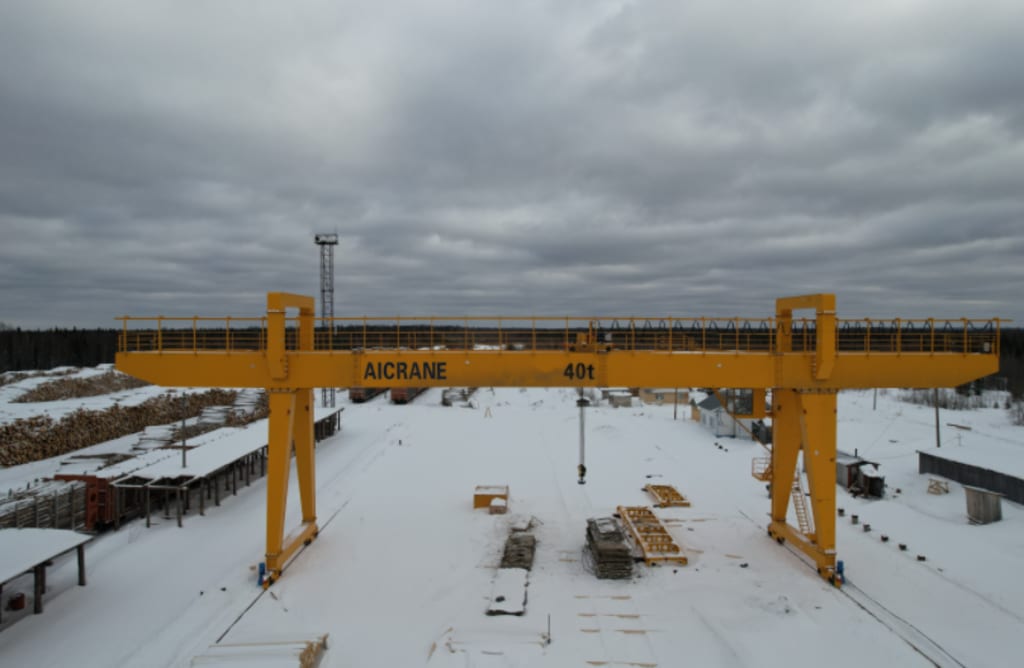
Designing industrial lifting equipment such as a 40 ton gantry crane for use in extreme cold environments is far more complex than designing for typical conditions. Extreme cold presents unique challenges that impact material selection, structural integrity, mechanical performance, electrical reliability, safety systems, and maintenance planning. Whether the crane will operate in arctic drilling sites, northern mines, cold storage facilities, or polar research stations, engineers must account for the severe effects of low temperatures to ensure safety, performance, and longevity.
This article explores the key design considerations for a 40-ton gantry crane intended for extreme cold climates, covering environmental challenges, material science, structural design adaptations, power and control systems, anti-icing strategies, safety protocols, and maintenance planning. By understanding these factors, manufacturers and users can ensure reliable operation in conditions where failure isn’t an option.
Understanding the Challenges of Extreme Cold
Before diving into design specifics, it’s important to understand how extreme cold affects 40 ton gantry crane systems:
1. Material Behavior at Low Temperatures:
At temperatures below freezing — and especially in sub-zero conditions like -40°C or lower — the mechanical properties of metals change. Many steels become brittle and are more susceptible to fractures under impact or dynamic loads.
2. Lubrication and Mechanical Resistance:
Viscosity of lubricants increases dramatically in cold conditions, leading to higher friction, slower movement, and increased wear on moving parts. Bearings, gears, and wire ropes are particularly vulnerable if not properly specified for cold climates.
3. Electrical and Electronic Vulnerabilities:
Batteries, sensors, control systems, and wiring may not function correctly at very low temperatures. Displays, PLCs, and communication modules often require special enclosures or heating systems to operate reliably.
4. Environmental Conditions:
Snow, ice, wind, and humidity can accumulate on crane structures, creating additional load, increasing slip hazards, and causing ice build-up on critical mechanisms.
5. Personnel Safety:
Workers may have limited dexterity in extreme cold, and emergency systems must function reliably to protect operators under adverse conditions.
Understanding these issues drives the engineering decisions required for a cold-climate gantry crane.
Material Selection for Durability
The foundation of cold-climate design starts with material selection:
High-Toughness Steels
Standard structural steels like ASTM A36 or mild carbon steels can become brittle at low temperatures. For extreme cold environments, engineers typically specify low-temperature toughness steels that maintain ductility and impact resistance at low temperatures. Examples include:
ASTM A572 Grade 50
ASTM A709 Steel with low-temperature impact requirements
EN 10025 S355J2+N or similar sub-zero impact toughness steels
These steels are tested at designated low temperatures (e.g., -40°C or lower) to ensure they retain sufficient toughness and do not fracture under load. In critical high-stress areas such as the crane bridge, legs, and trolley frames, these steels are indispensable.
Structural Design Adaptations
Extreme cold affects not only the material but also the structural behavior of the crane:
Increased Safety Factors
Design codes such as DIN EN 13001 and ASME B30 series provide general guidelines for crane design, but for extreme cold conditions, engineers often apply increased safety factors to account for uncertainty in material behavior and environmental loading.
Accounting for Ice and Snow Loads
Snow and ice actuate additional dead loads on crane surfaces. Flat surfaces like crane girders or gantry beams should be designed for:
Ice accretion
Wind-driven snow loads
Thermal contraction of structural members
Finite Element Analysis (FEA) simulations often model the combined effects of cold-induced material properties and environmental loads to verify safety.
Wire Rope and Lifting Components
The wire rope, hook block, and lifting gear are critical components where failure could be catastrophic. In low temperatures:
Standard wire ropes may stiffen and lose flexibility.
Lubrication films break down faster.
Sheaves and drums become sources of high friction and wear.
Cold-Rated Wire Ropes
For cold environments, gantry crane manufacturers specify wire ropes with improved flexibility at low temperature, often made from alloys with better toughness. Lubricants designed for cold climates — such as synthetic or low-temperature greases — are used to ensure consistent performance.
Regular inspection of rope condition and lubrication effectiveness under cold conditions must be scheduled more frequently than in warm climates.
Power Systems and Electrical Components
Cold temperatures negatively affect electrical and control systems. Designers must address two main issues: keeping systems within operating temperature ranges and protecting them from environmental ingress.
Heated and Insulated Control Cabinets
Enclosed electrical cabinets are insulated and fitted with electric heaters or thermostatically controlled heat cables. These systems maintain internal temperatures so that PLCs, power supplies, sensors, and contactors operate reliably.
Cold-Rated Cables and Sensors
All wiring, sensors, and connectors should be specified for use in the target temperature range. For example:
Cold-rated cables with flexible insulation
Sealed connectors to prevent moisture ingress
Temperature-compensated sensors
These precautions prevent brittle cracking of cable insulation or failure of sensor signals.
Power Supply Considerations
If the crane uses battery backup systems or electric motion devices, cold affects battery performance significantly. Lithium-ion batteries have reduced capacity at low temperatures, and emergency backup systems may need heating or insulated housings.
Drive Systems and Motion Control
Drive systems in extreme cold require special attention:
Gearboxes and Bearings
Standard gearboxes must be specified with lubricants designed for low temperatures. Cold-rated gear oils prevent gear tooth wear and reduce start-up torque.
Bearings and moving elements must also have the correct lubrication and seals to prevent contamination and loss of lubrication at low temperatures.
Variable Frequency Drives (VFDs)
Variable Frequency Drives offer soft starting and speed control, improving mechanical life and operator safety. However, they must be installed in warmed enclosures to avoid electronic failure in extreme cold.
Anti-Icing and Snow Mitigation Features
Ice accumulation on crane rails, walkways, ladder rungs, and structural elements poses safety risks. Designers often include:
Rail heating systems to prevent ice build-up on crane runways
Walkway heating or ice-melting elements
Drainage channels to prevent water accumulation and freezing
Protective covers over sensitive mechanisms such as limit switches and trolleys
These features significantly improve operational reliability and safety.
Operator Comfort and Safety
Human factors are crucial. Even with operator cabins, extreme cold can impact performance:
Heated Operator Cabs
Fully enclosed and climate-controlled cabins improve operator comfort and reduce fatigue. Key features include:
High-efficiency HVAC systems
Insulated glazing
Anti-fogging and defrosting systems
This ensures operators remain alert and in control even during long shifts in sub-zero temperatures.
Safety Systems
Emergency stop circuits, limit switches, anti-collision sensors, and cameras all must be qualified for cold operation. Redundant systems often improve safety margins, especially when temperatures approach material limits.
Maintenance Planning for Cold-Climate Cranes
Designing for cold climates isn’t enough — maintenance planning ensures reliability throughout the crane’s lifespan:
Frequent Inspection Intervals
Cold environments accelerate wear and tear on moving parts. Regular checks should include:
Wire rope condition and lubrication
Bearings and gearboxes
Electrical cabinet temperatures and heater operation
Cables and connectors for insulation integrity
Remote Monitoring
Integration of remote monitoring systems allows maintenance teams to track load cycles, drive temperatures, vibration data, and environmental conditions. Alerts can be configured when components reach predefined thresholds, enabling predictive maintenance.
Emergency Response Planning
Because extreme environments often mean remote locations, planning for emergency repairs and access to spare parts becomes crucial.
Meeting Standards and Compliance
Crane designers must ensure compliance with international and regional standards, such as:
ISO 1516/1 – Wire ropes
DIN EN 13001 – Crane safety
ASME B30 – Crane standards
DNV standards for cold climates
These standards provide baseline safety and performance requirements, but additional engineering judgment is always required for extreme cold.
Summary
Designing a 40 ton gantry crane for extreme cold environments demands a holistic approach that integrates advanced materials, structural safety, mechanical resilience, electrical robustness, and thoughtful human-centric features. Engineers must balance performance needs with environmental realities, ensuring that every component — from wire rope to control system — is qualified for harsh, sub-zero conditions.
The result? A reliable, durable, and safe gantry crane capable of lifting heavy loads in some of the world’s most unforgiving climates — enabling industrial productivity where standard designs simply won’t suffice.
About the Creator
Aicrane01
Welcome to the Aicrane Blog, your practical guide to lifting solutions. Discover articles covering overhead cranes, gantry cranes, winches, steel structures, boat lifts, and more.
Website: https://steelmillcranes.com/
Water Sign Twin Flames:
The concept of twin flames, often referred to as soulmates on steroids, has captivated hearts and minds for years. It describes a profound and intense soul connection with another individual, a mirroring that goes beyond superficial attraction and delves into the very core of your being. While twin flame journeys are complex and often challenging regardless of astrological signs, when both individuals involved are governed by the element of water – Cancer, Scorpio, or Pisces – the connection takes on a uniquely deep and emotionally charged dimension. This article explores the powerful dynamic between water sign twin flames, focusing on how their union acts as a catalyst for profound emotional healing, revealing hidden depths and ultimately leading to spiritual growth.
By Wilson Igbasi6 days ago in Journal


Comments
There are no comments for this story
Be the first to respond and start the conversation.