
Chandrayaan: India's Lunar Exploration
Let's Dive Deep Into It
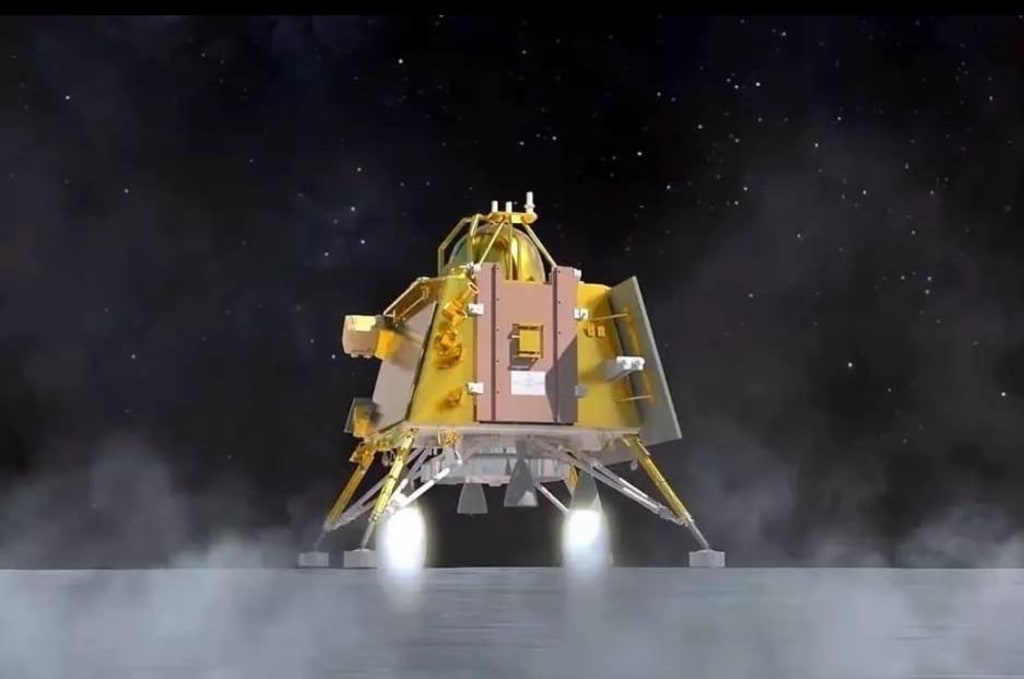
Humans have always been fascinated by the idea of exploring outer space. This fascination has led to various attempts and theories to understand the cosmos. India, too, has ventured into space exploration with its Chandrayaan missions, which have left the world in awe of their success. In this article, we celebrate the achievements of these missions and explore their significance for humanity. Let's delve into the history of lunar missions, the evolution of Chandrayaan, and the importance of space exploration.
A Brief History of Lunar Missions
The Moon has always captured the imagination of people of all ages. Lunar missions have been a testament to humanity's desire to explore space. Here are some notable moon missions:
1. Luna Program (1959-1976): The Soviet Union launched this program in 1959, marking the first successful moon mission. Luna 2 became the first human-made object to reach the Moon in 1959, and Luna 9 achieved the first soft landing on the lunar surface in 1966.
2. Apollo Program (1961-1972): Led by NASA scientists from the United States, this program successfully landed astronauts on the Moon between 1969 and 1972. Apollo 11, with Neil Armstrong and Buzz Aldrin, marked the first human steps on the lunar surface.
3. Chang’e Program (2007-present): China initiated this program, conducting several missions for lunar exploration. Chang'e 3 (2013) achieved a soft landing on the Moon, and Chang'e 4 (2019) explored the far side of the Moon.
4. Clementine (1994): This NASA mission focused on mapping the Moon's surface and played a role in the discovery of water ice in lunar polar craters.
5. Lunar Reconnaissance Orbiter (LRO) (2009-present): Another NASA program launched in 2009, the LRO has been instrumental in mapping the Moon's surface and investigating its resources and environment.
The Making of a Lunar Orbiter
Creating a lunar orbiter involves meticulous planning and execution. Here's a brief overview of the process:
1. Mission Concept: It all begins with defining the mission's goals, objectives, and instrument selection.
2. Payload Deployment: Carefully select and develop instruments and sensors for data gathering and experiments.
3. Spacecraft Design: Scientists and engineers collaborate to design the spacecraft, considering factors like power generation, communication systems, and propulsion.
4. Testing: Rigorous testing ensures the design's reliability and minimizes the risk of mission failure.
5. Launch and Mission Operations: The spacecraft is launched with precision planning and timing, followed by ongoing monitoring and management to ensure a successful mission.
Chandrayaan-1: India's First Lunar Mission
Chandrayaan-1 marked India's entry into lunar exploration. Here are key details about this mission:
- Launch Date: October 22, 2008
- Launch Mass: 1380 kg
- Power: Solar panels
- Budget: 80 million USD
Chandrayaan-1 was equipped with 11 scientific instruments, including a Moon Impact Probe (MIP) that impacted the lunar surface. The mission aimed to map the Moon's surface, study its mineral composition, and search for water ice in polar regions. It made a groundbreaking discovery of water molecules on the lunar surface.
Chandrayaan-2: Building on Success
Chandrayaan-2 built upon the achievements of its predecessor and aimed for further lunar exploration. It consisted of an orbiter, a lander named Vikram, and a rover named Pragyan. Although Vikram's landing attempt was unsuccessful, the orbiter continues to provide valuable data from lunar orbit.
- Launch Date: July 22, 2019
- Launch Mass: 2379 kg
- Power: Solar panels
- Budget: 141 million USD
Chandrayaan-3: India's Latest Lunar Endeavor
Chandrayaan-3, India's most recent lunar program, is highly celebrated worldwide. It successfully achieved a soft landing on the Moon's south pole, making India the only country to accomplish this feat.
- Launch Date: July 14, 2023
- Launch Mass: 3900 kg
- Power: Solar panels
- Budget: 75 million USD
Why Explore the Moon?
You might wonder why we invest in space missions instead of focusing on national development. Here are some compelling reasons:
1. Scientific Exploration: Studying the Moon's surface helps us understand its mineral composition and geological history.
2. Resource Identification: Space missions enable us to search for valuable resources like water, which can support future research and exploration.
3. Technology Advancements: Space missions drive innovation and can lead to discoveries that benefit various fields.
4. International Collaboration: Collaborating with other nations fosters global bonds and allows us to work with brilliant minds from around the world, advancing our collective knowledge.
In conclusion, India's Chandrayaan missions represent significant contributions to lunar exploration, scientific discovery, and technological advancement. These missions reflect humanity's enduring curiosity about the cosmos and its potential benefits for our planet and future generations.
About the Creator
Keep reading
More stories from Harjot Singh and writers in Journal and other communities.
What If We Just...Stopped Working?
Imagine a scenario where work, as we know it, suddenly grinds to a halt. What if, starting tomorrow, none of us showed up for our jobs? The very idea might sound chaotic, and indeed, it would be. Empty shelves, deserted cities, unfulfilled promises—society would swiftly unravel without the contribution of its workforce.
By Harjot Singh2 years ago in Journal
Why Deep Connection Often Feels Effortless.
Some relationships feel natural from the start. Interactions flow without strain, conversations are engaging, and emotional understanding seems immediate. Deep connections often feel effortless because they emerge from alignment in values, emotional resonance, communication patterns, and mutual understanding. While relationships typically require work to develop, certain bonds appear seamless. Exploring why deep connection feels effortless reveals the interplay of psychology, neurology, and social dynamics that underlie meaningful human relationships.
By Wilson Igbasiabout 20 hours ago in Journal


Comments
There are no comments for this story
Be the first to respond and start the conversation.