
What If We Just...Stopped Working?
Reimagining Work: Exploring the Path to a More Balanced Lifestyle
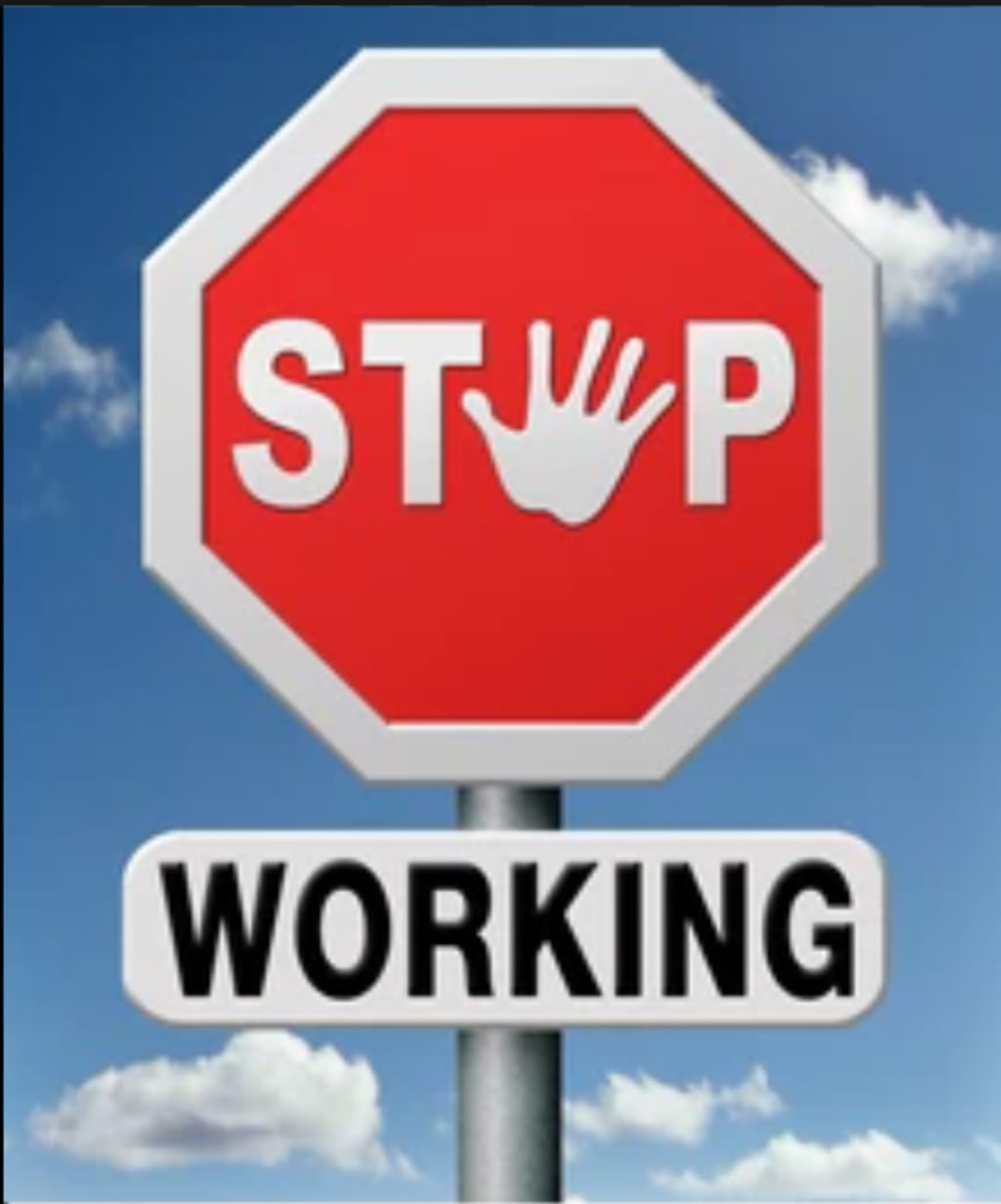
Imagine a scenario where work, as we know it, suddenly grinds to a halt. What if, starting tomorrow, none of us showed up for our jobs? The very idea might sound chaotic, and indeed, it would be. Empty shelves, deserted cities, unfulfilled promises—society would swiftly unravel without the contribution of its workforce.
We often refer to our daily toil as "work," but that doesn't make the question of "what if we stopped working" meaningless. In fact, there's an intriguing layer beneath the surface. If the answer to this question is "we can't stop," it leads to another question: How close can we get to reducing our work hours? And exploring this question reveals some fascinating insights.
Consider the common party question: "What do you do?" If you respond with, "I make YouTube videos," you might get a few raised eyebrows. The humor here lies in the stereotype that YouTubers are isolated, and lacking in social connections. However, this question's prominence at social gatherings highlights a significant aspect of our society—work plays a central role in our lives. But does it have to be this way? Some countries are already experimenting with alternatives, like the four-day workweek.
Countries like New Zealand, Spain, and Iceland have implemented trials to shorten the workweek to just four days, and the results are worth examining.
Iceland, for instance, conducted experiments between 2015 and 2019. Responding to union demands for more leisure time, approximately 2,500 Icelanders enjoyed a reduction in their work hours from 40 to around 35 hours a week. Remarkably, salaries remained intact. Unsurprisingly, this change had a positive impact. People reported increased happiness, reduced burnout, and overall improved well-being. Thanks to the success of these experiments and the advocacy of trade unions, over 80 percent of Iceland's population either shortened their working hours or gained the right to do so.
Even professionals in corporate attire found themselves happier because they could save on some expenses without observing a decline in productivity. It's a well-known fact that productivity follows a diminishing returns curve—the longer you work, the less productive each additional hour becomes. This suggests that working less while maintaining efficiency is achievable.
This video diverges from the usual content on this channel, which often focuses on negative aspects and grievances. However, for the next 15 minutes, we'll address essential questions about work: what it represents, why it carries such significance for some, and why it could be different. The key takeaway is that we don't need to toil so tirelessly. You'd think that such a notion would be politically attractive—promising more pleasant lives with less work-related stress and greater freedom. After all, who wouldn't vote for a candidate or party advocating for such improvements?
Interestingly, some countries have embraced this approach. However, the reality in the United States is different. Neither major political party actively seeks to reduce the time Americans spend at work. The prevailing narrative emphasizes the importance of work as not just a source of income but as a pillar of dignity, respect, and community identity.
Despite the widespread dissatisfaction with jobs, exemplified by articles like Forbes' "15 ways to rise above resenting your job," the sentiment for significant change isn't widespread in American politics. While Democrat Mark Takano is pushing for a 32-hour workweek bill in Congress, neither party can be characterized as anti-work. But should they be?
Let's clarify some definitions. "Work" isn't just a guess in an illegal game of Wordle; it's a fundamental aspect of our lives. Work involves the application of physical or mental effort to achieve specific outcomes. Without any work, society would crumble. Nurses, electricians, teachers, and even someone making breakfast contribute their labor to keep society functioning.
Some work is compensated with money, while other forms are rewarded with minimal or no monetary compensation, often coupled with societal disdain. The anti-work movement doesn't disregard the necessity of work; it challenges the conditions under which work takes place. It advocates for a balance between work and leisure, aiming to minimize work hours while maximizing the quality of leisure. The goal isn't to eliminate work but to redefine it, making it more meaningful and enjoyable.
In a capitalist society, work is the gateway to basic necessities like food, shelter, and healthcare. However, this system often means limited control over working conditions and the feeling of coercion—work or starve. This coercive aspect of work should not be underestimated.
At the workplace, individuals frequently have limited influence over their conditions. These conditions can range from acceptable to highly unfavorable. Moreover, societal discourse reinforces the value of work, attaching slogans like "Work will set you free," "No pain, no gain," and "There's no such thing as a free lunch" to the concept of work. This ideological discourse accompanies the material reality of coercion, making work appear more natural and acceptable than it is.
Our need to work is further fortified by psychopolitics, which seeks to elevate work as a fundamental value. Yet, it seems that this elevation doesn't align with the desires and well-being of the population, considering the considerable dissatisfaction with work and the desire for more leisure time.
In conclusion, the question "What if we stopped working" reveals deeper insights into our relationship with work and its societal significance. While work is undeniably essential for our survival and the functioning of society, there is room for reimagining it.
The anti-work movement doesn't propose the complete eradication of work but advocates for a shift in work conditions, aiming for a more balanced life with meaningful leisure. It's a challenge to the prevailing notion that endless work is the path to virtue and fulfillment, and it's a conversation worth having as we navigate the evolving landscape of work in the modern world
About the Creator
Keep reading
More stories from Harjot Singh and writers in Journal and other communities.
Chandrayaan: India's Lunar Exploration
Humans have always been fascinated by the idea of exploring outer space. This fascination has led to various attempts and theories to understand the cosmos. India, too, has ventured into space exploration with its Chandrayaan missions, which have left the world in awe of their success. In this article, we celebrate the achievements of these missions and explore their significance for humanity. Let's delve into the history of lunar missions, the evolution of Chandrayaan, and the importance of space exploration.
By Harjot Singh2 years ago in Journal
5 Mindset to Make a Person Richer and Richer
While some may believe that wealth is a matter of luck and initial capital, my decade-long experience in business and conversations with billionaires have shown that sustained growth and stability are driven by five key mindsets that are put into action. Capital merely serves as the stepping stone; the mindset acts as the engine that propels wealth to snowball—leverage thinking magnifies returns, compound thinking consolidates gains, and the right mindset can transform capital into a potent weapon for wealth creation. Exchange thinking unlocks resources; when paired with risk preemptive strategies and value anchoring, these five mindsets create a tightly interwoven chain. Without any one of these mindsets, breaking through the wealth bottleneck becomes an almost insurmountable challenge.
By Lady Alkaid5 days ago in Journal
One Hard Thing
Stop me if you’ve heard this one before: You have the number, you know your schedule- you’ve even picked out the perfect day and time to make this appointment. Shoot, you’ve even picked out alternative days and times just in case their schedules can’t accommodate you!
By Taylor Rigsby3 days ago in Motivation




Comments
There are no comments for this story
Be the first to respond and start the conversation.