
Central vs. Obstructive Sleep Apnea: Differences, Symptoms & Treatments
DR Manvir Bhatia
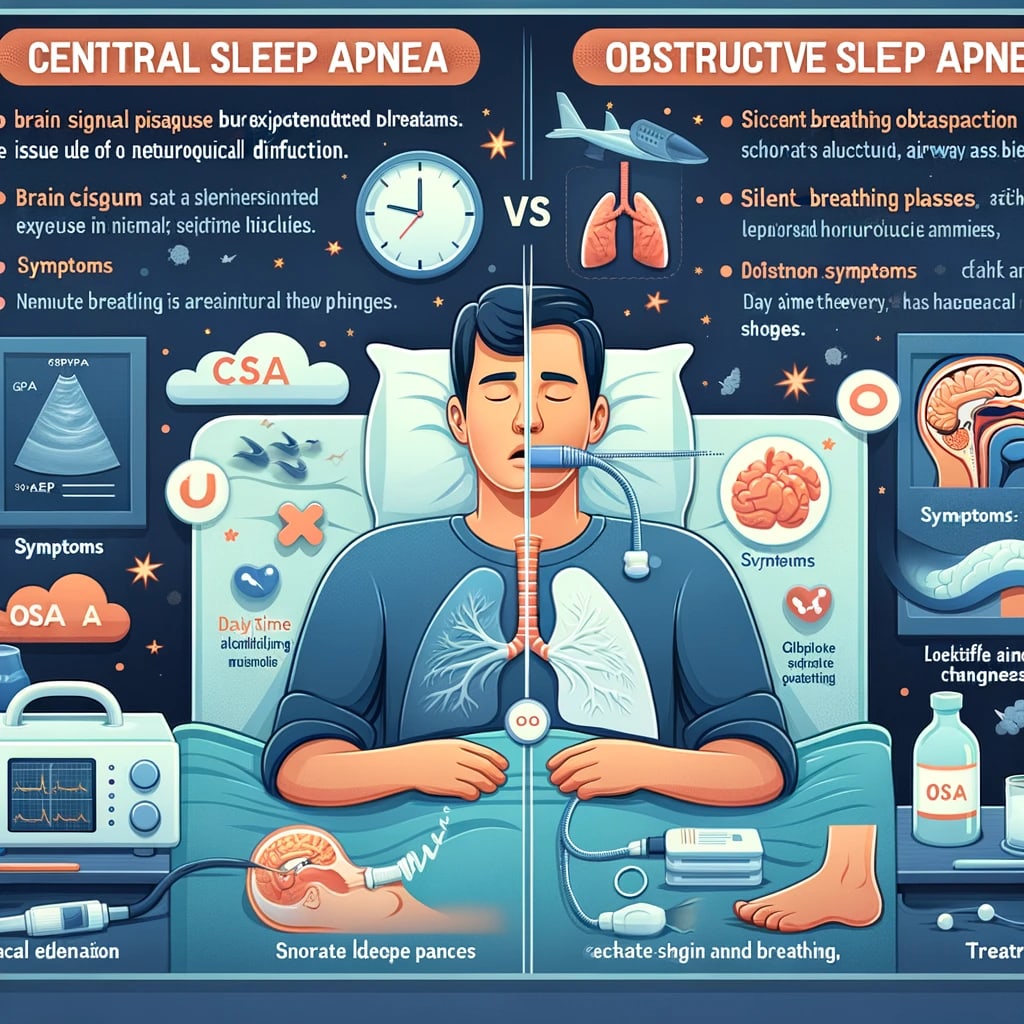
Sleep apnea is a serious sleep disorder that affects breathing during sleep. It can lead to severe health issues if left untreated. There are two main types of sleep apnea: Obstructive Sleep Apnea (OSA) and Central Sleep Apnea (CSA). Understanding their differences, symptoms, and treatments is crucial for finding the right solution.
What is Obstructive Sleep Apnea (OSA)?
Obstructive Sleep Apnea occurs when the muscles in the throat relax excessively, causing a partial or complete blockage of the airway. This blockage reduces oxygen levels, leading to disrupted sleep and frequent awakenings.
Causes of OSA
- Excess weight and obesity
- Large tonsils or adenoids
- Narrow airway structure
- Smoking and alcohol consumption
- Sleeping on the back
- Nasal congestion or sinus issues
Symptoms of OSA
- Loud snoring
- Choking or gasping during sleep
- Excessive daytime sleepiness
- Difficulty concentrating
- Morning headaches
- Dry mouth or sore throat upon waking
- Mood changes, irritability, or depression
What is Central Sleep Apnea (CSA)?
Unlike OSA, Central Sleep Apnea occurs when the brain fails to send proper signals to the muscles that control breathing. This leads to temporary pauses in breathing, often without snoring.
Causes of CSA
- Neurological disorders
- Heart failure or other cardiac conditions
- High-altitude exposure
- Opioid medication use
- Stroke or brainstem injury
- Idiopathic (unknown causes)
Symptoms of CSA
Frequent pauses in breathing during sleep
Gasping or difficulty breathing at night
Insomnia or fragmented sleep
Excessive daytime fatigue
Difficulty focusing or memory problems
Shortness of breath while lying down
Key Differences Between OSA and CSA
FeatureObstructive Sleep Apnea (OSA)Central Sleep Apnea (CSA)
CauseBlocked airway due to relaxed throat musclesBrain fails to send breathing signals
SnoringLoud and frequentUsually absent
Breathing PausesDue to airway blockageDue to lack of brain signals
Daytime SleepinessCommonCommon
TreatmentCPAP, lifestyle changes, surgeryCPAP, ASV, treating underlying condition
Diagnosis of Sleep Apnea
Both types of sleep apnea require proper diagnosis, usually through a sleep study (polysomnography) conducted at a sleep clinic or via a home sleep apnea test (for OSA).
A sleep specialist may recommend:
Overnight polysomnography (PSG): Monitors brain activity, oxygen levels, breathing patterns, and heart rate.
Home Sleep Apnea Test (HSAT): Detects breathing disturbances at home, but mainly for OSA.
Treatment Options for OSA and CSA
1. Continuous Positive Airway Pressure (CPAP) Therapy
CPAP is the most effective treatment for Obstructive Sleep Apnea. It delivers a steady flow of air to keep the airway open.
For Central Sleep Apnea, CPAP may be useful, but an Adaptive Servo-Ventilation (ASV) machine is often recommended, which adjusts airflow based on breathing patterns.
2. BiPAP Therapy
Bilevel Positive Airway Pressure (BiPAP) delivers two different air pressure levels, helping those with CSA or OSA who have difficulty with CPAP.
3. Lifestyle Changes
Maintain a healthy weight
Avoid alcohol and sedatives before bed
Sleep in a side position instead of on the back
Practice good sleep hygiene
4. Oral Appliances
For mild to moderate OSA, a dentist-prescribed oral appliance can reposition the jaw and tongue to prevent airway blockage.
5. Surgery (For Severe OSA Cases)
Surgical options include:
Uvulopalatopharyngoplasty (UPPP) – Removing excess throat tissue
Inspire Therapy – Implanting a nerve stimulator to keep the airway open
Tonsillectomy – Removing enlarged tonsils (especially in children)
6. Treating Underlying Conditions (For CSA)
For Central Sleep Apnea, treating the root cause (e.g., heart failure, neurological issues) can help manage symptoms.
Which Type of Sleep Apnea Do You Have?
If you experience sleep disturbances, daytime fatigue, or breathing interruptions at night, consult a sleep specialist for a proper diagnosis. Both OSA and CSA can lead to serious complications like heart disease, high blood pressure, and stroke if left untreated.
Conclusion
Understanding the differences between Obstructive Sleep Apnea (OSA) and Central Sleep Apnea (CSA) is crucial for getting the right treatment. While OSA is caused by airway blockage, CSA stems from brain signal disruptions. Both conditions can affect sleep quality and overall health. With early diagnosis and proper treatment—whether through CPAP therapy, lifestyle changes, or medical intervention—you can improve your sleep and reduce health risks.
If you suspect sleep apnea, don’t wait. Consult a sleep specialist today to find the best treatment for you.
About the Creator
Keep reading
More stories from Dr manvir bhatia and writers in Journal and other communities.
Sleep Apnea and Mental Health: How Poor Sleep Affects Anxiety & Depression
Introduction Sleep apnea is more than just loud snoring or disrupted sleep. It can have serious effects on both physical and mental health. People with untreated sleep apnea often experience anxiety, depression, and mood disorders. Poor sleep quality affects brain function, emotional regulation, and stress levels, making mental health issues worse. Understanding the link between sleep apnea and mental health is crucial for effective treatment and overall well-being.
By Dr manvir bhatia11 months ago in Journal
How, Too
Many people wonder how, too. You are not alone, and I am an expert. I will teach you how, too! First, you need to remit a small application fee and fill out an application describing the nature of your financial situation and how often payments will be made, as this will have great bearing on how well I teach you how, too.
By Harper Lewis4 days ago in Fiction



Comments
There are no comments for this story
Be the first to respond and start the conversation.