
How Automation Is Transforming 100-Ton Gantry Crane Operations
Enhancing Safety, Precision, and Productivity Through Intelligent Control Systems and Smart Lifting Technologies
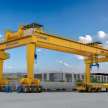

In heavy industrial environments, 100-ton gantry cranes are among the most vital pieces of lifting equipment. Whether handling massive steel coils in manufacturing facilities, moving precast concrete segments in construction yards, loading and unloading heavy cargo at ports, or positioning turbines and generators in power plants — 100-ton gantry cranes shoulder enormous loads with precision and reliability. Traditionally operated by skilled crane operators working from cabins or control platforms, these cranes have long demanded intensive human supervision.
In recent years, however, automation technologies have begun to transform how 100-ton gantry cranes are designed, controlled, and operated. From remote control and semi-automated movement to fully integrated AI-driven systems, automation is reshaping productivity, safety, efficiency, and profitability across diverse industries. This article explores how automation is influencing 100-ton gantry crane operations, the technologies enabling this transformation, practical benefits, implementation challenges, and what the future holds.
1. The Traditional 100-Ton Gantry Crane Landscape
Before diving into automation’s impact, it’s important to understand the operational baseline of a conventional 100 ton gantry crane:
Manual Control: Operators in a cabin or on the ground use joysticks and buttons to control travel, hoist, and trolley movements.
Dependence on Human Precision: Load positioning, navigation, and safety decisions rely heavily on operator skill.
Limited Sensing: Traditional limit switches and human observation prevent collisions and overtravel — often reactionary rather than predictive.
Safety Hazards: Operating in challenging environments with limited visibility and heavy loads exposes workers to risks.
While these systems have served industries for decades, they inherently limit productivity and pose safety challenges, particularly as operational demands grow.
2. What Is Automation in Gantry Crane Operations?
Automation refers to technologies that reduce or eliminate the need for continuous manual input while enabling cranes to operate more efficiently and safely. It spans multiple levels:
Remote control systems – Operators control cranes from a safe distance.
Assisted automation – Sensors and safety systems support manual operations (e.g., collision avoidance).
Semi-automated operation – Pre-defined tasks are performed automatically under supervision.
Fully automated systems – Cranes execute complete workflows with minimal human intervention, guided by advanced software and machine intelligence.
Automation in 100-ton cranes integrates hardware, software, communication networks, sensors, and intelligent control systems.
3. Core Automation Technologies Transforming 100-Ton Gantry Crane Operations
Let’s examine the key technologies enabling this transformation:
3.1 Remote Control and Operator Assistance
One of the earliest steps toward automation is remote control, where operators use wireless control panels or tablets to maneuver the crane from a safer viewpoint.
Benefits:
Operators gain better visibility of critical zones.
Reduces risk of injury by distancing personnel from heavy loads.
Improves comfort and reduces fatigue.
Remote systems often include safety interlocks, dead-man switches, and failsafe communication.
3.2 Sensor Integration and IoT
Sensors are the foundation for situational awareness:
Position encoders track travel and trolley position.
Load cells monitor actual load weights.
Lidar and radar detect obstacles on travel paths.
Ultrasonic sensors assist in precision positioning.
Environmental sensors detect wind, temperature, and other conditions that affect safe lifting.
Sensors feed data into PLCs (Programmable Logic Controllers) and edge devices, enabling real-time decision-making.
3.3 Collision Avoidance and Safety Systems
Automation introduces active safety systems:
Anti-collision algorithms prevent cranes from entering prohibited zones.
Virtual fences restrict travel beyond predefined limits.
Automatic speed adjustment slows movement in congested zones.
These capabilities reduce human error and prevent accidents that could damage equipment or injure workers.
3.4 Vision Systems and Computer Vision
Cameras with AI-based computer vision assess the environment for:
Load orientation and alignment.
Obstacle detection beyond basic proximity sensors.
Monitoring operator gestures in hybrid control modes.
Vision systems significantly enhance accuracy, enabling tasks such as automated load centering, especially for irregular or visibly marked loads.
3.5 Telemetry, Data Analytics, and Condition Monitoring
Automated cranes collect vast amounts of operational data. Using cloud platforms and analytic tools, operators and managers can:
Track usage patterns.
Predict maintenance needs (e.g., bearing wear, cable fatigue).
Optimize scheduling and reduce downtime.
Improve energy efficiency.
This predictive maintenance approach reduces unexpected breakdowns and extends equipment life.
3.6 AI and Machine Learning Integration
Artificial intelligence adds a higher level of autonomy:
Learning from past operations to optimize movement paths.
Adaptive control algorithms based on load type and environmental conditions.
Intelligent automation capable of making decisions — such as re-routing around obstacles — without human input.
Although fully autonomous cranes are more common in structured environments like container terminals, AI is rapidly expanding into general industrial applications.
4. Key Benefits of Automation in 100-Ton Gantry Crane Operations
Automation brings tangible improvements across operations:
4.1 Enhanced Safety
The greatest impact of automation is in safety:
Reduces potential for operator error.
Eliminates “blind spots” through sensor fusion.
Prevents unsafe movements with automatic safeguards.
Enables operation from safe distances.
Collectively, these reduce accident rates and improve workplace compliance.
4.2 Increased Productivity and Precision
Automation improves operational performance:
Faster task execution with accurate pre-programmed motions.
Repeatability, crucial for repetitive lifting and placement tasks.
Reduced cycle times through coordinated motion control.
With machine-assisted precision, positioning heavy loads within millimeters becomes achievable far more consistently than purely manual operation.
4.3 Improved Equipment Longevity and Asset Utilization
With smart scheduling and condition monitoring:
Maintenance is performed proactively rather than reactively.
Overloads and abusive operations are avoided.
Wear on key components like brakes, ropes, and gearboxes is reduced.
This increases uptime and lowers lifecycle costs.
4.4 Data-Driven Decision Making
Automation systems generate rich datasets that empower:
Performance benchmarking.
Identification of bottlenecks.
Continuous improvement strategies.
Integration with ERP, WMS, or production planning systems.
Enterprises can thus optimize not only crane operations but entire workflows.
5. Real-World Use Cases of Automation in 100-Ton Gantry Crane Systems
5.1 Ports and Container Terminals
In large container harbors, automated and semi-automated port gantry cranes coordinate container stacking and truck interfacing, improving throughput while reducing labor costs.
5.2 Heavy Manufacturing
Factories handling large castings, turbine components, or industrial equipment use automated cranes to improve repeatability and align parts for machining or assembly.
5.3 Construction and Precast Facilities
Automation ensures consistent placement of heavy precast elements, reducing reliance on operator skill and speeding up construction timelines.
5.4 Steel and Metallurgy
Automated lifting and positioning of heavy steel slabs or coils optimizes production flow and reduces the risk of damage or injury.
6. Challenges and Considerations for Implementation
Despite its benefits, automation introduces challenges:
6.1 Upfront Investment
Installation of automation systems requires capital outlay — sensors, software, controls, and communication infrastructure — which must be justified by long-term gains.
6.2 Integration with Legacy Equipment
Older cranes may need retrofits to support automation — sometimes limited by mechanical or electrical constraints, requiring careful assessment.
6.3 Workforce Adaptation and Training
Operators must be trained on new systems, and roles may shift from manual control to system supervision and exception handling.
6.4 System Reliability and Cybersecurity
As systems become connected, cybersecurity becomes essential. Communication interruptions or cyber threats must be mitigated with robust design and protocols.
7. The Future of Automation in Gantry Crane Operations
Looking ahead, automation will continue to mature and expand:
AI-Driven autonomy where cranes self-optimize and make intelligent decisions.
Swarm coordination, enabling multiple cranes to work collaboratively.
Digital twins, virtual replicas of physical cranes for simulation and optimization.
Augmented reality (AR) for operator assistance and maintenance support.
5G connectivity for ultra-reliable low-latency control and monitoring.
These advancements will further push productivity, safety, and flexibility to new levels, making automated gantry cranes a standard in heavy industries.
Conclusion
Automation is no longer a futuristic concept but a present-day reality transforming 100-ton gantry crane operations. By integrating remote control, sensors and IoT, AI, analytics, and advanced safety systems, automation enhances safety, precision, efficiency, and asset utilization. While implementation requires thoughtful planning, investment, and training, the benefits — from reduced downtime to data-driven performance improvements — are significant.
As industries continue demanding higher throughput, tighter schedules, and safer work environments, automated crane technologies are poised to become an indispensable part of heavy lifting infrastructure. For businesses operating 100-ton gantry cranes today, embracing automation isn’t just an upgrade — it’s a strategic imperative for competitiveness in tomorrow’s industrial landscape.
About the Creator
Aicrane01
Welcome to the Aicrane Blog, your practical guide to lifting solutions. Discover articles covering overhead cranes, gantry cranes, winches, steel structures, boat lifts, and more.
Website: https://steelmillcranes.com/
The goals I did not achieve
Every writing goal I made for the year is a wash. It has been this way for a while, but I think it's important to be open about my failures and the reality of how life can get in the way. This is especially true considering the several times I have posted on Vocal about my writing goals, how I was changing my approach, and where I was hoping to be for the upcoming year. I will probably do that again in a couple months, but for now, it is time to acknowledge where I am today.
By Kay Husnick22 days ago in Journal
The Role of Confession in Spiritual Growth
Confession, also called the Sacrament of Reconciliation, is one of the most powerful and transformative practices in Catholic life. Through this sacrament, Catholics seek God’s forgiveness for sins, experience His mercy, and receive spiritual guidance. Far from being a routine obligation, confession is a vital pathway to spiritual growth, healing, and deeper communion with God. Understanding its purpose, benefits, and proper approach can enrich a believer’s faith and daily life.
By Sound and Spirit4 days ago in Journal


Comments
There are no comments for this story
Be the first to respond and start the conversation.