
Bogibeel Bridge Assam: A Marvel of Connectivity and Engineering
Bogibeel Bridge Assam: Transforming Connectivity, Trade, and Tourism in Northeast India

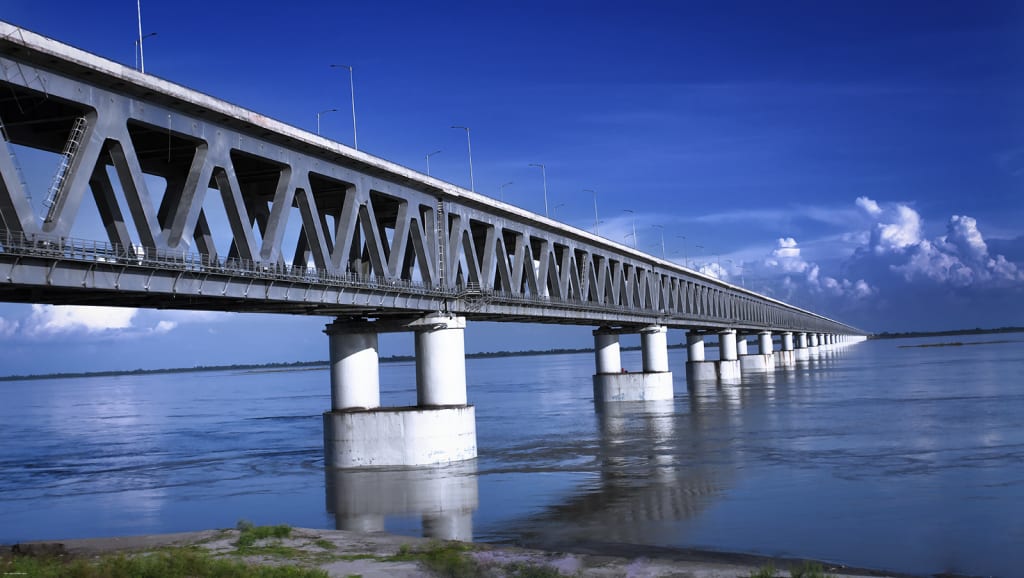
The Bogibeel Bridge Assam stands as a symbol of engineering excellence and regional transformation. As India’s longest rail-road bridge, it spans the mighty Brahmaputra River, connecting Dibrugarh and Dhemaji town while significantly reducing travel time between Assam and Arunachal Pradesh. The bridge is not only a vital infrastructural development but also a game-changer for trade, transportation, tourism, and defense in Northeast India.
1. Bogibeel Bridge in Which State?
The Bogibeel Bridge Assam is located in the northeastern state of Assam, a region known for its lush tea gardens, mighty rivers, and strategic significance. The bridge connects Dibrugarh city on the southern bank with Dhemaji town on the northern bank, making it an essential link in Assam’s transportation network.
Constructed over the Brahmaputra River, this bridge is crucial for connectivity in the flood-prone regions of Upper Assam. It enables uninterrupted travel between Assam’s tea-producing districts and the resource-rich regions of Arunachal Pradesh.
2. Dibrugarh Bogibeel Bridge: A Game-Changer for Connectivity
The Dibrugarh Bogibeel Bridge plays a pivotal role in transforming transportation in the region. Before its construction, people and goods had to rely on slow ferry services or take long detours via Tezpur or Guwahati to cross the Brahmaputra. The bridge has dramatically reduced travel time, making movement smoother and more efficient.
2.1 Road Connectivity
The Bogibeel Bridge Assam is a double-decker bridge with a road on the upper deck and a railway track on the lower deck. The road portion of the bridge has a 3-lane highway, allowing vehicles to travel between Dibrugarh and Dhemaji in just 20–25 minutes.
Previously, traveling between the two towns would take several hours, especially during monsoons when ferry services were often disrupted. Now, commuters, traders, and emergency services can cross the river seamlessly, improving the quality of life for people on both sides.
2.2 Railway Connectivity
The Bogibeel Bridge Assam also supports broad-gauge railway tracks, strengthening train connectivity between Upper Assam and Arunachal Pradesh. Trains such as the Dibrugarh–Itanagar Express and the Tinsukia–Naharlagun Intercity Express now operate over the bridge, enhancing regional rail transport.
This railway link has not only benefited passengers but has also facilitated faster freight movement, helping Assam’s tea, oil, and agriculture industries thrive. Goods from Dhemaji town and Arunachal Pradesh can now be transported to other parts of India more efficiently, boosting trade and commerce.
3. Assam Bogibeel Bridge: Engineering Marvel and Construction Feat
The Assam Bogibeel Bridge is an architectural and engineering wonder. Built to withstand seismic activities, it is India’s first bridge constructed using a fully welded steel-concrete composite structure. This design ensures durability and minimizes maintenance costs.
3.1 Key Features of the Bridge
Length: 4.94 km (India’s longest rail-road bridge).
Construction Material: Steel-concrete composite for high strength.
Double-decker Design: Upper deck for road traffic, lower deck for trains.
Seismic Resistance: Designed to withstand earthquakes up to 7 on the Richter scale.
The bridge took over two decades to complete, but its impact is now being felt across multiple sectors, from trade and commerce to tourism and national security.
4. Economic and Trade Benefits of Bogibeel Bridge Assam
The Dibrugarh Bogibeel Bridge has significantly boosted Assam’s economy, particularly in the tea, agriculture, and petroleum industries.
4.1 Tea and Agriculture
Dibrugarh is known as the "Tea City of India," producing some of the world’s finest Assam tea. Before the bridge, transporting tea from Dibrugarh to Arunachal Pradesh and the rest of Assam was time-consuming and expensive. The bridge has reduced logistical costs, making trade more profitable.
Similarly, Dhemaji town and surrounding areas are rich in agricultural produce, including rice, mustard, and vegetables. With improved road and rail transport, farmers now have better access to markets, leading to higher incomes and reduced wastage.
4.2 Petroleum and Industrial Growth
Assam has a thriving petroleum and natural gas industry, with key production centers in Digboi, Duliajan, and Tinsukia. The bridge allows faster transportation of petroleum products to other parts of the country. Additionally, industries in Dhemaji and Arunachal Pradesh now have better supply chain access, encouraging new investments and industrial expansion.
The Bogibeel Bridge Assam has also opened up new tourism opportunities. Travelers from across India are now visiting the bridge as part of their Assam itinerary, marveling at its impressive structure and enjoying panoramic views of the Brahmaputra.
5.1 Dibrugarh – A Growing Tourism Hub
With improved access, Dibrugarh is witnessing a rise in tourism. Some popular attractions near the Dibrugarh Bogibeel Bridge include:
Tea Gardens: Visitors can tour iconic tea estates like Mancotta and Jalan Tea Estate.
Dibru-Saikhowa National Park: A haven for wildlife and bird enthusiasts.
Brahmaputra River Cruises: Scenic boat rides offering stunning sunset views.
5.2 Dhemaji Town – Exploring the Lesser-Known Gem
Earlier an isolated town, Dhemaji town is now emerging as a tourist destination. Key attractions include:
Malini Than Temple – An ancient temple with historical significance.
Sissi Tongani Wetlands – A paradise for bird watchers.
Gateway to Arunachal Pradesh – Dhemaji provides easier access to scenic spots in Arunachal, including Pasighat and Ziro Valley.
The improved connectivity is encouraging local businesses to invest in homestays, eco-tourism, and adventure sports, further boosting the region’s economy.
6. Strategic and Defense Importance
Beyond its economic and transport benefits, the Bogibeel Bridge Assam is of immense strategic importance for India’s defense forces. Given its proximity to India’s border with China, the bridge facilitates the rapid movement of military personnel, vehicles, and supplies.
In times of emergency, the Indian Army can now deploy troops much faster to Arunachal Pradesh, ensuring better border security. The bridge is built to support the movement of heavy defense machinery, strengthening India’s northeastern defense infrastructure.
Conclusion
The Bogibeel Bridge Assam is much more than a bridge—it is a lifeline for connectivity, economic growth, and strategic strength in Northeast India. By linking Dibrugarh and Dhemaji town, it has improved trade, tourism, and defense preparedness while also reducing travel time and transport costs.
As new development projects emerge around the Dibrugarh Bogibeel Bridge, the region is set to witness even greater transformation. Whether it is boosting Assam’s economy, enhancing tourism, or ensuring national security, this engineering marvel will continue to play a crucial role in shaping the future of Assam and the entire Northeast region.
About the Creator
Assam Wonderer
At Assam Wonderer, we are passionate about showcasing the beauty and charm of Assam. Our travel blogs dive deep into the state's scenic spots, historical landmarks, and cultural experiences.
Keep reading
More stories from Assam Wonderer and writers in Journal and other communities.
Haflong Tourism: Discover the Hidden Jewel of Assam
Tucked away in the heart of Assam’s lush green hills, Haflong is a destination that remains largely unexplored yet holds immense beauty. Known as the only hill station of Assam, it offers a unique blend of adventure, tranquility, and cultural richness. Whether you’re a nature lover, an adventure enthusiast, or someone seeking peace away from the city’s chaos, Haflong has something special for you.
By Assam Wonderer12 months ago in Journal
Return to Silent Hill Review: A Horror Movie Best Forgotten
Return to Silent Hill is the latest entry in the film franchise and is very loosely inspired by the 2001 video game Silent Hill 2. And honestly? This is a movie that’s destined to be forgotten. It genuinely felt like a made-for-TV Hallmark horror movie — one that had absolutely no business being shown in cinemas.
By Info Post Gate6 days ago in Journal




Comments
There are no comments for this story
Be the first to respond and start the conversation.