
Australia Agricultural Machinery Market: Size, Share & Forecast 2025-2033
Australia agricultural machinery market size was valued at USD 4.0 Billion in 2024. Looking forward, IMARC Group estimates the market to reach USD 6.4 Billion by 2033, exhibiting a CAGR of 5.18% during 2025-2033.

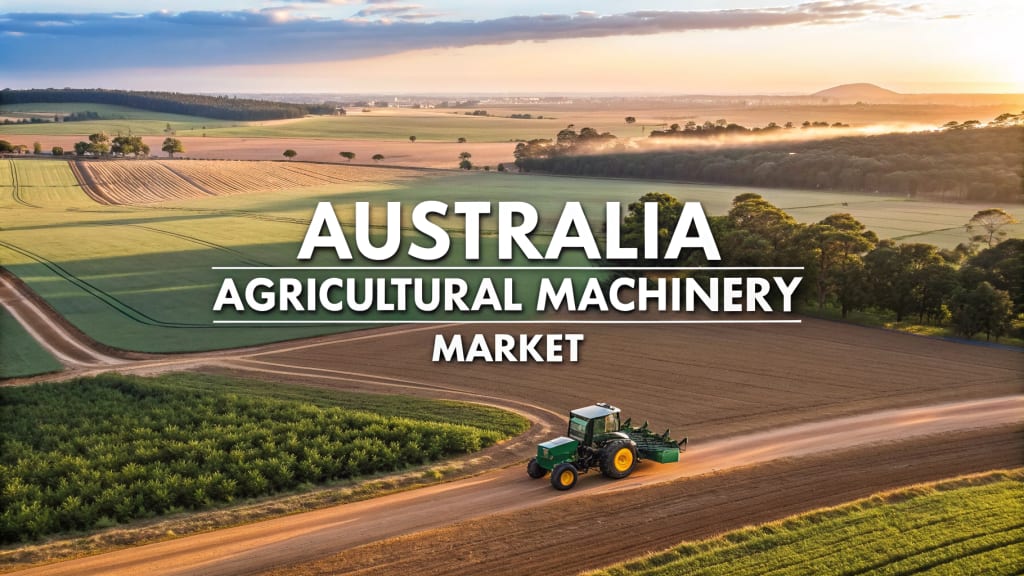
Australia Agricultural Machinery Market Overview
Market Size in 2024: USD 4.0 Billion
Market Size in 2033: USD 6.4 Billion
Market Growth Rate 2025-2033: 5.18%
According to IMARC Group's latest research publication, "Australia Agricultural Machinery Market: Industry Trends, Share, Size, Growth, Opportunity and Forecast 2025-2033", The Australia agricultural machinery market size was valued at USD 4.0 Billion in 2024. Looking forward, IMARC Group estimates the market to reach USD 6.4 Billion by 2033, exhibiting a CAGR of 5.18% during 2025-2033.
Key Factors Driving the Australia Agricultural Machinery Market
• 2.3% Annual Growth in Food Consumption Expenditure: According to the Australian Department of Agriculture, Fishery, and Forestry, household food consumption expenditures increased from $49 billion to $92 billion between 1988-89 and 2016-17, representing a 2.3% annual growth rate. This sustained demand growth compels farmers to enhance productivity through advanced machinery investments. Additionally, a 2.1% annual increase in indicative food production occurred from $65 billion to $117 billion during the same period, demonstrating the sector's expanding output capacity. The need to boost both quantity and quality of produce is encouraging farmers to invest in advanced machinery that can streamline operations and reduce labor costs.
• 85% of Broadacre Farms Implement Sustainable Practices: According to the Australian Department of Agriculture, Fishery, and Forestry, 85% of broadacre cropping farms keep their stubble, 68% minimize tillage, and 65% maximize fertilizer and herbicide efficiency while reducing reliance on these inputs. These statistics reflect the widespread adoption of conservation farming methods across Australia's agricultural sector. Modern agricultural machinery plays a crucial role in this transition by enabling more efficient use of resources such as water, fertilizers, and pesticides. Equipment supporting conservation tillage, precise irrigation, and targeted application of inputs helps minimize environmental impact while maintaining or enhancing productivity throughout the farming landscape.
• 61% of Livestock Farms Adopt Rotational Grazing: Numerous livestock farms use a range of grazing management techniques, with 61% implementing rotational, trip, or cell grazing systems and 61% establishing requirements for long-term groundcover maintenance. This demonstrates significant market penetration of sustainable livestock management practices across Australia. The integration of smart technologies, such as GPS, sensors, and automation, is revolutionizing the agricultural sector, enabling farmers to monitor and manage their fields in real time, optimize resource usage, and make data-driven decisions that enhance both productivity and environmental stewardship across diverse farming operations.
• August 2024 John Deere 6M Series Enhancement: In August 2024, John Deere made a significant improvement for MY2025 to the renowned 6M, one of the most well-liked tractors in John Deere's lineup in Australia. It now boasts a 13-model range with increased speed and power, including four models with 200 horsepower and a 50 kph transmission. This technological advancement demonstrates the industry's commitment to delivering enhanced performance and efficiency. The upgraded lineup addresses diverse farming requirements across Australia's varied agricultural landscape, providing operators with greater versatility, improved fuel efficiency, and advanced precision agriculture capabilities for modern farming operations.
• AUD 2.1 Billion Agricultural Machinery Imports in 2021-22: As per the Australian Bureau of Statistics, the import of agricultural machinery in Australia increased to AUD 2.1 billion in 2021-22, reflecting strong demand for advanced farming equipment and technologies. This substantial import volume highlights the Australian agricultural sector's ongoing modernization efforts and willingness to adopt cutting-edge machinery. The high import figures demonstrate farmers' recognition of technology's role in addressing labor shortages, improving operational efficiency, and maintaining competitive advantage. This trend supports market growth by introducing innovative solutions that enhance productivity across diverse farming applications throughout the nation.
Grab a sample PDF of this report: https://www.imarcgroup.com/australia-agricultural-machinery-market/requestsample
Australia Agricultural Machinery Market Trends & Drivers
Australia's agricultural machinery market is experiencing robust growth driven by increasing demand for food security, technological innovation, and government support for agricultural modernization. The country's growing population combined with strong export demand for agricultural products creates sustained pressure on farmers to enhance productivity and efficiency. As the agricultural sector contributes significantly to Australia's economy through exports, maintaining high production standards and meeting international demand requires continuous investment in advanced machinery capable of handling larger-scale operations while improving crop yields and operational efficiency.
Government policies and monetary benefits serve as major drivers for the agricultural machinery market in Australia. The Australian government has implemented various policies and subsidies to uplift its agricultural sector, encouraging farmers to adopt modern agricultural machinery. Supportive grants and soft loans are frequently provided toward new investment in machinery for growers, especially equipment applied to increase productivity and environmental sustainability. Tax benefits and agricultural investment write-offs bring additional financial relief to farmers, making advanced machinery more accessible. This comprehensive government support lessens the financial burden of farming and accelerates acceptance of newer, efficient technologies across all farm sizes and types.
The growing emphasis on sustainable farming practices is reshaping machinery demand across Australia's agricultural landscape. As environmental concerns become more pronounced, there is a strong push toward reducing the ecological footprint of farming operations. Modern agricultural equipment that supports conservation tillage, precise irrigation, and targeted application of inputs helps minimize environmental impact while maintaining or enhancing productivity. The widespread adoption of stubble retention, minimal tillage, and optimized fertilizer usage demonstrates farmers' commitment to sustainable practices. Equipment supporting organic farming and other eco-friendly practices is experiencing rising demand as environmental regulations tighten and consumer preferences shift toward sustainably produced food products.
The integration of smart technologies, such as GPS guidance systems, sensors, drones, remote monitoring, and automation, is revolutionizing the agricultural sector. These innovations enable farmers to monitor and manage their fields in real time, optimize resource usage, and make data-driven decisions that enhance operational efficiency. The adoption of GPS guidance systems, sensors, drones, remote monitoring, and automation is growing rapidly across Australian farms. Farmers are seeking machinery that enables targeted soil treatment, variable rate application, yield mapping, and automated equipment adjustment. Advanced tractors featuring GPS guidance, telematics, precision agriculture capabilities, and autonomous functions command premium segments as farmers prioritize efficiency, data-driven decision-making, and reduced environmental impact across their operations.
Australia Agricultural Machinery Market Industry Segmentation
The report has segmented the market into the following categories:
Product Type Insights:
• Tractors: Represent the backbone of agricultural mechanization, with advanced models featuring GPS guidance, telematics, and precision agriculture capabilities driving market growth. The 40-120 HP segment experiences fastest growth at approximately 9% during 2024-2029, attributed to versatility and optimal power range
• Ploughing and Cultivating Machinery: Includes ploughs, harrows, cultivators and tillers, and other soil preparation equipment essential for conservation tillage and sustainable farming practices
• Planting Machinery: Encompasses seed drills, planters, spreaders, and precision seeding equipment that enable optimal crop establishment and resource efficiency
• Harvesting Machinery: Features mowers, balers, and advanced harvesting equipment designed to maximize efficiency and minimize crop loss during critical harvest periods
• Haying Machinery: Specialized equipment for forage production and livestock feed preparation, supporting Australia's substantial pastoral agriculture sector
• Irrigation Machinery: Critical equipment for water management and efficient irrigation, particularly important given Australia's variable rainfall patterns and water conservation priorities
Breakup by Region:
• Australia Capital Territory & New South Wales: Leading position driven by high agricultural production values, extensive broadacre cropping operations, and well-developed farm infrastructure
• Victoria & Tasmania: Significant dairy and mixed farming operations with strong demand for specialized machinery and precision agriculture technologies
• Queensland: Diverse agricultural production including sugarcane, cotton, grain, and livestock operations requiring varied machinery solutions
• Northern Territory & Southern Australia: Extensive pastoral operations and specialized cropping systems demanding durable, high-capacity equipment
• Western Australia: Major grain production region with large-scale broadacre farming operations driving demand for high-capacity machinery
Recent News and Developments in Australia Agricultural Machinery Market
• August 2024: John Deere made a significant improvement for MY2025 to the renowned 6M tractor series in Australia. The upgraded lineup now boasts a 13-model range with increased speed and power, including four models with 200 horsepower and a 50 kph transmission, addressing diverse farming requirements across Australia's varied agricultural landscape.
• February 2024: John Deere launched 9RX series tractors in the Australian market, equipped with features to autonomously adjust harvesting equipment according to the state of crops. The 9RX model demonstrates advanced autonomous capabilities, representing a significant step toward fully automated farming operations in Australia.
• 2024: Australia witnessed tractor market sales of 10,250 units with projections reaching 11,370 units by 2030, reflecting steady demand growth and farmer confidence in mechanization investments. The market is highly concentrated, with top players controlling most segments through innovation and comprehensive service networks.
• 2021-22: Agricultural machinery imports reached AUD 2.1 billion according to the Australian Bureau of Statistics, demonstrating strong demand for advanced farming equipment and technologies. This substantial import volume reflects the sector's ongoing modernization and adoption of cutting-edge machinery solutions.
Market Opportunities
Precision Agriculture and Smart Farming Expansion
Australia's agricultural sector presents substantial opportunities for precision agriculture technologies and smart farming solutions. Farmers are increasingly seeking machinery that enables targeted soil treatment, variable rate application, yield mapping, and automated equipment adjustment based on real-time field conditions. The integration of artificial intelligence, IoT sensors, satellite imagery, and machine learning algorithms creates opportunities for equipment manufacturers to develop intelligent machinery that optimizes input usage while maximizing yields. Advanced data analytics platforms that connect machinery performance with agronomic outcomes enable farmers to make informed decisions about crop management, resource allocation, and equipment utilization. The growing adoption of GPS guidance systems, autonomous tractors, drone-based crop monitoring, and remote equipment diagnostics represents a transformative shift toward data-driven agriculture, creating substantial market opportunities for technology-forward machinery providers who can deliver integrated solutions.
Regional and Remote Area Service Models
Australia's vast geography and dispersed farming communities create significant opportunities for innovative service and distribution models tailored to regional and remote areas. Many farmers in remote locations face challenges accessing timely machinery maintenance, spare parts, and technical support, resulting in costly equipment downtime during critical farming periods. Developing mobile service units, regional spare parts hubs, and remote diagnostic capabilities can address these gaps while building customer loyalty. Telematics-enabled predictive maintenance systems that alert dealers to potential equipment issues before failures occur can minimize disruptions and extend machinery lifespan. Additionally, partnerships with local agricultural cooperatives, financial institutions offering equipment leasing programs, and government rural development initiatives can improve machinery accessibility for smaller farms and emerging agricultural regions. Manufacturers establishing comprehensive regional service networks and innovative financing options can capture market share in underserved areas while supporting agricultural productivity growth.
Sustainable and Alternative Fuel Equipment Development
As Australia advances toward carbon neutrality and strengthens environmental regulations, significant opportunities exist for agricultural machinery powered by alternative fuels and sustainable technologies. The emergence of electric tractors, hybrid systems, and equipment utilizing biofuels or hydrogen presents growth avenues for manufacturers committed to environmental innovation. Farmers facing rising diesel costs and carbon emission targets are increasingly interested in equipment that reduces operational expenses while meeting sustainability requirements. Solar-powered irrigation systems, battery-electric utility vehicles, and emission-optimized engines represent practical solutions that align with Australia's climate commitments. Additionally, machinery designed specifically for regenerative agriculture practices—including minimal soil disturbance equipment, precision inter-row cultivation tools, and biodiversity-supporting implements—addresses growing demand for farming methods that enhance soil health and ecosystem services. Manufacturers investing in sustainable technology development and clearly demonstrating environmental and economic benefits can differentiate their offerings and capture environmentally conscious market segments.
Competitive Landscape
The competitive landscape of Australia's agricultural machinery market is characterized by intense rivalry between established global manufacturers and specialized equipment providers. The market is highly concentrated, with top players controlling most segments through comprehensive product portfolios, extensive dealer networks, and strong brand recognition. Competition centers on technological innovation, particularly in precision agriculture capabilities, autonomous functions, and connectivity features. Manufacturers are leveraging advanced technologies including GPS guidance, telematics, AI-assisted operations, and integrated farm management systems to differentiate their offerings. The competitive environment also encompasses after-sales service quality, parts availability, financing options, and trade-in programs that influence farmer purchasing decisions. Strategic partnerships with agricultural technology companies, investment in research and development, and adaptation to local farming conditions determine market success.
The report provides a comprehensive analysis of the competitive landscape with detailed profiles of key players operating in the Australian agricultural machinery market, including major global manufacturers such as AGCO Corporation, CNH Industrial, John Deere (Deere & Company), Kubota Corporation, TAFE (Tractors and Farm Equipment Limited), and other prominent domestic and international equipment providers serving diverse agricultural segments.
Market Challenges
High equipment costs present significant barriers for many Australian farmers, particularly smaller operations and those in developing agricultural regions. Advanced machinery with precision agriculture capabilities, GPS guidance systems, and automated functions commands premium prices that can strain farm budgets and cash flow. While government subsidies and financing programs provide some relief, the substantial capital investment required for modern equipment remains challenging, especially when combined with other farming costs and commodity price volatility. The depreciation of expensive machinery, particularly in harsh Australian conditions, adds financial pressure. Additionally, the rapid pace of technological advancement creates concerns about equipment obsolescence, with farmers hesitant to invest heavily in machinery that may become outdated within several years. These financial constraints can slow adoption rates for innovative technologies despite their proven productivity and efficiency benefits.
Australia's agricultural machinery sector faces workforce challenges related to skilled technicians and qualified operators capable of maintaining and utilizing advanced equipment. Modern machinery incorporating complex electronics, software systems, hydraulics, and precision components requires specialized technical knowledge for proper maintenance, calibration, and repair. Regional and remote farming areas particularly struggle to attract and retain qualified service technicians, leading to extended equipment downtime when issues arise. The shortage of skilled labor affects both dealers' service capabilities and farmers' ability to fully utilize sophisticated equipment features. Training programs and certification systems have not kept pace with technological advancement, creating gaps between available workforce skills and industry requirements. Additionally, the aging farmer population and decreasing number of young people entering agriculture compound these challenges, as new-generation machinery demands greater technological literacy and comfort with digital interfaces and data management systems.
Supply chain disruptions and parts availability issues pose ongoing challenges for the agricultural machinery market in Australia. The country's geographic isolation and reliance on imported equipment and components create vulnerabilities to international shipping delays, global supply chain bottlenecks, and currency fluctuations affecting import costs. During critical farming periods such as planting or harvest seasons, equipment breakdowns requiring imported spare parts can result in significant productivity losses and financial impacts. The complexity of modern machinery, with numerous electronic and specialized components, increases dependency on manufacturer-specific parts that may have limited local availability. Additionally, consolidation in the agricultural machinery industry has reduced equipment and parts provider diversity, potentially limiting farmers' options and bargaining power. Manufacturers and dealers must navigate these supply chain complexities while managing inventory costs and ensuring timely parts delivery to support Australia's time-sensitive agricultural operations across vast geographic distances.
Note: If you require specific details, data, or insights that are not currently included in the scope of this report, we are happy to accommodate your request. As part of our customization service, we will gather and provide the additional information you need, tailored to your specific requirements. Please let us know your exact needs, and we will ensure the report is updated accordingly to meet your expectations.
About Us
IMARC Group is a global management consulting firm that helps the world's most ambitious changemakers to create a lasting impact. The company provide a comprehensive suite of market entry and expansion services. IMARC offerings include thorough market assessment, feasibility studies, company incorporation assistance, factory setup support, regulatory approvals and licensing navigation, branding, marketing and sales strategies, competitive landscape and benchmarking analyses, pricing and cost research, and procurement research.
Contact Us
IMARC Group
134 N 4th St. Brooklyn, NY 11249, USA
Email: [email protected]
Tel No:(D) +91 120 433 0800
United States: +1-201971-6302
About the Creator
Rashi Sharma
I am a market researcher.
Keep reading
More stories from Rashi Sharma and writers in Journal and other communities.
Machado Presented Her Nobel Peace Prize to Trump — But He Didn’t Actually Win It
In a stunning and symbolic moment at the White House, Venezuelan opposition leader María Corina Machado handed President Donald Trump her Nobel Peace Prize medal — a gesture that is now rocking world headlines and social media feeds.
By Omasanjuwa Ogharandukun3 days ago in Journal




Comments
There are no comments for this story
Be the first to respond and start the conversation.