
Atheists talk about God
According to the statistical website statista, on a global scale, the majority of humanity chooses to place their faith in an invisible realm,...

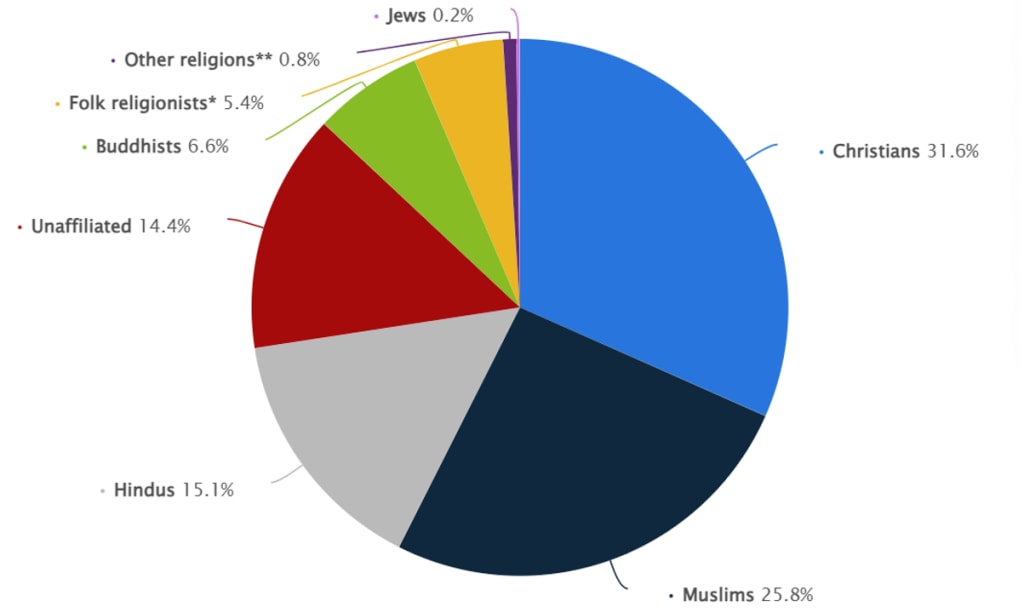
According to the statistical website statista, on a global scale, the majority of humanity chooses to place their faith in an invisible, transcendent, "high and sublime" realm. Atheists, in a flat world, are the "minority".
Reason
I am an atheist. Being atheist, or rather not following a religion, in Vietnam is not something strange or a big deal. If I just lived a simple, simple life on this land, perhaps I wouldn't have to worry about religion, belief, or faith my whole life. But fate did not lead me to such a leisurely life. I chose to spend the rest of my life with writing.
Writing for me is living, every time I create a character, I also reincarnate into their life and thoughts. My literary perfectionism makes me unable to stop saying: "If I were X in situation Y, how would I act?". Following the classic formula above, I began to search every corner of my mind, looking for ingredients to create very personal characters and lives. And that's when I realized: "I am a person of lack of faith."
I don't understand how angry, suspicious, and miserable the world was when some "mouse-bearded man" declared: "God is dead!". I can't even understand why there are people who believe that martyrdom will be recognized by God (in general) and will be granted an eternal, joyful afterlife. I find it even more confusing when a certain author from the 1960s declared that "The Soviet Union will definitely collapse, because it is a country that does not believe in God!".. The author is not a creator god, not to say that he is an omniscient being.
I am mature enough to realize that rational thinking cannot explain everything in this world. Therefore, with the mindset of a curious person in general and a perfectionist writer in particular, I went on a personal journey to learn about religious beliefs.
Confucianism and religion
In his classic book "On China", former US Secretary of State Henry Kissinger wrote a sentence that impressed me a lot: "Confucianism for the Chinese has a role equivalent to a constitution. Dharma and a Bible combined". In some Western sources I have accessed, Han people are sometimes classified as having a religion with the religious name Confucianism. Henry Kissinger is a famous politician of the pragmatist school. His personal dissection of the concept of religion and assigning it to Confucianism, in my opinion, has more political implications than an equivalent comparison. .
Confucianism has many things in common with current religions: a strict theoretical system, places and rituals that express the piety of believers, the embodiment of the supreme being - the Son of Heaven, etc. But Confucianism still lacks the decisive elements to become a religion.
First are the miracles - holy spirits, holy objects, legends about the revelation and apparition of the Almighty. It is true that Confucius lived a short life with the legend of the unicorn, but the magical and most importantly "arranged" nature was not specific. At the same time as Confucius, Lao Tzu also had a story of being pregnant for more than sixty years before giving birth. True kings and noble generals dreaming of strange objects is not uncommon. The Supreme Being, if there is one, of Confucianism does not clearly demonstrate his presence and existence. The believers or messengers of this Supreme Being also do not possess the miracle of calling the wind, leaving the river and filling the lake. Thus, Confucianism lacks the "fantasy" of other religions.
Second: Confucianism does not discuss the world after death. Before religion appeared, people thought about the afterlife. Those fantasies come true in folk tales, legends, and myths. In religions, the realm after death is the highest reward and punishment of the divine commandments. Confucianism, does not use such strong "threats" against those who do not follow "morals and ethics". Without a place of peace after a life of hardship, Confucianism cannot fulfill its spiritual role as a religion in human life.
Third: Confucianism does not have an omnipotent God. It is true that in Confucianism there is talk of "Heaven", but instead of a God who bestows love and builds a devout paradise after birth for all believers, Confucius's "Heaven" is an unconditioned "Heaven". , free, circulating, changing like nature. The current state of the world, through Confucius's theory, only stops at the level of natural times - a vague concept rather than the intentional will of a supreme being.
I debated for a while like that with Confucianism and religion, because Vietnam is a country deeply influenced by Confucianism. So profound that people of the last century like researcher Dao Duy Anh had to exclaim: "... a person in Chinese society and Vietnamese society spends his whole life breathing in the atmosphere of Confucianism, sucking Confucian milk, Confucian rice, and even dogs to death are within Confucian rituals."
"...a very dangerous person"
The topic between belief and non-belief is a topic I have explored for a long time in my writing life. Perhaps because firstly it is an interesting topic, and secondly it is a topic that reflects my long-term contemplation.
And during my long time "standing on the front line", I was always on the side against the gods. I (or at least I think so) have personally made every argument about the existence of the Supreme Being that I know become vague and unfounded. For that reason, one of my religious friends had to say: "... (I am) a very dangerous person."
I really like a proposition about the perfection of the Supreme Being that originates from ancient Greece: "If God is perfect, believing in God is unnecessary (because God will help everyone, without distinction). . If God is not perfect, believing in God is blindness. The sentences in parentheses are my own interpretations according to my understanding. Merit is an extremely vague concept like infinite reincarnation. I wonder if there was a person who sacrificed his child "out of absolute trust in the Most High" like Abraham, would that person be in prison or sitting on a palanquin preaching?
Omniscience is also a concept that cannot be clearly explained. Many people will deceive others with words like "a greater plan", or "don't use human intelligence to compare". Stripping away the beauty of language, I think that such arguments are no different than reducing to the advice: "Leave it alone and be a cow to... lead!"
If the "saints" move to the perfection of nature, mathematics and physics, of course I have the hammer ready with the name "anthropic principle" waiting to smash their fortress.
In general, I am a rational, methodical atheist, and have never wavered in my atheist beliefs.
So is religion necessary?
Although I am completely against the existence of the concept of a Supreme Being, if anyone asks me the question: "Is religion necessary?". My answer today would be: "Yes!".
"... It's not a fish, how do you know how happy a fish is!" - Chuang Tzu (Nam Hua Jing)
There are many hardships in life, but for me personally, "living for" someone else's life is one of the most terrible crimes. The worm will curse you if you pull it out of the ground. There is an English proverb: "You can lead a donkey to a stream, but you cannot make it drink water.". What my life has gone through, molded, and shaped my vision does not mean it will be a beautiful sunny spring day in the eyes of everyone else. It's the same bridge across the river, some people have gone through it a hundred times without success, while others have strangely just taken three steps on the bridge when the bridge breaks and their bodies are buried at the bottom of the river. The right to be happy in one's own way, without affecting the happiness of others, is a basic human right. So when Siddhartha Gautama said: "Listen to me if you are comfortable, listen, if you are not comfortable, don't listen" - that is the pinnacle of wisdom.
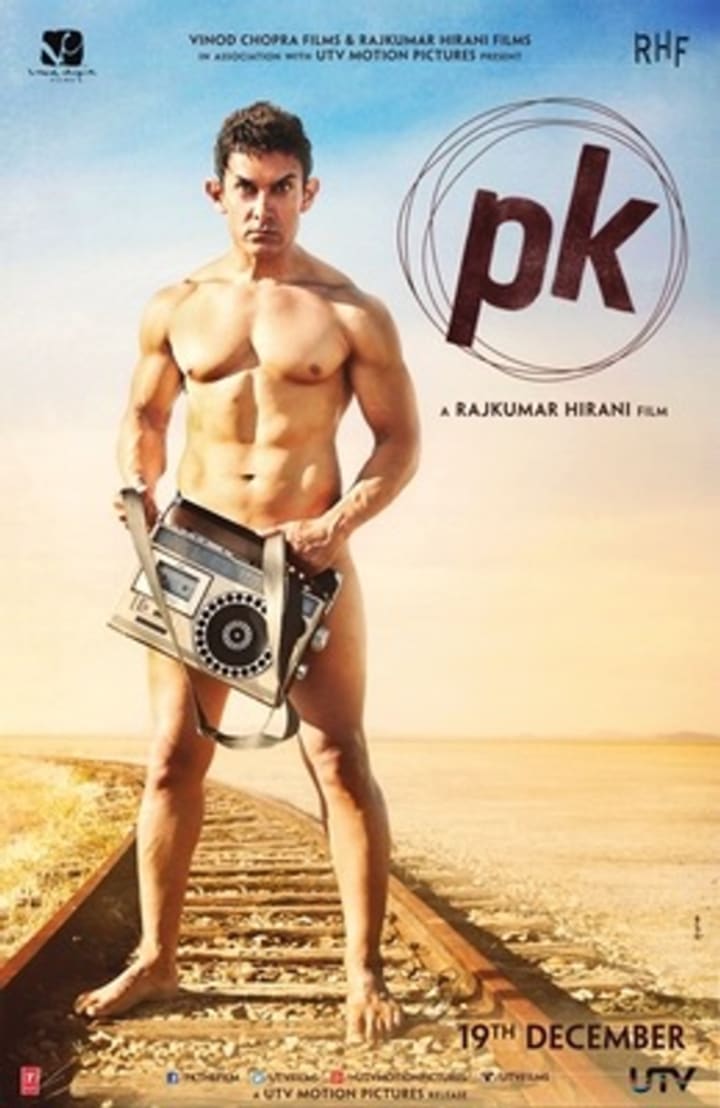
In the work PK (Vietnamese title is "innocent"), with the participation of famous actor Aamir Khan, many religious topics are explored. However, what impressed me most from the movie was not the distortion and ugliness of religion, but the question from the female lead's father (a very religious person): "There are millions of people in the world." This world believes in gods, considering them a great spiritual resource. If you overthrow the gods, what will you give them (millions of devotees)?".
The "civilized" Western press, when reviewing the song "China's economic collapse" in recent months, has made arguments from increasing spending on pagoda activities in the land of billions of people to move toward a Very old conclusion. It is an extremely unfounded and logical argument, but perhaps Marx was right when he said: "Religion is the opium of the people."
In a book published in the 1950s, it was written: "The Soviet Union will eventually collapse, because it is a country without trust." It is difficult to judge whether the above statement is a prophecy or a coincidence. However, after experiencing 70 years of Soviet atheism, modern Russia has more than 70% of its population religious. Religion, specifically Eastern Orthodoxy, has a very special history compared to the history of Slavic countries. For them, religion is a moral foundation, a cultural tradition, a thread of national unity and much more. Although "those who wanted the Soviet Union to collapse were heartless", a part of their heart was actually always devoted to the Savior.
I always say that Pakistan is a strange country. Strange because this country rejected the socialism of the Soviet Union, and also rejected the Republic and Democracy with the American model. The "successful resistance force" in Pakistan are Muslims with a period of "resistance" long enough for people to create countless cinematic motifs, both righteous, good, bad, and enlightened. "evening",... And I joked: "It turns out that the dream of these people is an Islamic Republic!".
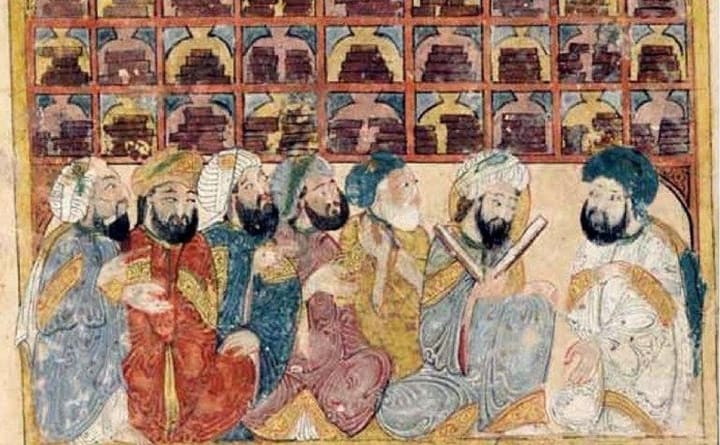
Although the "civilized" Western media has been on a decades-long campaign to spread contempt and fear of Islam represented by small extremist groups, any serious scholar must agree: without Islam, human civilization would have been regressed for centuries.
Prophet Muhammad said: "The ink of the clerics is as sacred as the blood of the warriors." Therefore, the medieval Islamic empire had an extremely superior education and knowledge. The number of public libraries of the medieval Islamic empire was so massive that when the Mongols conquered this land, ink from books thrown into the river stained the river black.
Return to the Slavic nations. Before being baptized, a Slav man could have as many wives as he wanted, and even kill them without any punishment. However, the Bible put an end to all that "barbarism".
The correct things that religion leaves behind are extremely valuable assets of human knowledge and soul.
Conclude
Although this is a (very) long article, perhaps you could still write more about religion. It's just that many constraints have stopped the flow of writing from flowing. Please leave the following words for another day.
About the Creator
Einstein’s Early Struggle: The 1895 Swiss Federal Polytechnic Entrance Exam and Lessons in Talent and Perseverance
In 1895, a 16-year-old Albert Einstein faced a setback that many might have seen as a sign of failure: he failed the entrance exam for the Swiss Federal Polytechnic in Zurich. While this moment is often remembered as a youthful stumble in the life of one of history’s greatest scientific minds, it offers profound insights into the nature of talent, learning, and perseverance. Einstein’s experience reminds us that early academic challenges do not define one’s potential, and that success often comes from persistence and leveraging one’s strengths.
By Salaar Jamali5 days ago in Journal
Affection and Healing for Yourself
During the night of the last quarter moon, I gathered my ritual supplies. I carefully handled the chunk of black tourmaline that would protect me from your overall negative and narcissistic energy. I carefully walked the house with my stick of selenite in hand, asking the universe to cleanse our working space.
By Alisha Wilkins ✒️🦋🖋️2 days ago in Fiction


Comments
There are no comments for this story
Be the first to respond and start the conversation.