
AI Tools for Smarter Investing in 2025: How to Stay Ahead of the Market Curve
From robo-advisors to predictive analytics, here’s how artificial intelligence is transforming investing — and how you can use it to your advantage.
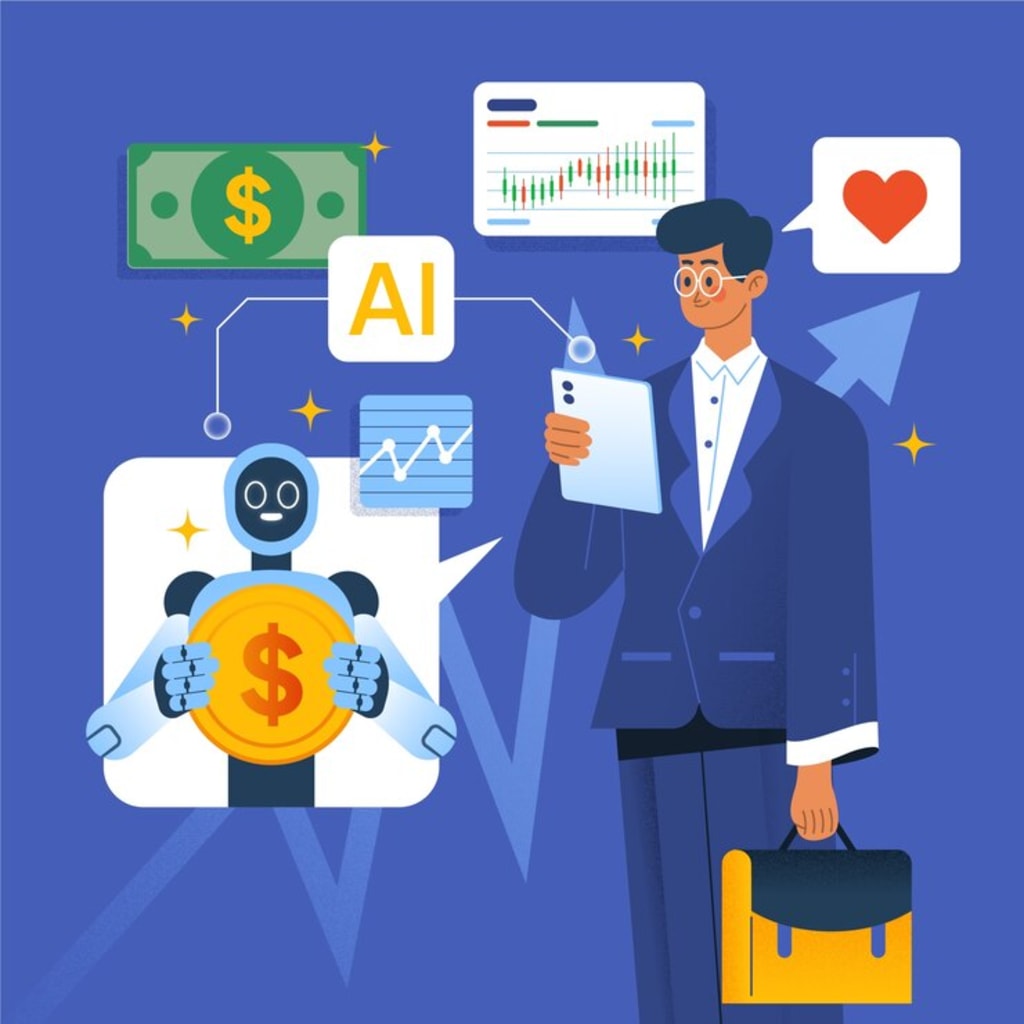
Artificial intelligence (AI) has quietly moved from the fringes of finance into the mainstream. What was once a niche technology used by hedge funds and quant traders is now available to anyone with a smartphone and an internet connection.
In 2025, AI-powered investing isn’t just about automation — it’s about enhancing your decision-making with speed, accuracy, and data-driven insight that no human could process alone. Whether you’re a seasoned investor or just starting your wealth-building journey, AI tools can help you make smarter, faster, and more informed choices.
### 1. AI-Powered Robo-Advisors: Your Portfolio on Autopilot
Robo-advisors have come a long way from their early “set and forget” models. Platforms like **Betterment, Wealthfront, and SoFi Automated Investing** now use AI to dynamically adjust portfolios in real time, responding not only to market trends but also to your personal goals and changing risk tolerance.
In 2025, many robo-advisors also integrate **tax-loss harvesting**, **automatic rebalancing**, and **thematic investing** (e.g., focusing on clean energy or AI stocks). These features mean your portfolio isn’t just reacting to the market — it’s being actively optimized every day.
---
### 2. Predictive Market Analytics: Seeing the Future in Data
AI’s predictive capabilities are perhaps its most exciting application in finance. Tools like **TrendSpider, Kavout, and Trade Ideas** use machine learning to analyze decades of market data, identifying patterns and potential price movements before they become obvious to the broader market.
Instead of manually scanning dozens of charts, AI platforms can alert you the moment a technical setup matches historical data associated with strong returns. For short-term traders, this is a game changer — for long-term investors, it offers early entry points and better timing on major buys.
---
### 3. AI for Risk Management
Investing isn’t just about making money — it’s about **not losing money unnecessarily**. AI platforms like **Zacks Investment Research AI tools** and **Portfolio Visualizer** can now simulate thousands of market scenarios in seconds, stress-testing your portfolio against potential downturns.
This allows you to adjust your allocation before trouble hits, instead of reacting after the fact. By combining this with real-time alerts, you can reduce emotional decision-making — a common pitfall for investors.
---
### 4. Sentiment Analysis: Investing in the Mood of the Market
While fundamentals and technicals matter, markets also move on **emotion**. AI tools like **MarketPsych** and **StockTwits AI sentiment trackers** scan millions of news articles, tweets, Reddit posts, and earnings calls to gauge the market’s overall mood.
For example, if AI detects rising negative sentiment toward a particular stock before earnings, you might choose to reduce your exposure. Conversely, early positive buzz could signal a buying opportunity before prices spike.
---
### 5. AI in Personal Finance Integration
Some of the best AI tools aren’t just about stocks — they integrate with your **entire financial life**. Apps like **YNAB with AI budgeting features** or **Cleo AI** help you understand your spending habits, find extra capital to invest, and forecast your savings trajectory.
When your personal finances are optimized alongside your investment strategy, you compound your results over time.
---
### 6. How to Start Using AI in Your Investing Today
You don’t need to be a tech genius to leverage AI for investing in 2025. Here’s a simple roadmap:
1. **Pick one AI tool** — either a robo-advisor or a market analytics platform — and get familiar with it.
2. **Start small** — use it alongside your existing strategy instead of replacing everything at once.
3. **Track your results** — monitor how AI suggestions compare to your manual decisions.
4. **Keep learning** — AI tools evolve quickly; update your skills regularly.
---
### 7. The Risks of AI Investing
Like any tool, AI isn’t perfect. Machine learning models are only as good as the data they’re trained on, and over-reliance on them can cause blind spots. Sudden global events — like geopolitical crises or pandemics — can still catch even the smartest algorithms off guard.
That’s why a **human-AI hybrid approach** is currently the best way forward: use AI for speed and data processing, but keep your own judgment and research as the final decision-maker.
---
**Final Thoughts**
AI is no longer just a buzzword in finance — it’s a practical, everyday tool that can help you invest smarter, faster, and more profitably. The investors who thrive in the next decade will be those who can combine AI’s strengths with their own insight, adapting quickly to a rapidly changing world.
If you start experimenting with AI tools today, you’ll be ahead of the curve when they become the standard for everyone else.
---
*Disclaimer: This article is for educational purposes only and does not constitute financial advice. Always conduct your own research or consult with a financial professional before making investment decisions.*
---
About the Creator
How AI Is Reshaping the Future of Software Development
Artificial intelligence is no longer an experiment running in parallel to engineering. It has moved directly into the production pipeline. For modern software development companies, AI is changing how code is written, tested, secured, and evolved. This shift is not cosmetic. It is structural. Businesses that treat AI as a feature will fall behind those that redesign their development model around it.
By Gabriella Browne6 days ago in Journal
Wild Card Weekend Recap: What Happens Now?
I think I figured out why I love Wild Card Weekend so much. It's because it's the first playoff anything of the calendar year. The NFL season starts in the fall, and once upon a time, the champion was crowned either on or slightly before New Year's. The evolution of the NFL schedule has resulted in the playoffs starting just into the New Year, and currently, the final week of the season falls on the first weekend of the New Year, with Wild Card Weekend coming a week after that. So yes, chronologically, the NFL's Wild Card Weekend serves as the first playoff anything of the calendar year.
By Clyde E. Dawkins7 days ago in Unbalanced



Comments
There are no comments for this story
Be the first to respond and start the conversation.