
A Prophet on the Throne of Patience: The Story of Prophet Ayyub (AS)
ধৈর্যের সিংহাসনে একজন নবী: হযরত আইয়ুব (আ.) এর কাহিনি

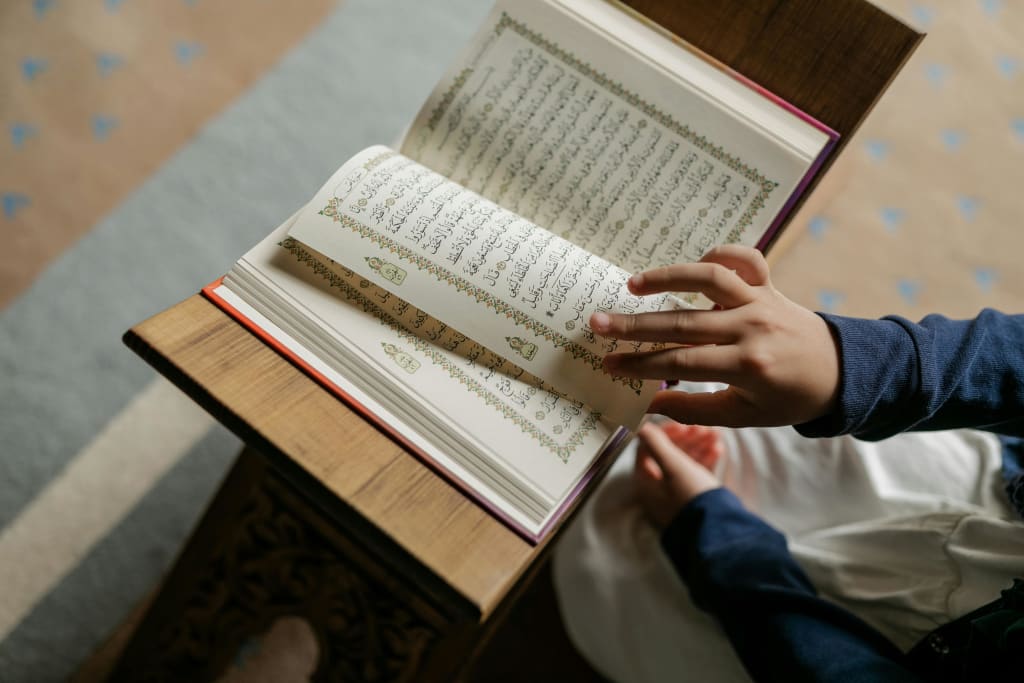
As the sun sets in the sky, the shadows of the mountains fall on the valley below, the once prosperous town is silent today. The trees stand as if they are witnesses to a history—of a prophet who lost everything, but did not lose faith; who did not cry in his sorrow, but remained grateful to Allah at every moment.
He was Hazrat Ayyub (AS).
His life was prosperous. Allah gave him endless wealth, vast fields, countless livestock, many children and influence. People loved and respected him. He himself was humble, generous and God-fearing. Despite being rich, he was never arrogant, but rather gave to the poor and helped the helpless.
Satan went to Allah and said, “Ayyub is your grateful servant, because you have given him wealth, family, and honor. If you take these away, he will become ungrateful to you.”
Allah said to Satan, “My servant Job is truly patient. Do whatever you want. But you do not have the power to enter his heart.”
Then a great test began—the ultimate test of patience.
First, his livestock died one by one. His farm, house, barn—everything was destroyed. Storms, fires, and famine struck all at once. Then one day, all his children died together in an accident. The sound of his cries and cries seemed to silence the sky.
People said, “Job must have committed a sin, otherwise why would such a calamity come?”
But Job said nothing. He closed his eyes and said, “Whatever Allah gave, He took. He is the best decision-maker.”
Satan lost. He said, “If you strike Job’s body, see how he turns away.”
Allah said, “You can strike his body, but not his soul.”
Then the horror of the disease began. His skin dried up, his skin became sore, his body rotted. No one came near him. Everyone except his wife abandoned him.
He then lay in a dilapidated hut. Day after day, month after month, year after year passed—but he had no complaint.
He said,
“I do not ask my Lord for anything, because He has kept me healthy for so many years. The years of my suffering are less than the healthy time He has given me.”
His wife—who was once a woman of a noble family, now worked in other people’s houses and brought bread to feed her husband. One day, in extreme distress, she said to Ayyub, “O Prophet of Allah, pray to Allah that He may heal you.”
Ayyub (AS) bowed his head and said,
“O my wife, should I lose faith in Allah? I am still waiting for His mercy.”
But he did not complain to Allah, but one day—after eighteen long years of suffering—he called out pitifully,
“Rabbi, anni machsaniyyad dur, wa antar hamrahar rahimin.”
“O my Lord, I am in distress, and You are the Most Merciful of the Merciful.”
(Surah Al-Anbiya, verse 83)
This supplication was not a complaint; it was not the heat of complaint; it was simply a request for refuge.
Allah said,
“Warqud birizlik; haja muhtasalun baridun wa sharab.”
“Push the ground with your foot, and a spring will flow there; bathe in it and drink.”
Cool and pure water gushed out of the ground with the blow of his foot. He bathed and drank. In an instant his body was healed. His skin became as clear as before. His strength returned to his body.
Then Allah gave him back his family, children, and wealth. Twice as much as before.
When people came to see him, they were surprised to see that Ayyub was as humble and grateful as before. He said, “I have only one pride—I have not lost patience.”
---
This story is not just the story of a prophet—it is an epic poem of patience. Hazrat Ayyub (AS) has taught us that suffering, illness, poverty—all can be part of worship, if we maintain faith, remain grateful, and do not complain.
In today’s consumerist era, when we get discouraged at the slightest adversity, Ayyub (AS) should remind us—patience does not mean just tolerance, but complete trust in Allah’s decision.
About the Creator
Keep reading
More stories from Abdul Barik and writers in Journal and other communities.
“I have made everything alive through water”
In this discussion, we will analyze a unique verse of the Quran, which is verse 30 of Surah Al-Anbiya. This verse states: “Do not those who disbelieve see that the heavens and the earth were joined together, then We separated them? And We gave life to everything from water. Will they not then believe?”—(Surah Al-Anbiya, verse 30)
By Abdul Barik8 months ago in Journal
Spain in Mourning as Death Toll Rises After High-Speed Train Collision Near Córdoba
Spain woke up to a national tragedy on Monday as emergency crews continued recovery efforts following a deadly high-speed train collision in southern Spain that has already claimed at least 39 lives, with fears the number could still rise.
By Omasanjuwa Ogharandukunabout 24 hours ago in Journal



Comments (1)
Informative.