
10 Smart Building Technologies Shaping Facility Management
Appvin Technologies

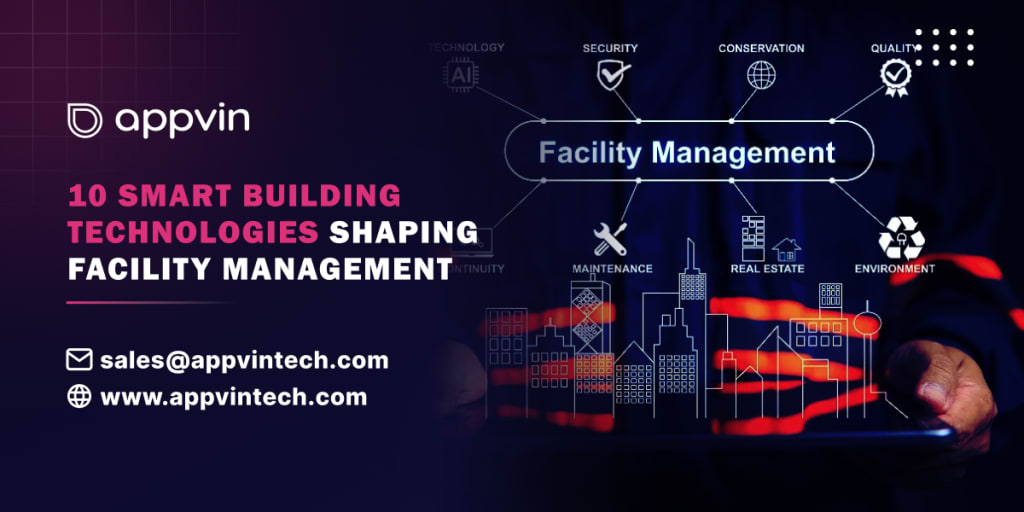
The facility management domain is fast-evolving with smart building technologies, bringing not only energy efficiency and sustainability to buildings but also changing the way facilities handle daily operations. Concepts such as the Internet of Things, Building Automation Systems, and Artificial Intelligence are being engineered into a new paradigm regarding smart buildings. Here are ten recent smart building technologies shaping facility management and saving money:
Smart buildings are reshaping the way modern facilities are managed, ensuring greater comfort for occupants and increasing the bottom line. This is done through ten recent smart building technologies that promise to help managers:
1. Internet of Things (IoT)
The Internet of Things (IoT) occupies an extremely central place in modern facility management. Networks can be used to connect and share information from IoT sensors, devices, and systems. Connected systems allow facility managers to control building operations like energy consumption, HVAC systems, and lighting in real time.
The creation of cross-platform mobile apps affords successful access to and management of IoT systems, making the overall system flexible and controllable. Facility managers can use the best cross-platform mobile apps to monitor equipment status, receive alerts, and make data-driven decisions to ensure seamless operations and reduced downtime.
2. Building Automation Systems (BAS)
Building Automation Systems (BAS) are the backbone of smart buildings. BAS integrates multiple building systems—such as HVAC, lighting, and security—into a centralized platform that can be monitored and controlled. BAS helps facility managers achieve higher energy efficiency while reducing operating costs through automation.
Cross-platform applications allow access to BAS via various devices. This makes it easier for facility managers to track building performance on the go. These systems can be customized to meet each facility's needs, ensuring smooth and enhanced building performance.
3. Building Information Modeling (BIM)
Building Information Modeling (BIM) is a revolutionary technology in facility management. It creates a digital representation of a building’s physical and functional features, offering a detailed visual model. This information can be utilized at every stage of a building's lifecycle, from design through construction to maintenance and management.
The power of BIM can be further enhanced through cross-platform mobile apps, enabling remote access to data. Facility managers can view 3D building models, retrieve critical information, and collaborate with other teams, managing building assets efficiently.
4. Virtual Reality (VR)
Virtual Reality (VR) has moved beyond entertainment and now plays a key role in facility management. VR allows facility managers to conduct virtual walkthroughs of buildings and spaces, offering a visual look at design concepts, maintenance plans, and potential upgrades.
By incorporating VR tools into enterprise mobile applications, facility managers can monitor building conditions and carry out inspections without being physically present. This saves time and ensures safety by enabling managers to conduct risk assessments and safety checks remotely.
5. Artificial Intelligence/Machine Learning (AI/ML)
The integration of Artificial Intelligence (AI) and Machine Learning (ML) into facility management systems has significantly improved operational efficiency. AI-powered systems can assess vast amounts of data from smart sensors, predict maintenance needs, and optimize energy usage automatically.
For example, AI systems can predict when equipment is about to fail and schedule maintenance before downtime occurs. This predictive maintenance approach reduces costly emergency repairs. Cross-platform app development ensures that facility managers can access AI insights from any device, improving decision-making and responsiveness.
6. Aerial Drones
Aerial drones are another new technology transforming facility management. Drones allow facility managers to inspect large buildings, including roofs, without the need for scaffolding or ladders. Drones provide high-quality visuals and real-time data, enabling facility managers to inspect buildings more efficiently.
Cross-platform mobile apps can allow facility managers to control drones remotely. Drones send aerial footage that enables quick decision-making and improves overall building safety.
7. Augmented Reality (AR)
Augmented Reality (AR) has become a valuable tool in facility management, especially in maintenance and repairs. AR provides technicians with real-time information about building systems as they perform maintenance tasks. AR overlays digital information onto physical objects, guiding technicians through complex repairs with visual cues.
By integrating AR-based tools with cross-platform mobile apps, facility managers can access these tools on mobile devices, either on-site or remotely. AR increases the efficiency of maintenance tasks, reduces downtime, and ensures accuracy in repairs.
Applications of Smart Building Technologies
Smart HVAC Systems
Smart HVAC systems automatically adjust heating, ventilation, and air conditioning settings based on occupancy, weather conditions, and energy efficiency goals. These systems use sensors and AI algorithms to optimize comfort while minimizing energy consumption.
Energy Management Systems (EMS)
Energy Management Systems (EMS) help facility managers monitor, control and optimize energy usage across a building. By integrating EMS with cross-platform mobile apps, managers can track energy performance in real time, making informed decisions to reduce costs and improve sustainability.
Predictive Maintenance Tools
Predictive maintenance tools use data from IoT sensors and AI algorithms to predict when equipment will fail. Facility managers can schedule maintenance before breakdowns occur, reducing downtime and repair costs. Cross-platform applications enable managers to access predictive maintenance data from any device.
Smart Lighting
Smart lighting systems automatically adjust lighting levels based on occupancy and daylight availability. These systems can be controlled remotely using cross-platform mobile apps, allowing facility managers to create custom lighting schedules that enhance energy efficiency and occupant comfort.
Access Control Systems
Access control systems provide secure entry and exit to buildings, restricting unauthorized access. These systems can be managed through mobile devices, ensuring real-time access control from anywhere.
Benefits of Smart Building Technologies
Energy Efficiency: Smart building technologies like IoT sensors, EMS, and smart lighting reduce energy consumption, improving energy efficiency and lowering carbon footprints.
Cost Savings: Automated processes through BAS and predictive maintenance tools help cut operational costs by optimizing energy use and avoiding costly repairs.
Enhanced Security: Smart access control systems and surveillance technologies improve building security by limiting access to authorized personnel.
Increased Comfort: Smart HVAC and lighting systems create optimal conditions for building occupants, improving comfort and productivity.
How to Create Smart Building Technology Solutions
To create successful smart building solutions, developers should focus on scalability, user-centric design, and security. Partnering with an enterprise mobile app development company like Appvintech can accelerate the development of cross-platform applications that enhance facility management.
Understand Market Needs: Identify facility managers' specific challenges and develop solutions that address those needs.
Discover Emerging Technologies: Stay informed about innovations in AI, IoT, and energy management.
Scalable Platforms: Ensure that the platform can scale with building growth or technology integration.
Data Analytics: Use data to drive decision-making and optimize building performance.
Energy Efficiency: Focus on energy-efficient solutions to reduce consumption and promote sustainability.
Security: Implement strong security measures to protect building systems and occupant data.
Conclusion
Smart building technologies are transforming facility management by enhancing efficiency, reducing costs, and improving occupant comfort. From IoT and AI to drones and AR, these innovations are shaping the future of intelligent spaces. By embracing cross-platform mobile app development and working with an enterprise mobile app development company like Appvintech, facility managers can stay ahead of the curve and unlock the full potential of smart building technologies.
About the Creator
Appvin Technologies
AppVin Technologies: Your go-to software development company for innovative solutions driving business growth. Harness the power of technology today.
Keep reading
More stories from Appvin Technologies and writers in Journal and other communities.
Software Development with AI: The Cutting-Edge Tools and Techniques Shaping the Future
As the world evolves with time, the software development industry continues to see innovative solutions and advanced methodologies emerge as artificial intelligence (AI) increases. This evolution has not only automated tasks but has also improved the overall quality of applications and how developers approach their craft. This blog post focuses on how AI tools and techniques are changing the world of software development, particularly in outlining the best cross-platform apps developed in mobile app development during the rise of enterprise mobile app development companies and their benefits in collaboration.
By Appvin Technologiesabout a year ago in Journal



Comments (1)
Thanks for the info I will try to figure it out for more https://www.yourtexas-benefits.com