
When Grammar meets giggles: Linguistic Deviation in digital Memes Part 2
Exploring How Internet Humor Bends Language Rules for Laughs and Likes



1. Graphological Level:
Font and Layout: Casual digital font, likely mimicking everyday text or memes on social media. This contributes to a humorous, informal tone.
Quotation Marks: Direct quotations of sentences suggest an analysis of grammar rules, but the meme’s ironic tone contrasts with the typical seriousness of grammar.
Emphasis by Repetition: The repetition of pronouns (“her her” vs “him him”) visually foregrounds the absurdity or confusion in English grammar.
2. Lexical Level :
Colloquial Language: Phrases like “After knowing that” and “double standard” reflect casual, everyday English.
Irony/Sarcasm: The phrase “double standard” is a strong, emotionally loaded term often used in social justice contexts. Its use here is humorous and ironic.
3. Syntactic Level (Sentence Structure):
Contrast Structure: The meme uses parallel structure in the examples (“Give her her book” vs. “Give him him book”) to highlight inconsistency.
Elliptical Clause: “Why English has double standard” drops the article “a” before “double standard”, which reflects spoken/informal style and may be intentional to match meme
conventions.
4. Semantic Level (Meaning):
Surface Meaning: It’s confusing that “her her” is acceptable but “him him” is not.
Deeper Meaning: The meme critiques the irregularity and exceptions in English grammar.
Play on Logic: The reader is invited to think that language should follow mathematical or logical consistency.
5. Stylistic Deviation:
Grammatical Deviation: The second sentence “Give him him book” is ungrammatical — creating comic effect and emphasizing how similar forms are treated differently.
Register Deviation: The phrase “double standard” typically belongs to political or ethical discourse.

1. Graphological Level:
Font and Layout: Casual digital font, likely mimicking everyday text or memes on social media. This contributes to a humorous, informal tone.
Quotation Marks: Direct quotations of sentences suggest an analysis of grammar rules, but the meme’s ironic tone contrasts with the typical seriousness of grammar.
Emphasis by Repetition: The repetition of pronouns (“her her” vs “him him”) visually foregrounds the absurdity or confusion in English grammar.
2. Lexical Level :
Colloquial Language: Phrases like “After knowing that” and “double standard” reflect casual, everyday English.
Irony/Sarcasm: The phrase “double standard” is a strong, emotionally loaded term often used in social justice contexts. Its use here is humorous and ironic.
3. Syntactic Level (Sentence Structure):
Contrast Structure: The meme uses parallel structure in the examples (“Give her her book” vs. “Give him him book”) to highlight inconsistency.
Elliptical Clause: “Why English has double standard” drops the article “a” before “double standard”, which reflects spoken/informal style and may be intentional to match meme
conventions.
4. Semantic Level (Meaning):
Surface Meaning: It’s confusing that “her her” is acceptable but “him him” is not.
Deeper Meaning: The meme critiques the irregularity and exceptions in English grammar.
Play on Logic: The reader is invited to think that language should follow mathematical or logical consistency.
5. Stylistic Deviation:
Grammatical Deviation: The second sentence “Give him him book” is ungrammatical — creating comic effect and emphasizing how similar forms are treated differently.
Register Deviation: The phrase “double standard” typically belongs to political or ethical discourse.

1. Graphological Deviation:
Bold White Text: The meme uses bold white font in all caps for emphasis and clarity. It draws the reader’s attention directly to the text.
Use of Quotes (“Dark white”): Quotation marks emphasize the absurdity and contradiction in the phrase, highlighting it as the punchline.
2. Lexical and Semantic Deviation
Phrase “Dark white”:
Oxymoron / Semantic Contradiction: Combines two antonyms—‘dark’ and ‘white’—which don’t logically coexist. This contradiction creates humor and absurdity.
Mocking Materialism: It exaggerates preferences to a ridiculous level, poking fun at consumerist attitudes.
3. Syntactic Features:
First-person narrative (“I and my Bestie”):
Creates a personal tone, mimicking how people typically speak about desires and excuses in social media posts.
Unusual word order (“I and my Bestie” instead of “My Bestie and I”) subtly reflects self-centred or comic emphasis.
4. Irony:
Monkey with exaggerated hand gestures: Often used in memes to signify frustration, sarcasm, or mocking reflection.
Luxury urban background (skyscrapers, G-Wagon): Represents wealth and aspiration.
5. Pragmatic and Discourse Level:
Hyperbolic excuse (“color not available”) implies how some people justify their lack of wealth or luxury with comically trivial reasons.
Audience Engagement:
Targets a social media-savvy audience familiar with trends, memes, and luxury references like the G-Wagon.
6. Stylistic Tone:
Humorous and Satirical:
The overall tone mocks modern consumer culture and self-justification.

To be countinued..
About the Creator
Salar Khan
✨ Storyteller | 🖋️ Writer of Words That Matter
A writer fueled by curiosity, creativity, and a love for powerful storytelling.Diving into cultural commentary. My goal is simple: to connect, inspire, and spark meaningful conversations.
Keep reading
More stories from Salar Khan and writers in Humor and other communities.
From ad men to mad men
It's after 2am in the morning when a local police patrol vehicle in Northern New Jersey spots a figure costumed as Quasimodo, The Hunchback of Notre Dame, proceeding southbound on the sidewalk along Lydecker Street. Though the hunchback’s costume stuffing offers added insulation, it's January, and friggin’ freezing. Carefully, the officers slow down, gently question the subject, and offer him a ride home.
By David W. Maury4 days ago in Humor
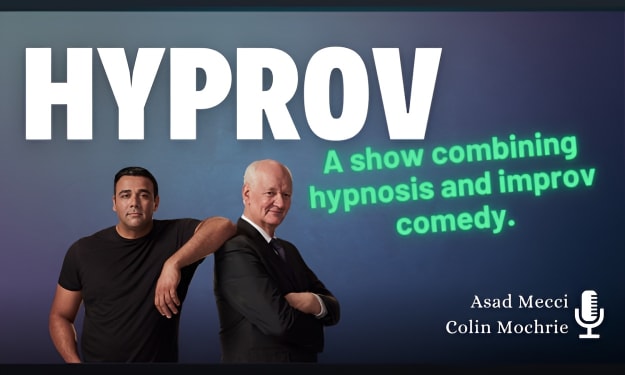
Hyprov Review: A Blend of Hypnosis & Improv That Will Make You Go Gaga
You would have seen and experienced a lot of comedy shows, but have you heard about Hyprov, a unique and personalised blend of hypnosis and improv? If not, you are seriously missing out on something truly fun and fascinating. Just imagine you went to a Hyprov show expecting some traditional humour, jokes, and stage play. But what you get is an experience that truly engages you, keeps you on the centre stage, and makes you laugh uncontrollably.
By Marta Larsonabout 6 hours ago in Humor



Comments (1)
This meme's graphological elements really set the tone. The casual font makes it feel like a social media post. Lexically, the colloquial language and ironic use of "double standard" are spot-on. It's funny how it mocks grammar rules. Syntactically, the contrast and elliptical clause add to the humor. Do you think this kind of meme could make people more aware of English grammar quirks?