
When Grammar meets giggles: Linguistic Deviation in digital Memes Part 1
Exploring How Internet Humor Bends Language Rules for Laughs and Likes

This article is written by me and my fellows
ENJOY.
Abstract:
In today’s digital world, memes have become a powerful way to share humor, opinions, and
cultural ideas. This research looks at how language and humor come together in internet memes by focusing on linguistic deviations—intentional changes or “mistakes” in language that help
create humor and meaning. These deviations can include unusual word choices, grammar errors, spelling changes, and new ways of using meaning, and they play a big role in making memes
funny or thought-provoking. The study explores how breaking grammar rules like using the wrong verb form, mixing languages, or writing incomplete sentences is often done on purpose. These changes are used as stylistic tools to express sarcasm, irony, or social messages. We will analyze selected memes to find common language patterns and see how these funny or creative “errors” work together with images to deliver a message. This research shows that memes are not just silly jokes, but creative examples of how people use language in new and expressive ways.
The paper argues that instead of weakening language, these deviations show how language is
evolving in fun, flexible, and meaningful directions in the digital age. Using stylistic analysis, we study selected memes and identify how their language breaks common rules in fun and creative ways. We look at four main types of deviations: lexical (word choice), grammatical (sentence
structure), Graphological (spelling and punctuation), and semantic (meaning). This analysis helps us understand how these playful forms of language are used in memes to grab attention, express emotions, or reflect social issues.
Keywords:
Linguistic Deviation, Stylistic Analysis, Digital Memes, Internet Language, Humour in Language
Theoretical Framework:
This research is grounded in the principles of stylistics, particularly focusing on Geoffrey Leech’s (1969) classification of linguistic deviation, which includes deviations at the lexical,
grammatical, graphological, semantic, phonological, dialectal, and register levels. Leech argues that such deviations are deliberate choices by writers (or in this case, meme creators) to create
foregrounding—drawing attention to the form of language itself to produce stylistic effects such as humor or emphasis. The study also draws from Roman Jakobson’s (1960) model of language functions, especially the poetic and conative functions, which highlight the aesthetic and
persuasive use of language. Additionally, concepts from pragmatics, particularly Grice’s
Cooperative Principle and implicature theory, inform the analysis of how memes rely on shared cultural knowledge and contextual cues to convey layered meanings. By applying these theories to meme texts, the study views memes as modern digital texts that utilize stylistic deviation to engage audiences and create humorous or ironic impact.
Analysis:
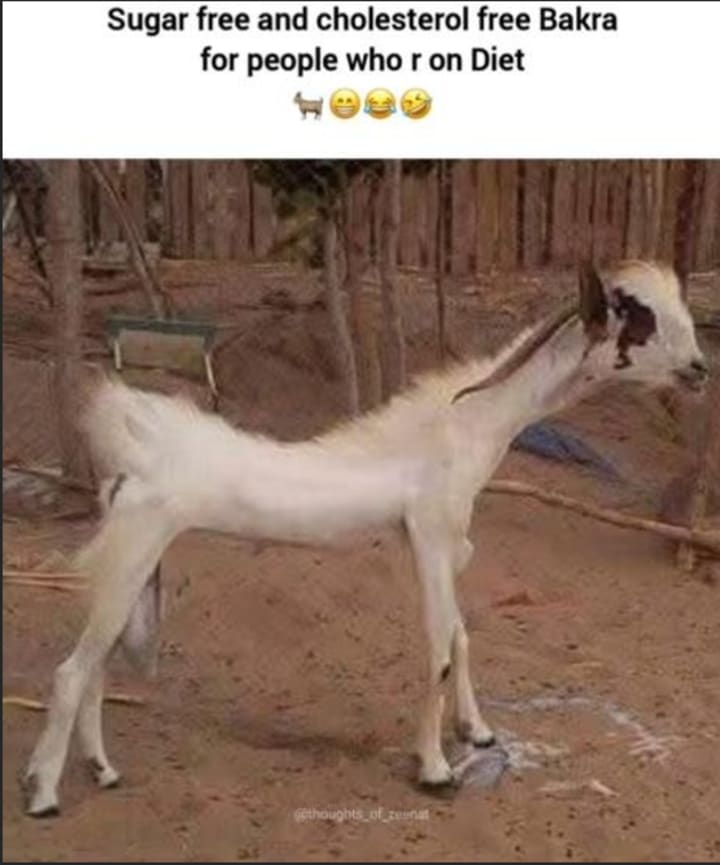
1. Lexical Deviation:
Informal Lexis: The use of "r" instead of "are" is an example of texting or internet slang. It deviates from standard English for brevity and a casual tone.
Code-switching: The word "baqra" (Urdu/Hindi for "goat") is inserted into an otherwise English sentence. This creates a humorous cultural blend for audiences familiar with both languages.
2. Semantic Deviation:
Literal vs Figurative Meaning:
The phrase “sugar free and cholesterol free baqra” is absurd because a goat (baqra) is naturally neither processed with sugar nor considered in terms of being sugar-free.
The humour lies in treating a live animal as a labelled diet product, similar to how food items are branded in supermarkets.
3. Pragmatic Stylistics:
Cultural Context:
Refers to Eid-ul-Adha, where people buy goats (baqra) for sacrifice.
The meme humorously applies health-conscious marketing language to a religious/cultural ritual, targeting modern concerns about dieting and health.
Irony:
There’s an ironic mismatch between a religious/cultural practice (sacrificing a goat) and diet- conscious product advertising.
4. Graphological Features:
The meme’s visual layout (likely a picture of a goat with the caption) supports the humour.
The simple, informal font and language reflect internet meme culture, which values brevity and visual impact.
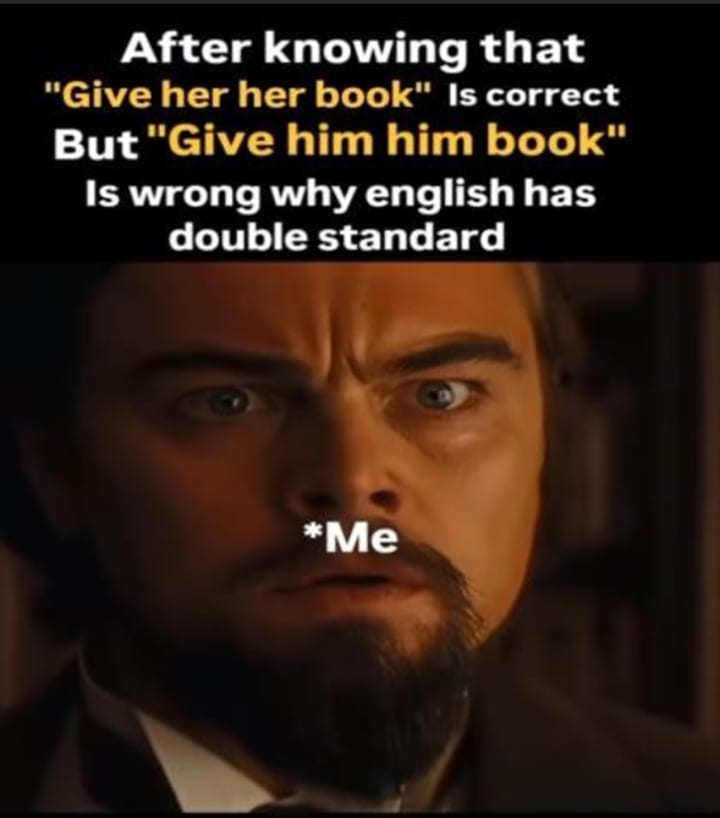
For more wait for secound part because this article is too long
About the Creator
Salar Khan
✨ Storyteller | 🖋️ Writer of Words That Matter
A writer fueled by curiosity, creativity, and a love for powerful storytelling.Diving into cultural commentary. My goal is simple: to connect, inspire, and spark meaningful conversations.
Keep reading
More stories from Salar Khan and writers in Humor and other communities.
From ad men to mad men
It's after 2am in the morning when a local police patrol vehicle in Northern New Jersey spots a figure costumed as Quasimodo, The Hunchback of Notre Dame, proceeding southbound on the sidewalk along Lydecker Street. Though the hunchback’s costume stuffing offers added insulation, it's January, and friggin’ freezing. Carefully, the officers slow down, gently question the subject, and offer him a ride home.
By David W. Maury4 days ago in Humor
Canada Conducts Massive Airstrikes on Minnesota to Aid Heroic Protesters Battling Authoritarian I.C.E. Regime
In an act of compassion, the Canadian Armed Forces have initiated massive airstrikes against key centers of oppression in Minneapolis, in an action dubbed "Operation De-Icing" that supports local protesters demanding an end to the brutal regime of U.S. Immigration and Customs Enforcement (I.C.E.).
By Scott Christenson🌴2 days ago in Humor




Comments (2)
You've got an interesting take on memes and language. I've noticed how memes often play with words to be funny. Like that time I saw a meme with a misspelled word used creatively. It made me laugh. Do you think these language deviations in memes are more popular among younger generations? And how do they affect our understanding of proper grammar?
👏👏