
Why do we need relationships?
Sometimes we need them. And sometimes we need to heal from them.


I’ve often found myself wondering, in the quiet moments alone with my thoughts: do we truly need relationships? Or are we simply living under the illusion of need, while everything within us screams self-sufficiency?
Are relationships a necessity? Or are they just a habit passed down from a time when humans were too weak to face life on their own?
But let’s start with a psychological perspective. A relationship isn’t just about having someone to talk to; it’s a deep psychological structure embedded in our very core from the moment we’re born.
John Bowlby, the founder of Attachment Theory, believed that we are shaped by our earliest relationships. The attachment style we develop in childhood — whether it’s secure, anxious, or avoidant — stays with us for life, shaping how we love, how we need, and how we retreat from others.

At our core, I believe we are social beings. We are born crying out for warmth, we grow up searching for those who resemble us, and we love because we need to see ourselves reflected in someone else’s eyes. Relationships are mirrors — sometimes they distort our image, and other times they reveal the most beautiful parts of who we are.
The First Relationship… is the Ultimate Model
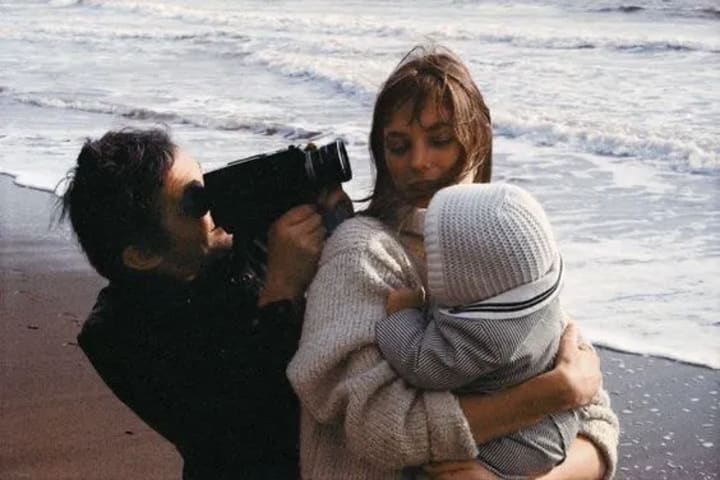
When we ask ourselves whether we truly need relationships, we can’t overlook the origin of all human connections: the relationship with our parents. It is the first bond we experience once we’re born into, before we can even comprehend, where we love before we understand, and through which we form our earliest impressions of ourselves and the world.
The parent-child relationship is our first model — it becomes our emotional language, learned without instruction. Through it, the heart begins to shape its understanding of love, tenderness, trust, and even the fear of loss.
But this doesn’t stop at family relationships. Our internal relationships (with ourselves and our family) are deeply intertwined with our external ones (with friends, partners, and society). They influence us in subtle, far-reaching ways.
Sometimes, a simple moment can shake us — a reaction that feels disproportionate — and only years later do we realize its root lies in a harsh tone from a mother, or an emotionally absent father.
Relationships are never truly forgotten, even when we forget their details. They’re stored in the body — in our nerves, our responses, our emotional reflexes, and in the way we see ourselves.
But Why Do We Even Need Relationships?
In the mid-20th century, Abraham Maslow introduced his hierarchy of needs, placing love and belonging at the center of the journey toward self-actualization.
Maslow’s hierarchy shows that we don’t evolve in isolation — we grow by being part of something: a bond, a connection, a shared warmth. Even today, studies continue to show that the human need to belong is as essential as the need for air.
Relationships awaken so much within tenderness, hope, pain, disappointment, and love. They reveal how vulnerable and how strong we are, both at once. They are the never-ending school of life, one we can’t simply skip.
So, do we need them? Yes or maybe not, because we can’t live without them, but because life feels incomplete without them.
Imagine a day with no story to share, no voice to bring order to your chaos, no hand to gently rest on your heart when the world feels too heavy.
But do we need every relationship? Absolutely not.
Some relationships are a burden. Spaces filled with noise, pressure, comparison, expectations, unresolved wounds, and projected emptiness.
In a time where relationships are measured by response time, red hearts, and public visibility, it seems we’re no longer seeking connection; we’re seeking proof of existence.
What we truly need are real, honest relationships that resemble our souls, not our appearance. We need relationships that bring ease, not exhaustion. We need to be loved — not consumed.
Researchers Mark Leary and Roy Baumeister spoke of the “need to belong” as one of the most powerful psychological drives.
The absence of this connection can lead to anxiety, depression, weakened immunity, and even early death.
On the other hand, healthy relationships reduce stress and improve overall life quality — as confirmed by the American Psychological Association (APA).
But not every connection represents a healthy need.
We don’t need all relationships; we need the ones that reflect and revive us.
This is where psychologist Arthur Aron’s Self-Expansion Model comes in. He proposed that relationships help us discover ourselves, not lose ourselves. They are a space to learn, not surrender. And when a relationship is genuine, it adds to us: new skills, emotions, perspectives, even a new sense of identity through which we grow.
But have you ever wondered why relationships make us happy, even something as simple as a message with an emoji??

Interestingly, this has been studied. Research shows that even the simplest expressions of connection — like emojis in messages — increase intimacy and satisfaction in relationships, according to a study published in PLOS One.
And perhaps, at some points in life, we need to be without relationships altogether — to withdraw, to rest, to repair, to reflect, to redefine what we truly deserve. Relationships are not a constant necessity; they are a shifting experience.
Sometimes we need them. Sometimes we need to heal from them.
In the end, no one can decide whether you need relationships — except your heart. Only it knows: does the relationship add or subtract? Does it revive you, or does it extinguish you?

Between needing and letting go, we continue to live, trying to understand, to build, to break, and to rebuild ourselves again. Every relationship we enter is, in one way or another, an attempt either to reclaim what we’ve lost or to protect what’s left within us.
And when we realize that, we become more aware, more gentle with ourselves, and more precise in choosing who we let into our hearts
.........
About the Creator
Manal
I write to breath
The Girl Who Blinked: How a Sixteen-Year-Old Stopped a Massacre by Trusting the Knot in Her Stomach
The true story of Emily Carson, the Colorado high school student who prevented a school shooting by noticing a subtle detail and reporting it, highlighting the power of situational awareness.
By Frank Massey 2 days ago in Humans


Comments
There are no comments for this story
Be the first to respond and start the conversation.