
"Why Are We Afraid of Corpses?"
Uncovering the Evolutionary, Cultural, and Psychological Roots of a Universal Fear

Why Are Humans Afraid of Corpses? The Evolution of a Deep-Rooted Fear
Death is inevitable, but few things trigger human fear as intensely as the sight of a lifeless body. Whether in horror films or real-life tragedy, the presence of a corpse can invoke discomfort, dread, or even panic. But why does this happen? Why do humans feel a profound fear of dead bodies, especially those of their own species, while animals often do not? The answer lies in a fascinating intersection of evolution, psychology, and cultural conditioning.
The Origin of Fear: A Survival Instinct
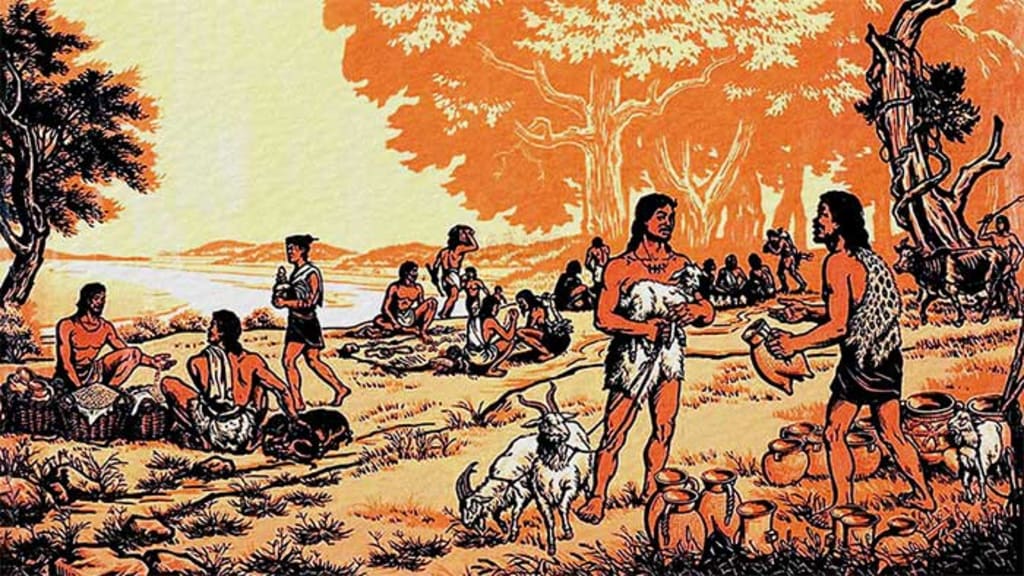
To understand our fear of corpses, we need to go back to our earliest ancestors. In prehistoric times, humans lived in close contact with death. Life was harsh, and violence, disease, and hunger were constant threats. In this context, dead bodies—especially those that had decomposed—signaled danger. The smell of decay meant bacteria, infection, and disease. If one member of a tribe died under mysterious or gruesome circumstances, others could be at risk. Avoiding the dead became a survival strategy.
In fact, early humans likely learned through bitter experience that consuming or coming into contact with the corpses of fellow humans often led to sickness. Unlike scavenger animals that evolved to digest rotten flesh, humans didn’t possess the same biological resilience. Over time, this aversion to the dead became hardwired—a kind of evolutionary alarm bell, warning us of possible contagion.
The Cultural Transformation of Death
As societies grew more complex, so did our relationship with death. We moved from primal fear to ritual and symbolism. The dead were no longer simply avoided; they were buried, mourned, and remembered. This marked the beginning of funeral practices, which served not only to dispose of bodies safely but also to honor the deceased and provide closure for the living.
These cultural practices weren’t just spiritual or emotional. They were practical too. Burying the dead helped prevent the spread of disease. Over centuries, these practices evolved into deeply held beliefs about respect, sanctity, and the afterlife. In most cultures today, the dead are treated with reverence. Their bodies are sacred, and handling them is the domain of specific professionals—morticians, priests, medical examiners—who often undergo training that desensitizes them to the visceral reactions most people experience.
As a result, the average person rarely comes into contact with a dead body. Death has become somewhat “sterilized”—hidden behind hospital curtains or embalmed behind polished coffins. This separation only deepens the psychological gap between the living and the dead, reinforcing fear through unfamiliarity.
Why Animals Don’t Share This Fear
Interestingly, animals do not seem to share the same fear of dead members of their own species. While some species—like elephants or dolphins—appear to mourn the loss of a companion, they do not respond with fear or disgust. Many carnivores will eat their own kind if food is scarce, and even social animals may simply move away from a dead member without emotional turmoil.
This difference again points to evolution and intelligence. Animals operate largely on instinct, while humans are conscious of mortality in a unique way. We don’t just see death—we contemplate it. We understand that we, too, will die someday, and a corpse is a powerful, tangible reminder of that fact. In essence, when we look at a dead body, we are not only confronted with decay but also with our own impermanence. This self-awareness amplifies the fear.
Media and Myth: Fueling the Fear
Modern media, especially horror films, have taken this instinctive fear and magnified it. Corpses are portrayed as grotesque, cursed, or even reanimated. From zombies to vengeful spirits, the dead are often depicted as threats rather than simply the aftermath of life. These narratives tap into primal fears and reinforce the idea that corpses are something to dread.
Moreover, in many cultures, the dead are associated with spiritual taboo. Ghost stories, superstitions, and religious beliefs often paint the dead as beings who can harm the living if not properly respected. As children, we are taught to avoid cemeteries at night, not speak ill of the dead, and fear haunted places. Over time, these stories form subconscious associations that contribute to adult phobias—particularly necrophobia, the fear of corpses.
A Learned Fear—or a Learned Indifference?
Interestingly, not everyone is afraid of corpses. Funeral workers, medical students, soldiers, and forensic scientists often interact with dead bodies regularly. Over time, repeated exposure dulls the initial fear. For them, the dead become clinical subjects, not objects of horror.
This suggests that, while the fear of corpses may have evolutionary roots, it is also heavily influenced by education and experience. If we grow up in an environment where death is normalized rather than hidden—such as in traditional communities with open-casket funerals or ancestor worship—our reaction might be far more calm and respectful than fearful.
On the other hand, in hyper-modern societies where death is medicalized and hidden away, any encounter with a corpse can seem alien and traumatic.
Conclusion: Fear as a Mirror of Ourselves
Ultimately, our fear of dead bodies is less about the dead—and more about the living. It reflects our fear of disease, our discomfort with the unknown, and most of all, our fear of mortality. Corpses symbolize the end of identity, emotion, and existence. They are a stark reminder that no matter how powerful, successful, or beloved someone was, death is the great equalizer.
Yet, understanding this fear can also be empowering. By exploring its origins—in biology, culture, and psychology—we begin to reclaim our relationship with death. Instead of seeing corpses as terrifying anomalies, we can begin to see them as what they are: the natural conclusion of life.
About the Creator
Eleanor Grace
"Dream big.Start small.Act now."
Keep reading
More stories from Eleanor Grace and writers in Humans and other communities.
Lonely Minds, Restless Nights: How Isolation Breeds Nightmares
We often think of loneliness as an emotional ache, something quietly tucked away in the corners of our daily lives. But what if that feeling is reaching into the deepest parts of our minds—into our sleep—and haunting us while we rest?
By Eleanor Grace10 months ago in Humans
Autonomy Is The Real Privilege
Good morning, freedom-seekers! Today we’re gonna be looking at autonomy. A strange word, I know; one many would probably look at blankly and run away from on sight. We’re gonna figure out what it actually means, consider how it’s achieved, and decipher just how deeply most of us are tangled up in dependence without realising it.
By That ‘Freedom’ Guyabout 10 hours ago in Humans




Comments
There are no comments for this story
Be the first to respond and start the conversation.