
What Your Nails Say About Your Health, Hidden Signs of Serious Illness You Shouldn’t Ignore
Discoloration, ridges, or spots on your nails could signal conditions like anemia, heart disease, or fungal infections—here’s what to watch for and when to see a doctor

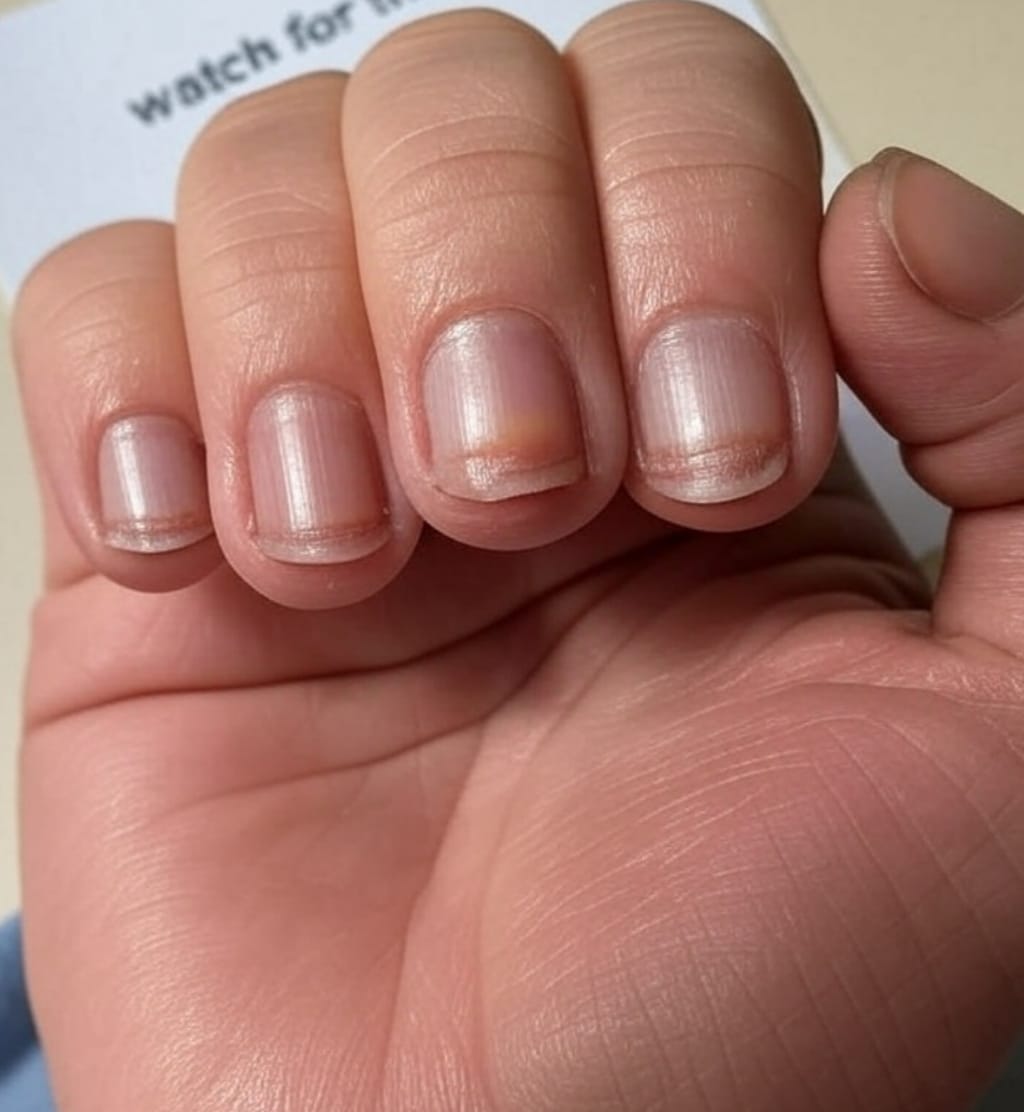
Taking Care of This Body Part is More Important Than Visiting a Beauty or Nail Salon
This part of the body often gives early signs of health issues, long before other symptoms appear.
That’s why paying attention to the color and any changes in your nails is important. Spots, marks, or other unusual signs on your nails could be warnings of an upcoming illness.
Whenever this happens, it is recommended to consult a dermatologist, so the doctor can understand your condition through blood tests or other diagnostics.
If a serious issue is suspected, a specialist may also recommend a biopsy.
There are many diseases that can affect one or more parts of the body — whether it's your hands or legs — and they are often linked to the endocrine system, nutrition, or the immune system.
The good news is: Not all nail changes are signs of serious health problems. Sometimes, they’re harmless or due to normal changes.
According to dermatologist Valeria Zanella Franzon, "Toenails receive less care and often face more problems — for example, they can become yellow and thick."
Below, we describe a few conditions that may signal upcoming health problems and need attention:
1. White Nails
If someone notices unusual changes in their nails, the first thing they should observe is the color.
White nails may indicate mycosis, psoriasis, pneumonia, or even heart disease.
A diet low in nutrients or protein can also cause this.
Dermatologist Juliana Paquet says:
"Pale nails can be a sign of anemia."
"A lack of iron in the body can make nails spoon-shaped or hollow."
There is also a condition called leukonychia, where white spots appear on nails.
This is generally harmless and doesn’t indicate any serious internal issue.
To treat these conditions, doctors usually try to identify the root cause.
If your nails start turning white, visit a dermatologist and follow up with any recommended medical tests so you can consult a specialist if needed.
2. Yellow Nails
Yellow nails can be caused by:
Genetics
Aging
Fungal infections
In severe cases: psoriasis, HIV, or kidney disease
People who smoke heavily may notice yellowing — especially on the thumb and index finger, due to direct contact with tobacco.
3. Nail Pitting (Tiny Dents or Dots on Nails)
Dermatologists call this “pitting.” It usually looks like small dents and is commonly found on one nail.
It can be related to:
Atopic dermatitis (eczema)
Psoriasis
Skin or hair disorders
According to Juliana Toma, dermatologist at the Federal University of São Paulo:
“If white spots are clearly visible on the nails, they might be linked to alopecia areata (sudden hair loss). In such cases, the patient should treat the underlying hair issue.”
In rare cases, it can also be a sign of syphilis, a sexually transmitted disease.
4. Blue Nails
This is more common than many think.
Blue nails may result from certain medications — such as acne or malaria drugs.
A doctor should check whether a specific drug needs to be stopped or replaced.
5. Recurrent Fungal Nail Infections
Mycosis (fungal infection) can return if treatment is stopped early.
If not properly monitored, it can recur frequently, especially on toenails.
Doctors recommend continuing treatment for:
6 months for toenails
3–4 months for fingernails
The patient should take medications on time and only stop when the doctor says so.
Also avoid places where infections spread easily, such as:
Tight, warm shoes
Swimming pools
Saunas
6. Nail Ridges
These appear like vertical or horizontal lines on the nails.
Often seen after:
High fever
Chemotherapy
If dark-colored ridges appear on only one finger, it could be a sign of melanoma, a type of skin cancer.
7. Brittle or Broken Nails
When nails become so dry they start cracking or falling off.
In such cases, dermatologists recommend moisturizing the nails with creams or ointments.
Other causes of brittle nails:
Lack of protein
Deficiency of biotin (Vitamin B7)
Lack of other B vitamins
Vegetarians can prevent nail breakage by taking Vitamin B12 and other nutritional supplements.
About the Creator
Keep reading
More stories from Real content and writers in Humans and other communities.
Skate Date
The morning of my first official date with Zane I woke up to bad omens. As soon as my alarm went off, I went to rub the sleep from my eyes and got jolted awake as something inside my eye scratched across my cornea. I felt my eye water profusely, already knowing that it would be bloodshot. I tried flushing it with water, and while it helped ease the discomfort, it did not remove the foreign object; occasionally I still felt it scratching around in there as I got ready. This is not an uncommon experience for me, as I have what one optometrist at Walmart described as a 'lazy blink.' My eyelids don't meet when I blink or close my eyes - unless I squeeze them tightly shut, so it's not uncommon for cat hair and dander to get in my eyes while I sleep.
By Gabriel Bradshaw 5 days ago in Humans
Miss Persephone's Manual to a Seemingly Ordinary Life
Miss Persephone was found at the dining table, her blue eyes swollen, her tears arriving and retreating like the tides of the ocean. Earlier that day, her family had visited her in the retirement home where she had lived for eight years. It was her eightieth birthday.
By Imola Tóth5 days ago in Fiction




Comments
There are no comments for this story
Be the first to respond and start the conversation.