
What Islam Taught Me About Love That No Other Religion Did
“Discovering the deeper meaning of love through the mercy, compassion, and kindness at the heart of Islam
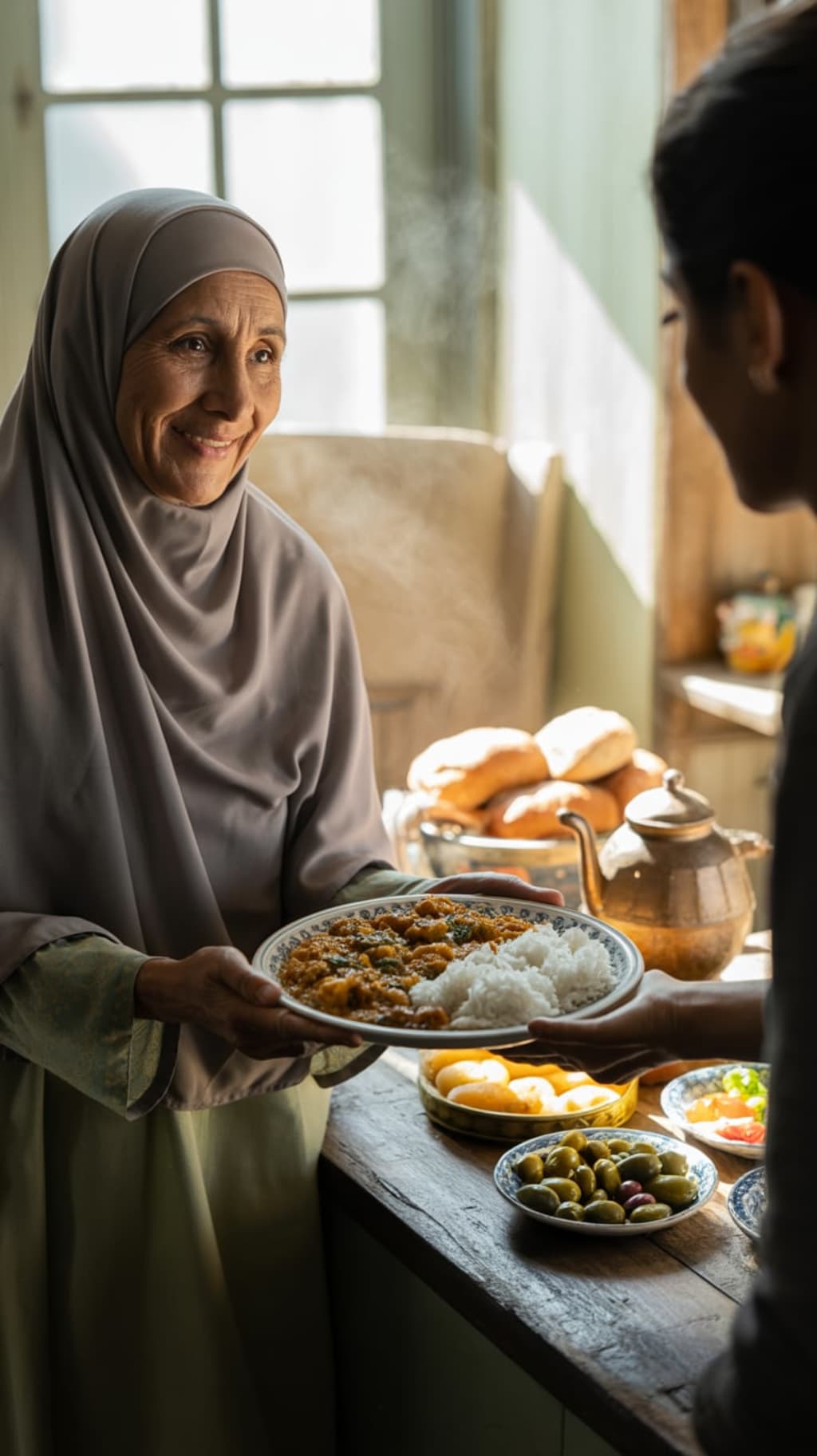
The first time I truly understood the depth of love in Islam wasn’t in a classroom, or even in a mosque. It was in my grandmother’s kitchen, a small space smelling of fresh bread and cinnamon tea.
A man had come to our door — someone we didn’t know — asking for help. Without hesitation, she took down a plate, filled it with the best food she had cooked that day, and handed it to him with both hands, whispering “Bismillah” (In the name of God).
I was young, maybe eleven.
I asked her later why she gave away the good meat instead of the leftover rice. She smiled and said something I will never forget:
“When you love for the sake of Allah, you give as if you are giving to Him, not just to a person.”
That moment planted a seed in me — a curiosity about what “love” really means in Islam. Over the years, I learned that in Islam, love (mahabbah) isn’t just an emotion; it’s an action, a principle, a way of living that reaches far beyond the limits of romance or family bonds.
Love as Mercy
The Qur’an repeatedly describes Allah as Ar-Rahman (The Most Merciful) and Ar-Raheem (The Most Compassionate). In fact, nearly every chapter of the Qur’an begins with these two names. This isn’t accidental — mercy is the foundation of divine love in Islam.
Prophet Muhammad ﷺ said:
“The Merciful are shown mercy by the Most Merciful. Be merciful to those on the earth and the One in the heavens will have mercy upon you.”
(Sunan al-Tirmidhi, 1924)
For Muslims, this means love is not reserved for those we already like — it’s a duty to extend compassion to every living being. That includes strangers, animals, and even those who wrong us.
Love Beyond Differences
One story that always moves me is the relationship Prophet Muhammad ﷺ had with a Jewish neighbor who disliked him. Historical sources mention that this neighbor would throw trash at the Prophet’s door every morning. One day, there was no trash. Concerned, the Prophet visited the man’s home to check if he was ill.
The man was stunned: “You came to check on me, even though I insult you?”
The Prophet replied that this is what Islam teaches — to love and care for neighbors, regardless of their faith or actions.
That neighbor eventually embraced Islam, not because of a debate, but because he experienced love that defied expectation.
Love for Creation
Islamic love isn’t just for humans. The Prophet ﷺ taught kindness toward animals in a way that was centuries ahead of its time. He told the story of a man forgiven by God for giving water to a thirsty dog, and another story of a woman punished for neglecting a cat.
I remember one summer afternoon when my father stopped our car in the middle of a busy road. A tiny bird was hopping dangerously close to traffic. He got out, gently cupped it in his hands, and moved it to the shade of a nearby tree where its nest was.
When I asked why, he quoted a saying of the Prophet:
“There is a reward for serving any living thing.”
(Sahih al-Bukhari, 2363)
That was the day I realized — in Islam, love is even for those who cannot speak our language.
Love in Action
When I was in high school, a new classmate named David joined our school. He was shy, from a different background, and had trouble making friends. Some students avoided him because he was different; others made jokes about his accent.
During lunch one day, I remembered my grandmother’s words and decided to sit with him. We started talking, and over weeks, we became close friends. I invited him to my home during Ramadan to break fast.
He later told me that this was the first time he felt “genuinely welcomed” since moving to the country.
I didn’t give him a lecture about Islam. I didn’t hand him a Qur’an. I simply practiced the kind of love Islam teaches — open, generous, and without an agenda. Years later, he sent me a message saying he still remembered that evening and how it changed his view of Muslims.
The Heart of It All
The beauty of Islam’s teaching about love is that it doesn’t stop at words. It’s woven into daily life — from the way we greet each other with Assalamu Alaikum (Peace be upon you), to the way charity (sadaqah) is encouraged even with something as small as a smile.
Prophet Muhammad ﷺ summed it up perfectly:
“None of you truly believes until he loves for his brother what he loves for himself.”
(Sahih al-Bukhari and Sahih Muslim)
That “brother” isn’t limited to Muslims — it means every fellow human being.
Closing Reflection
When I look back at my grandmother’s act of giving, my father’s kindness to a bird, and my own friendship with David, I see a clear thread: love in Islam is not a theory; it’s a living, breathing action.
It’s mercy for the weak, compassion for the outsider, care for creation, and generosity for the sake of God.
If love is the universal language, Islam taught me a new dialect — one spoken in patience, kindness, and mercy. And the beautiful thing is, you don’t have to be Muslim to speak it.
About the Creator
Keep reading
More stories from Maavia tahir and writers in Humans and other communities.
"The Human Cost of War: Analyzing Civilian Casualties in Global Conflicts"
War, by its very nature, is often perceived through the lens of armies clashing, strategies unfolding, and nations vying for power. Yet, behind every battlefront and every strategic maneuver lies the untold story of millions of civilians—ordinary people whose lives are irrevocably shattered by violence not of their making. Across history, from the massive state-led conflicts of the world wars to the modern-day insurgencies and proxy wars fought by non-state actors, the cost borne by civilians is staggering and heartbreaking.
By Maavia tahir7 months ago in Humans
Happiness Is Allowed
No one ever told us it was forbidden. We just learned to behave as if it were. In the city where I live, happiness feels like a suspicious thing—something you don’t display too openly, like cash pulled out in a crowded place. People smile, but briefly. Laughter is measured. Joy is edited before it reaches the mouth, as if someone might accuse you of not suffering enough.
By Jhon smith2 days ago in Humans


Comments
There are no comments for this story
Be the first to respond and start the conversation.