
What Happens When We Die? Science Explores the Final Mystery
Near-death experiences reveal uncanny patterns, shedding light on what may happen in our final moments.

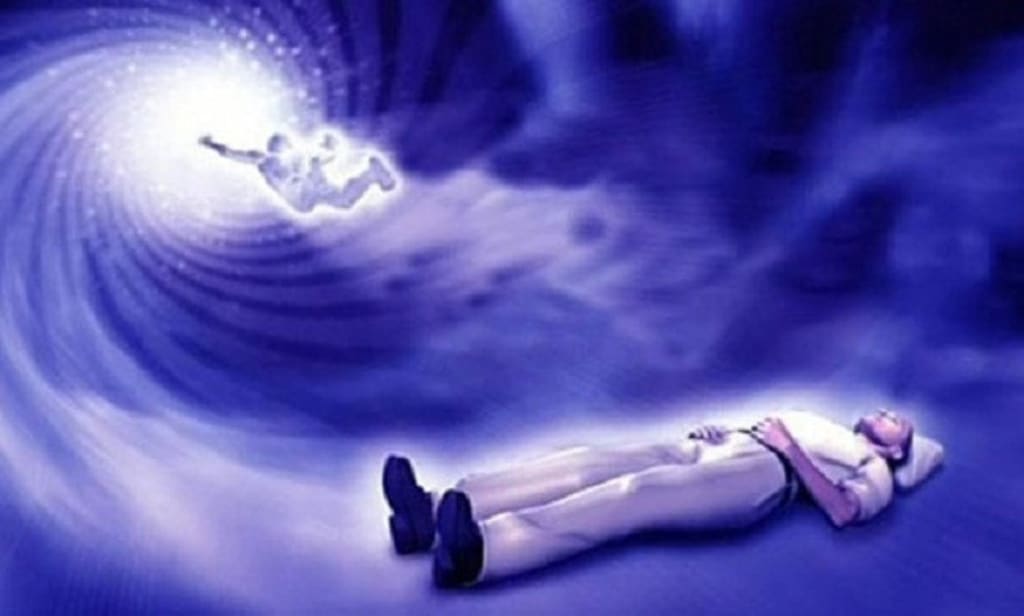
Death has always been humanity’s greatest mystery—and perhaps our deepest fear. While birth marks the beginning of our existence, death remains a topic cloaked in silence, sorrow, and uncertainty. Every person dies only once, and because so few return from the brink of death, it’s nearly impossible to understand what the experience of dying truly feels like.
Despite the universal nature of death, it continues to frighten us. We grieve, we cry, and we cling to life, not only out of instinct but also because the unknown that awaits beyond our final breath feels overwhelming. Yet human curiosity is relentless. Over the years, researchers and psychologists have tried to lift the veil, collecting accounts of people who have survived what should have been their final moments—those who’ve had a “near-death experience,” or NDE.
One such story is of a man who slipped and fell into a waterfall. In that harrowing moment, as his life was hanging by a thread, he recalled seeing flashes of his life play out before his eyes. “It felt like a slow-motion film reel,” he later shared on Reddit. “Everything from my past came flooding back in an instant. I’ve never experienced anything like it, and I still get chills thinking about it.” He was saved just in time by his younger brother, but the memory of that "supernatural" moment has never left him.
This phenomenon, often portrayed in movies, has now found validation in science. Experts say that the life review—when people see vivid images from their past just before death—is a documented aspect of near-death experiences. And this is just one of many shared patterns researchers have observed.
Dr. Raymond Moody, a pioneering American psychologist, dedicated years to studying 150 individuals who had undergone NDEs. Though their personal backgrounds and situations varied, the patterns in their accounts were strikingly similar. Based on his extensive interviews, Dr. Moody identified 14 recurring elements that make up the typical near-death experience:
Hearing the Declaration of Death: Many reported hearing doctors or bystanders announce that they had died. A deep physical exhaustion often accompanied this moment.
An Overwhelming Peace: After an initial flash of pain, they described a sudden wave of serenity and comfort. They floated through a dark space and felt utterly relaxed.
Unusual Sounds: Strange, sometimes musical tones were heard—beautiful and otherworldly. One young woman compared it to the soft notes of a celestial symphony.
Dark Tunnel or Void: A sensation of being pulled through a dark, airless tunnel appeared in many accounts. It felt like a threshold between the earthly realm and an unknown dimension.
Out-of-Body Experience: Survivors often described rising out of their bodies, observing their physical form and surroundings from above, as if they were feathers drifting in the air.
Inability to Communicate: Despite trying to speak, no one around them could hear or respond, leading to feelings of isolation.
In-and-Out of the Body: Some described moving repeatedly in and out of their physical bodies, losing all sense of time while doing so.
Enhanced Senses: Both sight and hearing seemed heightened. One man said he saw with unimaginable clarity, far beyond what he thought was humanly possible.
Intense Loneliness: The inability to connect or interact with others during this phase made many feel deeply alone.
Presence of Beings: Mysterious entities appeared—sometimes as guides, sometimes merely as watchers. Their roles were often unclear but unmistakably significant.
Encountering the Light: A bright, intelligent light appeared. This light wasn’t just bright—it seemed to have a personality, a conscious presence.
Life Review: In vivid detail, people saw their lives replayed, like a seamless movie. The emotions they felt, the actions they took, and the reactions of others all returned in astonishing clarity—sometimes even replayed multiple times.
Barrier or Boundary: A symbolic limit marked the point of no return. It could be a river, a fog, a wall, a door, or even a fence. Beyond it lay a place they were not yet meant to enter.
Returning to Life: Some were pulled back into their bodies, either through medical intervention or by choice. While many longed to return to life, others felt a strong reluctance—especially those who had glimpsed the light.
These elements, while not always occurring in the same sequence or with the same intensity, show astonishing consistency across cases, cultures, and belief systems. “Although we noticed common threads, each experience had its own emotional texture and variation,” researchers noted.
The idea of being able to feel death without truly dying has even inspired technological simulations. In Melbourne, Australia, a controversial VR experience now allows participants to virtually "die." Designed as part of the Melbourne Now cultural festival, this immersive simulation lets people lie on a hospital bed, complete with heart rate monitors, and experience a medically realistic death process—from cardiac arrest to brain death.
One participant described the experience as deeply unsettling: “It made me anxious and scared. I saw myself lying there, doctors trying to revive me… Then I floated above them, drifting away.”
While some critics argue this could harm participants’ mental health, others praise the simulation for helping people confront their fears in a controlled environment. Either way, it shows how powerful and universal the fear—and fascination—with death truly is.
In the end, perhaps the mystery of death isn’t meant to be solved, but understood a little more with each story shared. As science and technology continue to illuminate this shadowy part of life, humanity may one day find peace not by escaping death, but by learning to accept it.
About the Creator
Eleanor Grace
"Dream big.Start small.Act now."
Keep reading
More stories from Eleanor Grace and writers in Humans and other communities.
Touching Death Through VR
In a groundbreaking fusion of art, technology, and existential curiosity, a virtual reality (VR) experience in Melbourne, Australia, is giving people the chance to undergo something most have wondered about but never truly want to face — the moment of death.
By Eleanor Grace9 months ago in Humans
Autonomy Is The Real Privilege
Good morning, freedom-seekers! Today we’re gonna be looking at autonomy. A strange word, I know; one many would probably look at blankly and run away from on sight. We’re gonna figure out what it actually means, consider how it’s achieved, and decipher just how deeply most of us are tangled up in dependence without realising it.
By That ‘Freedom’ Guyabout 5 hours ago in Humans
Two Farmers Unearth a 17th-Century Silver Treasure While Working Their Land: A Remarkable Discovery
In a discovery that feels lifted straight from the pages of a historical novel, two farmers recently unearthed a 17th-century silver treasure while working their land. The find, consisting of coins, jewelry, and small silver artifacts, provides a fascinating glimpse into the region’s past and has ignited interest among historians, archaeologists, and the local community. Beyond the monetary value, this discovery underscores the enduring stories buried beneath the soil, waiting for chance and circumstance to reveal them.
By Salaar Jamali3 days ago in Humans




Comments
There are no comments for this story
Be the first to respond and start the conversation.