
Touching Death Through VR
An Australian VR project offers a chilling yet fascinating glimpse into the final moments of life — but is the experience too much for some to handle?

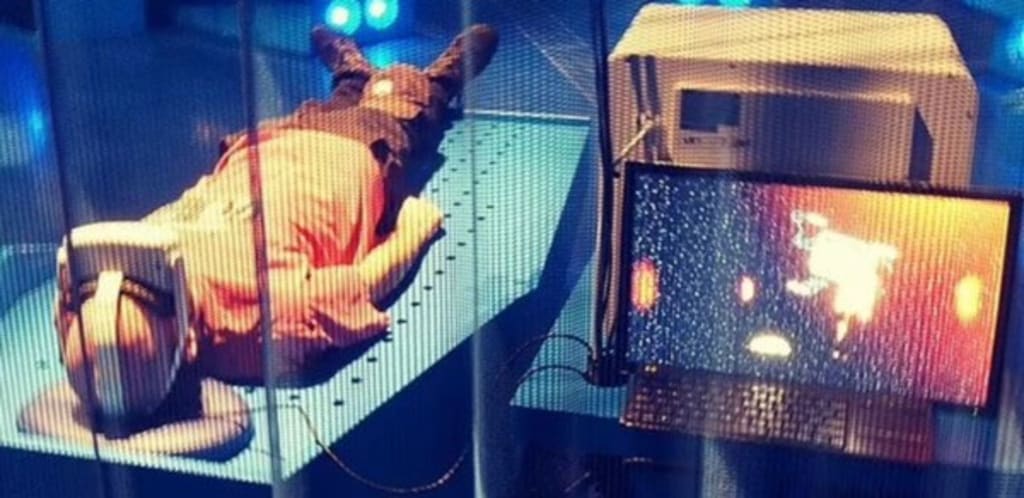
In a groundbreaking fusion of art, technology, and existential curiosity, a virtual reality (VR) experience in Melbourne, Australia, is giving people the chance to undergo something most have wondered about but never truly want to face — the moment of death.
The experience, which is part of the renowned cultural festival Melbourne Now, invites participants to simulate what it might feel like to die. Using cutting-edge VR technology, this immersive program carefully recreates the process of life slipping away — from a stopped heart to total brain death. While the concept may seem macabre or unsettling, many are drawn to it, driven by a deep-rooted curiosity about what lies beyond life’s final breath.
Facing the Ultimate Unknown
For as long as humans have been able to contemplate their existence, they’ve questioned what happens after we die. Is it darkness? Light? Nothingness? A second chance? Some who have had near-death experiences describe floating above their bodies, moving toward a bright tunnel, or experiencing a deep sense of peace. Others report terrifying voids or emotional turmoil.
But for most, the end remains an enigma — something feared, avoided, yet still mysteriously alluring. And this new VR experience offers a way to get just a little closer to that mysterious threshold, without actually crossing it.
The Simulation: Lying Down to “Die”
Participants of the VR death experience begin by lying on a hospital bed designed to mimic a clinical setting. They are fitted with a heart monitor to add realism, and once the session begins, the simulation takes them through a gradual process of bodily shutdown.
The hospital bed itself vibrates to simulate medical equipment, while the VR headset displays scenes from a hospital room. Doctors are seen frantically trying to resuscitate the participant, all to no avail. Slowly, everything fades. The beeping slows. And eventually, silence.
From that point, the simulation shows what appears to be the participant’s spirit or consciousness rising above the hospital bed, floating across the room, observing the futile attempts of the medical staff to revive them. Then, they drift through space — aimlessly, weightlessly — into the unknown.
One participant, who spoke to local media after trying the simulation, described the moment as “deeply unsettling and eerie.”
“You lie down on the bed, and the next thing you know, you're watching yourself from above. The doctors are working hard, but it’s clear nothing is working. Then you just… float. It’s peaceful but also terrifying. You really feel like you’ve left your body.”
Because the emotional impact can be intense, staff are always on standby during the experience. If at any point a participant feels overwhelmed, they can immediately stop the simulation.
Art Meets Psychology
This VR installation is not just an isolated tech project; it is the brainchild of a collective of artists participating in Melbourne Now — a large-scale arts festival that features over 200 artists and creators. Known for its bold and often unconventional exhibits, the festival encourages the exploration of difficult themes, including death, identity, time, and existence.
The goal of this particular project is not to traumatize, but to provoke thought, stir emotion, and open up discussion about something often seen as taboo.
“Death is something that unites all of us, and yet it’s rarely spoken about openly,” one of the creators said. “This VR experience is a way to help people confront that fear in a safe, controlled environment — and perhaps emerge from it with a new perspective on life.”
Public Reaction: Divided but Intrigued
As with any controversial project, public reactions to the VR death simulation are mixed.
Some attendees of the festival praised the experience as profound, transformative, and even beautiful.
“It made me feel more grateful to be alive,” one user wrote on social media. “I was scared at first, but afterward, I just wanted to hug my family.”
Others were less enthusiastic. Some mental health professionals expressed concerns about the psychological effects on individuals who may already be vulnerable.
“While this might be a powerful artistic statement, we must be cautious,” said Dr. Elaine Matthews, a Melbourne-based psychologist. “For someone struggling with anxiety, trauma, or depression, this kind of immersive death experience might trigger unintended consequences.”
In response, the creators emphasized the importance of personal discretion. Every participant is informed of the content before entering the experience, and staff are trained to offer immediate support if needed. Still, they acknowledge the potential risks and urge visitors to consider their own emotional readiness.
The Rise of VR and Simulated Experiences
The concept of using VR to simulate difficult or complex emotional experiences is not entirely new. Virtual reality has already been used in medical training, PTSD therapy, and even grief counseling. What sets this project apart is its willingness to go all the way to the final frontier — death itself.
With advancements in VR tech becoming more accessible and immersive, we may see more experiences designed not just for entertainment or therapy, but for philosophical exploration. Whether it’s walking through historical disasters, navigating life as someone from a different background, or — as in this case — experiencing the end of life, VR is evolving into a powerful tool for empathy and self-reflection.
A Mirror to Mortality
For many, this VR death simulation is less about the moment of dying and more about what comes after. It offers a mirror to our own mortality, forcing participants to grapple with emotions often buried beneath the surface of everyday life.
While some may find peace in the simulated journey, others may find fear or confusion. But perhaps that’s the point — to provoke, to question, to feel.
As we push the boundaries of technology and art, we are also redefining how we talk about life and death. And in a world where death is often avoided in conversation, this project dares to ask: What if we faced it, even just for a moment?
About the Creator
Eleanor Grace
"Dream big.Start small.Act now."
Keep reading
More stories from Eleanor Grace and writers in Humans and other communities.
6-Year-Old Breaks Record as World’s Youngest Programmer
At just 6 years and 346 days old, Kautilya Katariya from the United Kingdom made headlines worldwide by earning the title of the youngest computer programmer in history, according to the Guinness World Records. This achievement is not only a testament to his incredible talent and determination but also a powerful reminder that age is no barrier when it comes to mastering complex skills like coding and artificial intelligence (AI).
By Eleanor Grace9 months ago in Humans
Autonomy Is The Real Privilege
Good morning, freedom-seekers! Today we’re gonna be looking at autonomy. A strange word, I know; one many would probably look at blankly and run away from on sight. We’re gonna figure out what it actually means, consider how it’s achieved, and decipher just how deeply most of us are tangled up in dependence without realising it.
By That ‘Freedom’ Guyabout 7 hours ago in Humans



Comments
There are no comments for this story
Be the first to respond and start the conversation.