
What Happens When We Die?
According To Spiritual Science

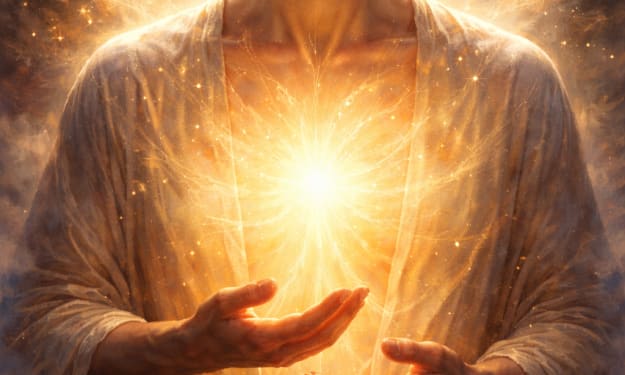
When we pass away, our souls embark on a fascinating journey that includes a life review lasting 21 days in Earth time. As we leave our physical forms, we are naturally drawn to a radiant light, which signifies the beginning of the reincarnation process. During this life review, we reflect on our experiences and the karma we've built up over our lifetime. After this introspection, we face a pivotal decision: to either return to the cycle of reincarnation or to reconnect with the ultimate source of consciousness, the creator. If we choose to incarnate again, we select our life paths and establish soul contracts with those we will encounter in our next life, including family and friends.
Unlike traditional views of Heaven and Hell, it is our karma that truly shapes our journeys, supported by spirit guides, often referred to as guardian angels. Our actions, whether positive or negative, are carefully documented in what spiritual mediums and quantum theorists call the "Akashic Records," similar to the Christian "Book of Life." Throughout our earthly existence, we are accompanied by at least four spirit guides who offer us support and guidance, and they are there to greet us when we transition. This is why many individuals who have had near-death experiences often report seeing familiar faces and feeling a sense of comfort.
As the spirit detaches from the physical body, the silver cord connecting them is cut, and they are drawn toward the brilliant light, usually accompanied by a guardian angel or spirit guide, who may be a friend or family member. This light acts as the energy source that leads us through the life review and reincarnation cycles, overseen by the lords of cycles. These beings are not judges but rather reviewers, operating under the guidance of the creator's laws. In this context, Earth serves as a learning environment where we gather insights about emotions and limitations, acting as data collectors for our souls.
Advancement involves learning from our errors, and failing to do so leads to a cycle of reincarnation in similar or lesser states. Many ancient Taoists suggest that upon death, individuals often feel drawn to a bright light, but most neglect to look back. Behind them lies the universe, offering a choice to explore it instead of heading towards the light, which could lead them back to their current life or to the creator and source of all existence.
Dolores Cannon, a well-known hypnotherapist with a focus on past life regression, dedicated nearly fifty years to exploring the complexities of death and reincarnation through her clients' experiences. These individuals, who had truly experienced death rather than just near-death, provided profound insights into the afterlife and the continuous cycle of reincarnation. The ultimate aim of existence is to manipulate energy, achieve full awareness of Christ consciousness, and settle all karmic debts.
Cannon's research indicates that there are three main destinations in the afterlife, each based on one's vibrational frequency. The lower astral realm is populated by souls entrenched in negativity, often unable to transcend their 3rd-dimensional earthly existence. This includes individuals like murderers, addicts, and those with severe mental health issues. Many of these souls, upon dying, remain oblivious to their death and attempt to re-enter living bodies.
Trapped in their destructive mindset within the lower astral realm, they continue to seek the negative sensations they experienced in life, becoming lost and stagnant. Eventually, they grow weary of not receiving physical sensations and return to the cycles of reincarnation to address their karmic debts and start their life journey anew.
The middle astral realm is akin to the idea of Heaven, depicted as a stunning and lively place where individuals can mold their reality according to their wishes. The environment is adorned with vibrant colors, awe-inspiring landscapes, and the chance to reconnect with those dear to them. This realm is flawless and beyond description. Yet, some souls eventually yearn for deeper experiences and transition to a higher level of existence.
Souls that decide to advance enter this elevated stage of reality, where they connect with the akashic records housed within the source. These records feature spaces where souls can observe and learn about different facets of reality and the universe, guiding their decisions for future lives. It’s similar to watching a movie or series; while it can be enjoyable, nothing compares to actually living and experiencing it firsthand.
The next phase involves engaging with the elders of cycles, a council that offers guidance on your journeys in the universe without imposing any specific paths. After the physical body ceases to exist, a thorough life review takes place. Every action, word, and interaction is presented from the perspective of those impacted. For example, if you positively influenced someone, you will feel their joy, while if you caused harm, you will experience their pain.
This process resonates with the teachings found in the "Emerald Tablets" by Thoth the Atlantean Priest King, who shared wisdom about the elders of cycles. These entities exist beyond the concepts of life and death, serving as life reviewers who oversee the cycles of the universe, highlighting the eternal nature of the universe's laws and consciousness under the creator.
Albert Einstein's conservation of energy principle resonates with the idea that the spirit exists independently from the physical body. He famously stated, "Energy cannot be destroyed; it simply transfers." When a person passes away, the energy that once animated them may seem to vanish, but it actually persists as the spirit transitions. Our physical forms are merely vessels, akin to garments we wear and remove.
Alan Watts, a distinguished English author and professor known for his insights into Buddhist, Taoist, and Hindu philosophies, delivered a remarkable and transformative lecture in the 1970s. In this talk, he posed a thought-provoking question: "What if you could dream any dream you desired at night, with the ability to manipulate your perception of time, experiencing 75 years of subjective time in just eight hours of sleep? You might begin by fulfilling all your desires, crafting the most blissful life imaginable—filled with love, feasts, enchanting companions, extraordinary travels, breathtaking gardens, and music that transcends belief. However, after indulging in this for a couple of months, you might find yourself yearning for something different. You would then venture into a realm of adventure, where the excitement of facing dangers would allow you to rescue princesses from dragons, embark on perilous quests, and create spectacular explosions."
Eventually, you would find yourself in competitions with adversaries. After engaging in this for a while, a new idea might emerge: to forget that you were dreaming, to convince yourself it was all real, and to feel anxious about it. Then, when you wake up, the relief would be so wonderful that you might challenge yourself, like kids daring each other, to see how far you could go. What could you endure? How much could you lose or feel abandoned? You could ponder these questions, knowing you would eventually awaken.
As time goes on, your sense of adventure would grow, leading you to take bolder risks in your dreams. Ultimately, you would find yourself dreaming about your current reality, living the life you are experiencing right now. This would exist within the endless array of choices where you play as if you are not God. According to this perspective, the essence of God is to engage in the game of pretending not to be, making everyone fundamentally an alternate reality—not in a royal sense, but as the core self, the fundamental essence of existence, all while acting as if they are not.
One day, you will awaken and realize, "Wow, that's me!" Deep down, what you truly are is simply the very fabric and structure of the simulation itself. The intriguing idea behind simulation theory suggests that particles can appear and disappear, moving through various dimensions. For instance, theoretical physicist James Gates found error-correcting codes embedded in the equations of string theory, resembling computer programming.
This insight has prompted some to explore the idea that the laws and constants of our universe might be part of a programmed reality, akin to a computer, where all beings act as connections to a universal source resembling a computer system. This fascinating concept even encompasses our thoughts, which reside in the synapses of our brains, as highlighted by quantum mechanics. A compelling example of this idea is seen in the creation of quasi-crystals by quantum physicists.
These unique multi-dimensional crystals, including an extraordinary 8th-dimensional quasi-crystal, project their influence into lower dimensions, eventually forming a spherical shape. This phenomenon supports the notion that our universe could simply be a projection from a higher dimension, leading to the captivating theory that we exist within a holographic universe. In essence, various teachings and sources from around the globe point to a core truth: we are all fragments of the creator, divided into countless beings within the universe to experience this three-dimensional simulation.
We are all aspects of the divine, engaging in a game where we forget our true nature, while also being multi-dimensional beings who continue to exist beyond the illusion of physical death. Our actions in each lifetime are met with rewards or consequences through the cycle of karma until we have absorbed all the lessons of this reality, ultimately returning to the source from which we came.
About the Creator
Keep reading
More stories from Lawrence Meli and writers in Humans and other communities.
Giving Her Distance Is Your Superpower
You reach out to her, call her, and show her you care, yet it still feels like it’s not enough. Here’s the truth: your error isn’t in your efforts; it’s in putting in too much effort. Today, I want to share why taking a step back might be the most appealing choice you can make.
By Lawrence Meliabout a year ago in Humans
Autonomy Is The Real Privilege
Good morning, freedom-seekers! Today we’re gonna be looking at autonomy. A strange word, I know; one many would probably look at blankly and run away from on sight. We’re gonna figure out what it actually means, consider how it’s achieved, and decipher just how deeply most of us are tangled up in dependence without realising it.
By That ‘Freedom’ Guy5 days ago in Humans
Saturn Is Testing Your Twin Flame Connection.
Many twin flame journeys hit a wall. Connection fades. Silence grows. Distance hurts. You ask why love feels blocked when the bond feels eternal. Astrology gives one clear answer. Saturn stands at work in your connection.
By Wilson Igbasi3 days ago in Humans



Comments
There are no comments for this story
Be the first to respond and start the conversation.