
What Exactly Is Pride?
Exploring how silence and emotional pain are often mistaken for pride.

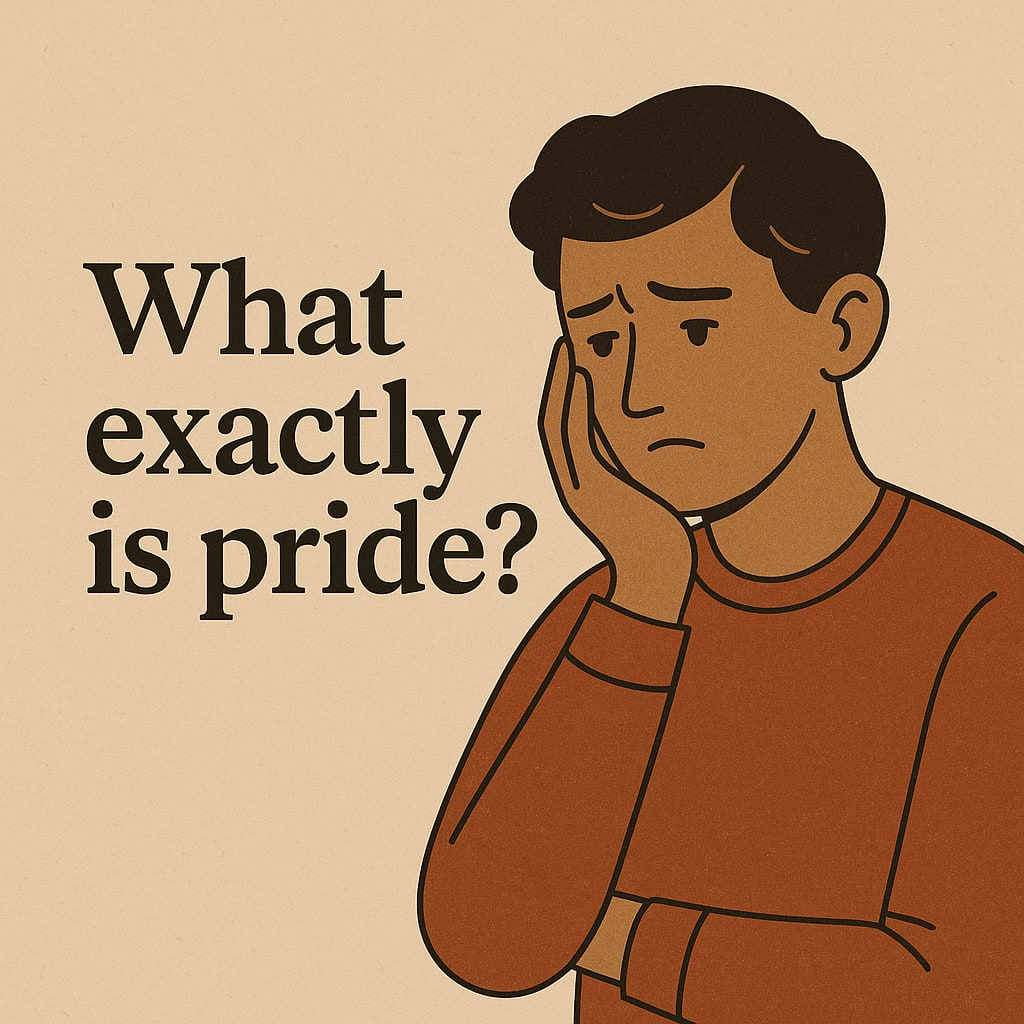
There seems to be growing confusion around the concept of pride—so much so that the word is now being used to describe behaviors that have little to do with its original meaning. Once associated with arrogance or an inflated sense of self-worth, pride now seems to include silence, introversion, privacy, and even emotional discomfort. The question is: What exactly is pride?
Somewhere along the way, being quiet started to look like being proud. People who struggle to engage in conversations, who avoid large crowds, who hesitate before speaking—not out of rudeness, but out of fear or anxiety—are often labeled as proud. Yet nothing about fear, social anxiety, or emotional exhaustion suggests superiority. If anything, these are signs of inner battles, not inflated egos. A person who finds it difficult to speak in public or socialize at length is not necessarily full of themselves—they might just be overwhelmed, emotionally drained, or processing thoughts in silence.
How did it get to this point?
Why has pride become a label for those who are simply trying to survive social situations that overwhelm them? Why is it so easy to dismiss someone’s silence as arrogance, instead of wondering what they might be going through? The line between self-protection and pride is becoming blurred, and the consequences are real: misunderstandings, broken relationships, and unfair assumptions.
The irony is that introversion and social anxiety are often mistaken for pride by those who don’t experience them. It’s easier, perhaps, to label someone as distant or full of themselves than to consider the emotional struggle they may be enduring. But how does that help? Isn’t it more compassionate—and more human—to ask, “Are you okay?” instead of assuming someone’s silence is rooted in self-importance?
Traditionally, pride implied a sense of being above others. It meant looking down on people, refusing to associate with certain groups, or refusing to admit faults. It was an attitude of superiority, a posture of self-importance. But now, simply keeping to oneself is seen as a sign of this same attitude. Does being private about one’s life qualify as pride? Or is it simply a matter of boundaries and emotional safety? There is a difference between choosing silence to appear better and choosing silence to feel safe. But often, that nuance gets ignored.
It becomes more confusing when the same person accused of having pride is also the one others turn to in moments of need. How can someone be labeled proud, yet be trusted and sought after when it truly matters? Wouldn’t that suggest that beneath the quietness is someone dependable, someone caring—perhaps someone who is not okay, but doesn’t know how to say it? If people consistently rely on someone they call "prideful," then maybe the word is being misused.
The redefinition of pride—whether intentional or accidental—raises serious concerns. Is the word now being used as a tool to pressure people into speaking when they are not ready? To shame them for not being emotionally available? Is it being thrown around by those who feel entitled to someone’s personality, presence, or life details? Is it possible that "pride" has become an accusation we reach for when we feel rejected or ignored, whether or not that was the person’s intention?
There is something deeply unfair about assigning the word "pride" to people who cannot defend themselves. Many who are quiet are not doing it to make a statement—they’re doing it because they’re hurting. Some people do not have the strength to speak up, to explain themselves, or to open up their lives. Not because they think they’re better, but because they are barely holding themselves together. Their silence is not a sign of pride—it is often a sign of survival.
So, again, the question must be asked:
What exactly is pride?
And have we changed its meaning without even realizing it?
Because if the word “pride” is being used to label the wounded, the introverted, the fearful, or the emotionally exhausted, then maybe it’s time we start questioning not their behavior, but our own.
About the Creator
Sanelisiwe Adam
I write for the ones who were told to stay quiet — the ones healing from things they’ve never said out loud. If you’ve ever felt misunderstood, unseen, or mislabeled, you’ll find a piece of yourself in my words.
Keep reading
More stories from Sanelisiwe Adam and writers in Humans and other communities.
Autonomy Is The Real Privilege
Good morning, freedom-seekers! Today we’re gonna be looking at autonomy. A strange word, I know; one many would probably look at blankly and run away from on sight. We’re gonna figure out what it actually means, consider how it’s achieved, and decipher just how deeply most of us are tangled up in dependence without realising it.
By That ‘Freedom’ Guyabout 11 hours ago in Humans
Seven Socially Acceptable Behaviors That Secretly Kill Your Potential.
You follow rules taught as polite and mature. Society rewards these behaviors with approval. Praise feels safe. Progress slows. The danger hides in habits nobody questions. These habits look responsible. They drain growth over time.
By Wilson Igbasi7 days ago in Humans




Comments
There are no comments for this story
Be the first to respond and start the conversation.