
Unfairly Greedy
How emotions made the world's most expensive painting

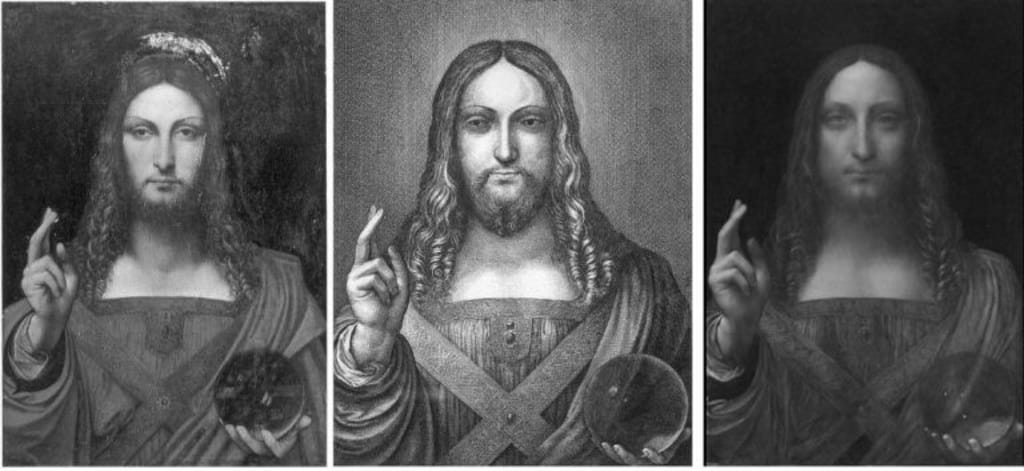
In 2005, Leonardo Da Vinci's famous Salvator Mundi painting was sold for $1175. In 2017, the same painting was sold for $450 million to Saudi crown prince Mohammed bin Salman, making it the highest-priced art ever. But it turned out to be fake. The prince pressured the Louvre museum to lie about the authenticity and exhibit it alongside Mona Lisa to spare the public humiliation of having spent $450 million on a fake painting.
If we accept that emotions influence our behaviour, how much did emotions affect the bidding on the painting? It sold for three times the amount most dealers had predicted.
Greed on the way up, fear on the way down. What if fear and greed did not influence our buying decisions?
Fear and greed can affect our brains to set aside common sense. Fear and greed can be powerful motivators towards money. How bad can it be?
A retail experiment of 100 stores showed that ignoring customer emotions could lower prices by 10-20%, which results in lower profits. And 76% of bidders view each other as 'competitors' in a win or lose game.
Two scenarios: (1) where emotions do not matter and (2) where emotions matter. First, we gain money, then we lose it; which one do we pick rationally?
One side benefits, and another side loses. Is there a benefit of removing emotions? Are we all winners and losers of pricing?
I.
Fear and greed are two primary emotions that influence the price. For investors, this is called the Fear and Greed index; excessive fear tends to lower prices, and too much greed tends to have the opposite effect. On a scale from 0-100, 50 reflects a neutral and therefore fair price. We are told to believe that the market can price fairly.
Rarely, however, has it hit 50 throughout history. If the market price is not fair, what can we do?
Every individual has a fear and greed index in which we determine what is fair, our brain's prediction error, indeed that must work? But our emotions conflict with commercial transactions. The fear of losing money is bigger than the excitement of winning. Not only is the pain of loss fearful, but the pain from accepting a bad decision is almost as painful.
Regardless of our emotions, a price is not fair.
II.
Maybe price does not matter. It is the way we look to our counterparts, the human on the other side. We sometimes assume that competitive people are 'out to get us'; sometimes, we believe that people are cooperative and can be trusted.
In an information provision experiment, one person has to decide whether to provide another person with information about their preferences and priorities to determine a decision that affects both parties. By withholding information or by giving (in)accurate information about payoffs, participants can try to influence the other person's decision — a human dilemma. Participants would withhold or lie about information if the other person was perceived as being competitive. Participants would give correct information if the other person was perceived as being cooperative.
Throughout the experiment, fear and greed played an important role. The counterpart makes choices that improve or harm the participant’s outcomes. Greed and fear of exploitation were prevalent when the other person was seen as being competitive.
Full circle. Only after the painting was sold was it declared fake. With fearful greed, the fair price could be $1175 or $450 million. What do we trust?
Sources to share:
- Christie's (2017) Leonardo’s Salvator Mundi makes auction history
- Wolfgang Steinel and Carsten De Dreu (2004) Social Motives and Strategic Misrepresentation in Social Decision Making
- Daniel Kahneman, Olivier Sibony and Cass R. Sunstein R. (2021) Noise
About the Creator
Human Dilemmas
Why do some ideas form our lives and others become nothing? Why do we take some ideas for granted and question others?
I'm Daniel, writer of Human Dilemmas. A weekly letter philosophising on life when we forget to live.
Keep reading
More stories from Human Dilemmas and writers in Humans and other communities.
50 Cent Finalizes Massive Louisiana Deal Expected To Generate $18 Billion In Revenue
Shreveport, Louisiana has officially been stamped G-Unit ville. Curtis “50 Cent” Jackson has officially cemented his deal with the northwest city in the state. By meeting with the governor and other officials, 50 has been able to bring his brainchild of an entertainment venue to that region. With some fanfare and photographs, the “21 Questions” rap superstar has laid out a plan to bring 6,000 jobs, $18 billion in revenue, and $300,000,000 in wages to Shreveport.
By Skyler Saunders5 days ago in Humans



Comments
There are no comments for this story
Be the first to respond and start the conversation.