
Passport Identity
Addictions that are not good for us: finding identity

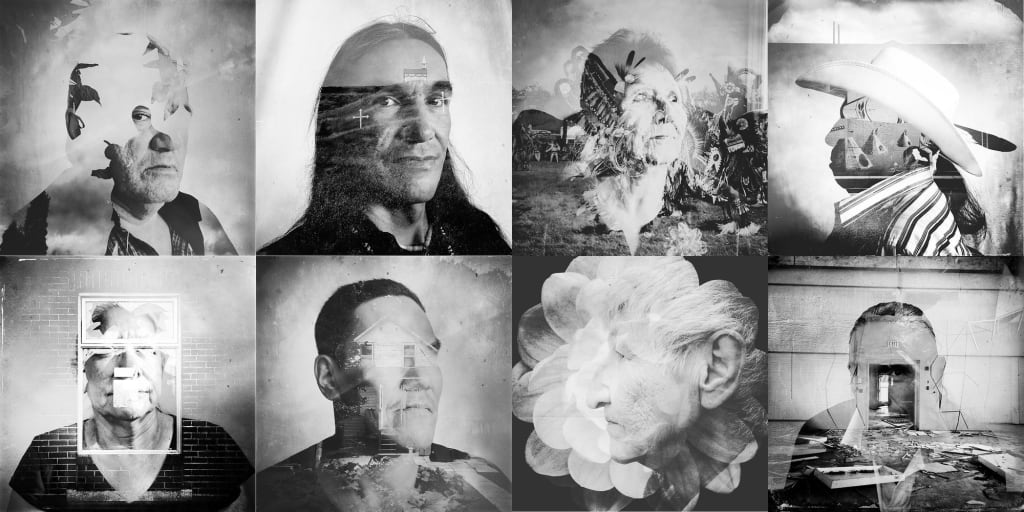
Rebelliously I started smoking when I was younger. That is not the addictive part. What got me hooked at first was the idea of finding identity.
The social smokers that everyone excuses themselves with which then spirals into chain-smoking, which is seriously bad. But for me, it was about trying to develop a personality.
One of the cool ones, creative ones or the ones that had their own independent personality. Of course, in order to obtain that cool independent persona, you had to do as all the other independent personalities. Smoking was part of it.
Not anymore, but the idea of identity is still very much.
It’s something I cannot let go of. The search and exploration for building my own unique personality alongside everyone else in the game we call life.
But at a certain point, people to people, I believe that the constant battle over identity has more negative than positive effects. Whether we are unsure about how to show or feel identity — or maybe worse how to show that others don’t have the ‘right’ identity.
I guess it’s fine if you rest in yourself, found your shelf or your path in life. But who really has? If you have, you can stop reading.
I.
So where does my identity sit? In my passport.
'Passport, please'
The tragicomic scene we all know with a passport controller verifying your identity through a piece of paper. For a second they doubt you, looking down, then up, you realise that they could claim it was not correct. Your display of identity is false. Is your identity invalid?
The introduction of passports allowed for peoples' identities to be documented, collected, categorised, and analysed. At age 16, when you are handed an adult passport in the middle of an existential social media crisis, know that an authority can tell your identity. Forget the soul searching, just go to passport control.
"I'm constantly seen as a 'foreigner,' and I need my passport to prove my identity, to keep moving and to carry on my work."
— Emmanuel Jal
Craig Robertson argues that 'the passport as a technology of verification foregrounds that the modern production of this ‘official identity’ a truth claim, which presents that identity as self-evident.'
We are not all smokers, but most of us have a passport with our social security number and a stiff-lipped photo.
Imagine if we didn’t have passports. What would we show to prove our identity?
II.
A friend, who will remain unidentifiable, shared a story from her home in Guatemala about a sick indigenous woman entering a hospital in her own country. All the identity she carried with her was a hard pronounceable name and her own background story.
Without any proof of identity, her treatment could not be documented and registered. Luckily the staff, humanely, decided to treat her.
Let alone the idea of not being able to go to other countries, but not being able to exist in your own country without a passport. Mad.
Ironically, you could argue that indigenous people, fighting for the right to claim identity from others constantly trying to take it away, are the ones that have found the most identity in this obsessive world.
Our fixation with identity manifested in passports, ID cards and smoking seems to lead us away from what it is supposed to represent; us humans, right?
So if we focus less on how we can show identity, we become more focused on what it actually means?
People stripping away someone’s identity or a young man searching for one is not a new phenomenon. Is that exactly why I write it? Because our addiction with identity continues to persist?
Sources to share:
About the Creator
Human Dilemmas
Why do some ideas form our lives and others become nothing? Why do we take some ideas for granted and question others?
I'm Daniel, writer of Human Dilemmas. A weekly letter philosophising on life when we forget to live.
Keep reading
More stories from Human Dilemmas and writers in Humans and other communities.
The Walls of Eden
The notion of a 'wall' has different meanings in a wide range of disciplines/fields, such as architecture, engineering, biology, psychology, sociology, etc. Despite the differences, the wall demonstrates separation, a border or a boundary, whether in a tangible or intangible form.
By Human Dilemmas4 years ago in Humans
Penn State Wrestling: The Heartbeat of College Wrestling
On cold winter nights in Pennsylvania, when the campus grows quiet and the air feels heavy with focus, one place stays alive with energy. The wrestling room. Penn State wrestling is not just a sports program. It is a story of discipline, belief, heartbreak, and pride that has been built over decades. Fans do not just watch matches. They feel them. Every takedown carries history. Every close match holds breath and hope. This program has shaped young athletes into resilient men and has given supporters moments they remember for life. To understand penn state wrestling is to understand why college wrestling still matters in a world that often moves too quickly to notice quiet greatness.
By Muqadas khanabout 24 hours ago in Humans


Comments
There are no comments for this story
Be the first to respond and start the conversation.