
"Towering Giants of the Animal Kingdom: Giraffes and Ostriches".
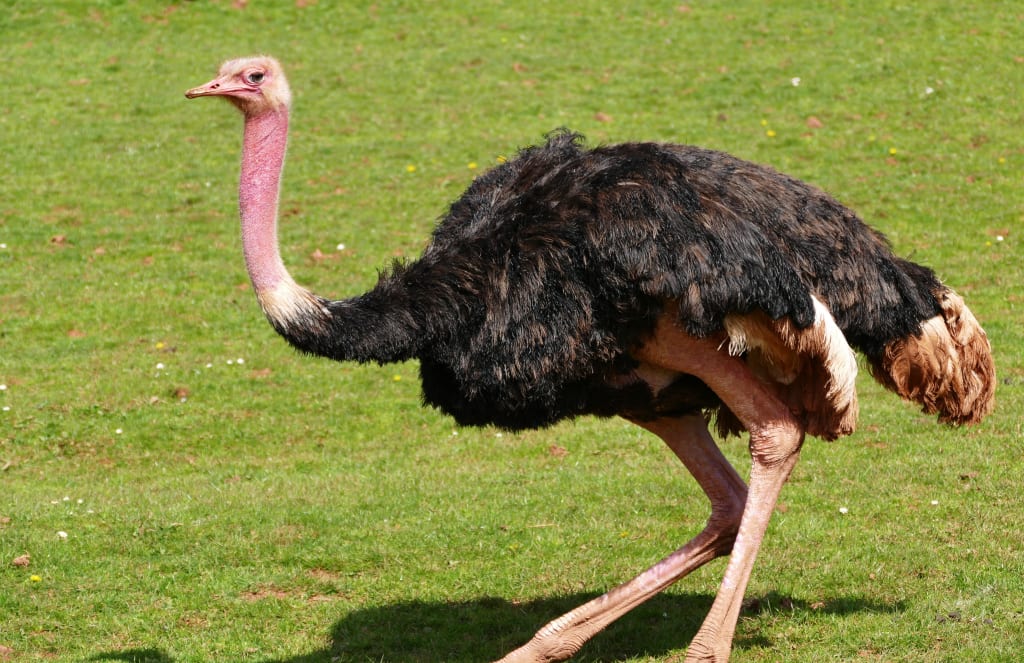
The fact that Giraffes are the tallest land animals in the world, reaching heights of 19ft (5.8 m). The ostrich is the world’s tallest bird. It can grow up to 9 feet (2.7m) tall.
Introduction:
In the expansive tapestry of the animal kingdom, some creatures stand head and neck above the rest, quite literally. The giraffe, with its elegant elongated neck, claims the title of the world's tallest land animal, reaching heights that defy the imagination. On a different scale but equally impressive, the ostrich strides into the avian realm as the tallest bird, showcasing its commanding presence with a remarkable stature. In this exploration, we delve into the unique characteristics and adaptations that make giraffes and ostriches the towering giants of their respective domains.
Chapter 1: Giraffes: The Graceful Skyscrapers of the Savanna
Giraffes (Giraffa camelopardalis) are renowned for their distinctive long necks, patterned coats, and towering legs. The giraffe's neck alone can measure up to 7 feet (2.1 m), contributing significantly to its overall height of 16 to 19 feet (4.8 to 5.8 m). This extraordinary adaptation is not merely a quirk of nature; it serves a vital purpose in the giraffe's daily life, aiding in reaching high branches and foliage that are inaccessible to other herbivores.
The giraffe's neck contains the same number of vertebrae as that of a human, seven in total. However, each vertebra in a giraffe can be up to 10 inches (25 cm) long, providing the necessary flexibility and strength to support the animal's towering stature. Additionally, the giraffe's cardiovascular system has evolved to maintain blood pressure and circulation to its brain, even when the animal lowers its head to drink water.
Chapter 2: Ostriches: Earthbound Giants of the Avian World
The ostrich (Struthio camelus) stands out as an exceptional giant in the avian realm. Native to Africa, the ostrich is the world's largest and heaviest bird, with males reaching heights of up to 9 feet (2.7 m). Unlike most birds, ostriches are flightless, but their powerful legs and impressive running speed make them formidable runners.
The ostrich's legs are a marvel of adaptation. Each leg has only two toes, with the larger toe bearing a formidable claw, while the smaller toe is vestigial. This unique foot structure enhances the bird's speed and agility, allowing it to cover great distances in search of food and to evade predators. Ostriches are known to reach speeds of up to 45 miles per hour (72 km/h), making them the fastest-running bird.
Chapter 3: Ecological Significance and Adaptations
Both giraffes and ostriches have evolved specific adaptations that contribute to their towering heights and enable them to thrive in their respective environments. Giraffes, with their extended necks, have access to a niche in the savanna ecosystem that is otherwise unexploited by herbivores. Their height provides them with a distinct advantage in reaching leaves and buds on tall acacia trees, minimizing competition for food.
Similarly, ostriches have adapted to the arid landscapes of Africa, where their height allows them to survey vast areas for potential threats and opportunities. Their keen eyesight and towering stature enable them to detect predators from a considerable distance. Additionally, the ostrich's strong legs are used for rapid escapes and effective foraging in harsh environments.
Chapter 4: Conservation Concerns
Despite their impressive adaptations, both giraffes and ostriches face conservation challenges. Giraffe populations have seen a decline in recent years due to habitat loss, poaching, and human-wildlife conflict. Efforts to protect these graceful giants include conservation initiatives that focus on preserving their habitats and raising awareness about the importance of coexistence.
Ostrich populations, while not as threatened as giraffes, also confront challenges, particularly in areas where habitat loss and hunting pose risks to their survival. Conservation measures for ostriches include habitat preservation, sustainable land management practices, and regulations to curb illegal hunting.
Conclusion:
Giraffes and ostriches, the towering giants of the animal kingdom, captivate us not only with their impressive heights but also with the remarkable adaptations that define their existence. From the giraffe's gracefully elongated neck, reaching for the foliage of the savanna, to the ostrich's powerful legs propelling it across the African plains, these creatures embody the diversity and resilience of life on Earth. As stewards of our planet, it is our responsibility to appreciate, understand, and actively contribute to the conservation of these majestic beings, ensuring that their towering presence endures for generations to come.
About the Creator
Keep reading
More stories from fatima zahra ajankar and writers in Humans and other communities.
"The Remarkable Odyssey of the Grey-Headed Albatross: Circling the Globe in 46 Days".
Introduction: In the vast expanse of the Southern Ocean, where the winds howl and the waves dance in a relentless rhythm, a majestic creature silently soars above, breaking the boundaries of endurance and navigational prowess. The Grey-Headed Albatross, a master of the open ocean, has astonished researchers with its remarkable ability to circumnavigate the globe in an astonishingly brief 46 days. This extraordinary feat not only sheds light on the incredible adaptations of these seabirds but also underscores the importance of understanding their behavior for conservation efforts.
By fatima zahra ajankar2 years ago in Humans
Autonomy Is The Real Privilege
Good morning, freedom-seekers! Today we’re gonna be looking at autonomy. A strange word, I know; one many would probably look at blankly and run away from on sight. We’re gonna figure out what it actually means, consider how it’s achieved, and decipher just how deeply most of us are tangled up in dependence without realising it.
By That ‘Freedom’ Guy6 days ago in Humans




Comments
There are no comments for this story
Be the first to respond and start the conversation.