
"The Remarkable Odyssey of the Grey-Headed Albatross: Circling the Globe in 46 Days".
The fact that Grey-headed Albatross can circle the globe in only 46 days.
Introduction:
In the vast expanse of the Southern Ocean, where the winds howl and the waves dance in a relentless rhythm, a majestic creature silently soars above, breaking the boundaries of endurance and navigational prowess. The Grey-Headed Albatross, a master of the open ocean, has astonished researchers with its remarkable ability to circumnavigate the globe in an astonishingly brief 46 days. This extraordinary feat not only sheds light on the incredible adaptations of these seabirds but also underscores the importance of understanding their behavior for conservation efforts.
Chapter 1: Masters of the Southern Skies
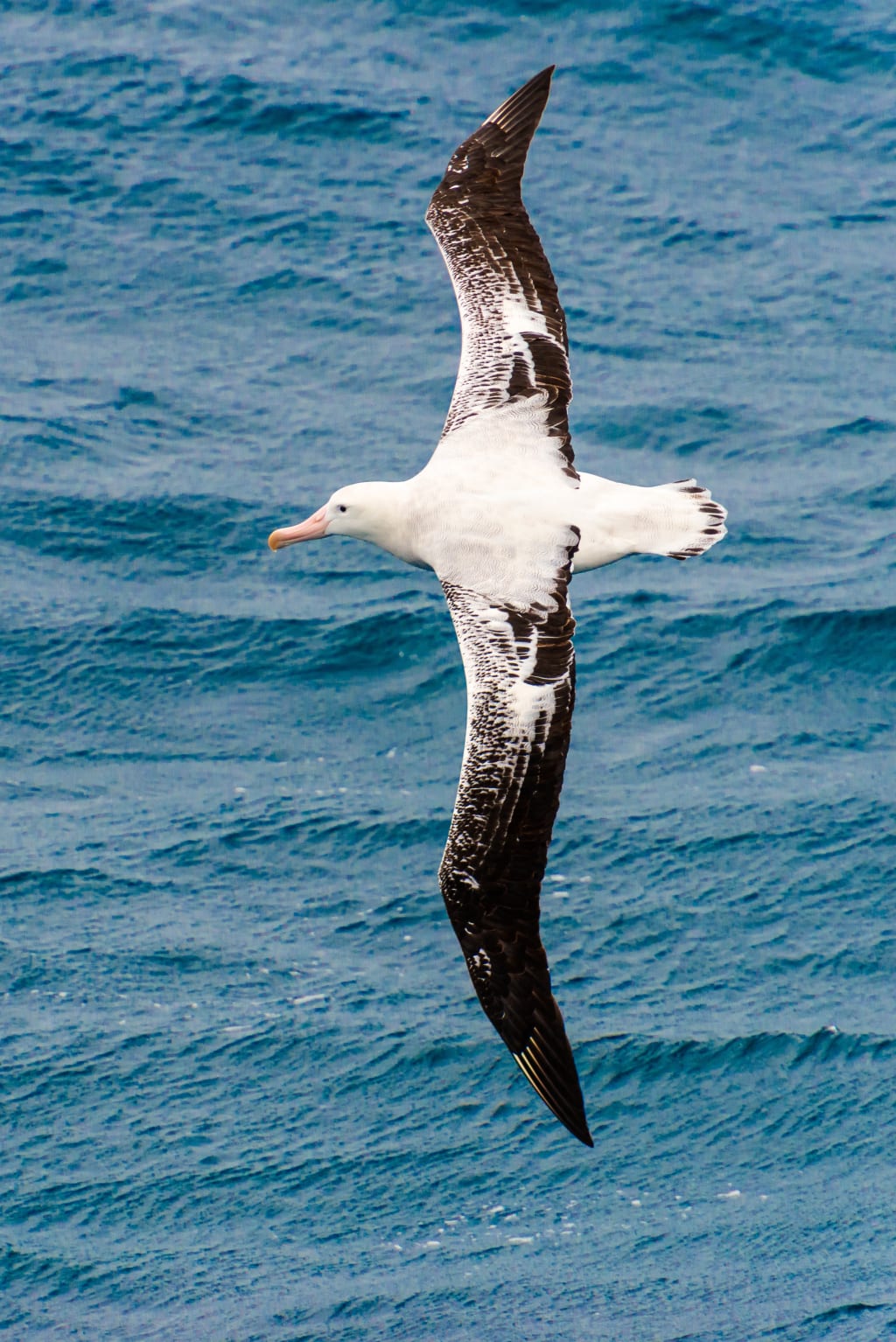
The Grey-Headed Albatross (Thalassarche chrysostoma) is a large seabird that belongs to the family Diomedeidae. With an impressive wingspan of up to 7 feet, these albatrosses are renowned for their exceptional flying capabilities, spending the majority of their lives in flight over the open ocean. Their striking appearance, characterized by a white head and body contrasting with a grey mantle, adds to the allure of these oceanic wanderers.
Chapter 2: The Circumnavigation Mystery Unveiled
The revelation that Grey-Headed Albatrosses can circle the globe in just 46 days emerged from a collaborative effort among ornithologists, marine biologists, and technology experts. Tracking devices, such as satellite transmitters, were instrumental in unveiling the secrets of their long-distance journeys. Researchers affixed these lightweight devices to the backs of several albatrosses, allowing them to monitor the birds' movements with unprecedented precision.
Chapter 3: The Journey Begins
Grey-Headed Albatrosses primarily breed on subantarctic islands, such as South Georgia and the Falkland Islands, during the austral summer. After the breeding season, these magnificent birds embark on epic journeys that take them across vast stretches of the Southern Ocean. The ability to cover immense distances is crucial for their survival, as they search for food, mainly squid and fish, in the nutrient-rich waters surrounding Antarctica.
Chapter 4: Navigating the Open Ocean
What makes the Grey-Headed Albatross' feat even more astonishing is the challenging environment in which it occurs. The Southern Ocean is notorious for its fierce winds and tumultuous seas, yet these birds have evolved to harness these elements to their advantage. With a wingspan designed for efficiency rather than speed, albatrosses are capable of covering hundreds of miles in a single day, effortlessly gliding above the waves.
Chapter 5: Understanding the Factors
Several factors contribute to the Grey-Headed Albatross' ability to complete a global circuit in such a short time. Wind patterns, for instance, play a crucial role. Albatrosses are adept at exploiting prevailing winds, using them to cover great distances with minimal energy expenditure. Their mastery of dynamic soaring, a technique where they use wind gradients to gain altitude and then descend with remarkable speed, further enhances their efficiency in traversing vast expanses of ocean.
Chapter 6: The Importance of Conservation
While the Grey-Headed Albatross' remarkable journey is a testament to the marvels of nature, it also underscores the challenges these seabirds face. Albatross populations worldwide are under threat from various human-induced factors, including longline fishing, plastic pollution, and climate change. Understanding their migratory patterns and behavior is crucial for implementing effective conservation strategies to ensure the survival of these iconic birds.
Conclusion:
The Grey-Headed Albatross, with its ability to circle the globe in a mere 46 days, stands as a testament to the awe-inspiring wonders of the natural world. Through the collaborative efforts of scientists and technological advancements, we gain a deeper understanding of the incredible feats these seabirds achieve in their quest for survival. As we marvel at their unparalleled navigational skills and endurance, it becomes imperative to recognize the importance of preserving their habitats and mitigating the threats they face, ensuring that the Southern Ocean continues to be graced by the silent wings of these majestic wanderers.
About the Creator
Keep reading
More stories from fatima zahra ajankar and writers in Humans and other communities.
"Weaving Nature's Tapestry: The Intricate World of Spiders in Green Landscapes".
Introduction: The Hidden Architects - Unveiling the Abundance of Spiders in Green Areas In the seemingly tranquil landscapes of green areas, where sunlight dapples through leaves and a symphony of nature unfolds, a hidden world thrives—one that often escapes the casual observer's eye. Spiders, the silent architects of intricate webs and skilled hunters, weave their existence into the very fabric of green spaces. Astonishingly, an average of 50,000 spiders per acre contributes to the biodiversity tapestry, embodying a crucial and often overlooked dimension of the ecosystems that surround us. In this exploration, we venture into the realms of green areas to unravel the roles, behaviors, and ecological significance of these arachnid inhabitants.
By fatima zahra ajankar2 years ago in Humans
Autonomy Is The Real Privilege
Good morning, freedom-seekers! Today we’re gonna be looking at autonomy. A strange word, I know; one many would probably look at blankly and run away from on sight. We’re gonna figure out what it actually means, consider how it’s achieved, and decipher just how deeply most of us are tangled up in dependence without realising it.
By That ‘Freedom’ Guy6 days ago in Humans
The Path to Salvation
The late autumn evening air filled the monk's lungs, but it wasn't the season that chilled his bones. The heavy-handed presence of evil he had sensed upon entering the woods surrounding this mountain village had not bothered to conceal itself from him.
By Made in DNA4 days ago in Fiction



Comments
There are no comments for this story
Be the first to respond and start the conversation.