
The Social Media Influence Dilemma: Are We Losing Ourselves?
Social Media
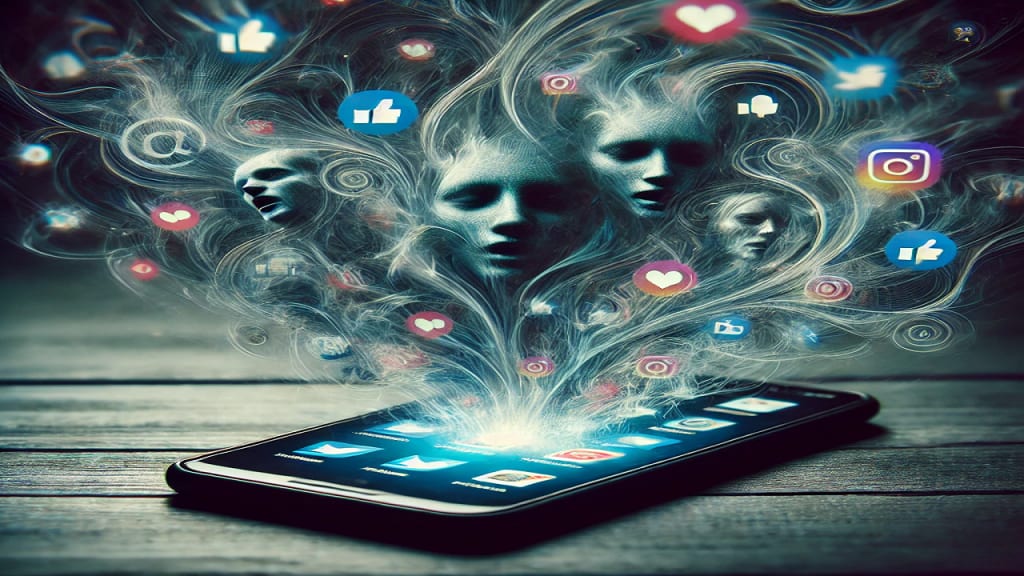
In today's hyperconnected world, social media has transformed how we interact, communicate, and present ourselves. Platforms like Instagram, TikTok, and Facebook have given rise to influencers, digital communities, and viral moments. But beneath the allure of perfectly curated feeds and fleeting "likes," there’s a growing concern: are we losing ourselves to our online personas? Here we will go through the dilemma with example.
The Rise of the Online Persona
Social media platforms offer a unique space for people to craft and share their lives. But with this comes the temptation to portray an idealized version of oneself, often leaving behind authenticity in favor of approval.
People carefully select the parts of their lives that will be seen by others, filtering out the mundane or less flattering moments. From the perfect vacation photo to a post highlighting career achievements, everything is curated to project success, beauty, or excitement. The idea of “living your best life” becomes a performance, and users begin to associate their self-worth with how their online persona is perceived.
This pressure affects not only influencers and celebrities but also everyday users, especially younger generations who grow up immersed in the world of “likes” and “follows.” As a result, the line between who we are and who we present to the world becomes increasingly blurred.
Example: Influencers set high beauty and lifestyle standards, causing followers to feel inadequate when they can’t match these unrealistic portrayals. Many people find themselves living for the next Instagram-worthy moment instead of enjoying the present.
Impact on Human Interactions
While social media was designed to bring us closer, it has, in many ways, done the opposite. People are now more likely to communicate through screens than in person, and this shift has impacted the depth and quality of our interactions.
It’s common to see a group of friends sitting together, heads buried in their phones, each person engrossed in their own online world. The convenience of messaging apps and social media comments has made real-life conversations seem like a hassle, leading to shallow, surface-level interactions. We respond with emojis instead of emotions, replacing meaningful engagement with quick, digital responses.
Social media gives the illusion of connection—allowing us to stay in touch with hundreds of people at once. However, this broad, superficial reach can lead to feelings of isolation, as many people report fewer close, meaningful relationships in their lives despite being “connected” to more people online than ever before.
Example: A 2021 study found that people who spent more time on social media reported higher levels of social isolation compared to those who prioritized face-to-face interactions.
Mental Health and the 'Comparison Trap'
One of the most insidious effects of social media is the "comparison trap." As we scroll through highlight reels of other people's lives, it’s easy to feel as if we’re not measuring up. From fitness transformations to luxury vacations, users are bombarded with idealized images that are carefully curated to show only the best moments.
This constant comparison can lead to feelings of inadequacy, anxiety, and even depression. When we compare our behind-the-scenes struggles to someone else’s highlights, it’s inevitable that we’ll come up short. Research has shown a strong correlation between heavy social media use and increased mental health issues, particularly among teens and young adults.
The relentless pursuit of online validation—whether through likes, comments, or followers—further compounds these negative feelings. Social media platforms are designed to be addictive, rewarding users with dopamine hits whenever they receive digital praise, creating a cycle of dependence and emotional strain.
Example: According to a study by the Royal Society for Public Health, Instagram was ranked as the worst social media platform for young people's mental health, contributing to high levels of anxiety, depression, and fear of missing out (FOMO).
The Obsession with Validation
The race for online validation has never been more intense. In the age of social media, our self-esteem often becomes tied to numbers—how many likes, comments, or shares we receive on a post. This digital validation becomes addictive, with users constantly seeking approval from their followers.
This quest for validation has a significant impact on how we present ourselves online. Many people choose to post only content that will generate the most positive response, sometimes bending the truth or exaggerating aspects of their lives to gain more engagement. This behavior fosters a culture of comparison and competition, where self-worth is measured by online attention.
The problem with relying on external validation is that it can become an obsession. People begin to crave the dopamine rush that comes from a successful post, and when engagement drops, so does their self-esteem. This addiction can lead to anxiety, self-doubt, and even social media burnout.
Example: Social media influencers often share stories of feeling overwhelmed by the constant pressure to produce content that will go viral, leading to mental health struggles and a need for digital detoxes.
Are We Losing Our True Selves?
As people become more invested in their online personas, it raises an important question: are we losing touch with our authentic selves? The more we focus on curating a life for the digital world, the more we distance ourselves from who we really are.
Social media encourages users to present a polished, often exaggerated version of their lives, leaving little room for vulnerability or imperfection. This constant curation can create a divide between our real selves—flawed, nuanced, and evolving—and our online selves, who are often portrayed as flawless and unchanging.
Over time, this disconnect can make it difficult to recognize or embrace our true identity. Instead of focusing on what genuinely makes us happy or fulfilled, we start prioritizing what will be well-received by an online audience. This shift in priorities can affect everything from personal relationships to career choices, as more people shape their lives around social media success rather than real-world fulfillment.
Example: A growing number of individuals are choosing to step away from social media entirely, citing the desire to reconnect with their authentic selves and escape the pressure of constant self-promotion.
Finding Balance in a Digital World
It’s clear that while social media offers immense benefits, it also poses serious risks to our sense of self and mental health. The key to navigating this digital age lies in balance—using social media as a tool for connection and expression without letting it dominate our identity or relationships.
Call to Action: Encourage readers to reflect on their social media use and make mindful adjustments to ensure they stay true to themselves.
About the Creator
Berry
I’m passionate about sharing compelling stories, intriguing ideas, and thought-provoking insights. My goal is to inspire curiosity and spark engaging conversations. Stick around for content that’s not just enjoyable but also irresistible.
Time to change your life.
Is it even possible for you to change your life? A lot of people, more than there should be, are unhappy with their lives. But what are they doing about it? Usually nothing. People talk about how shitty their lives are and want change, but are they not taking the actions to change?
By Jen Phillips2 days ago in Humans
Cassidy’s Walkabout: When Losing Your Way Becomes the Only Way to Find Yourself
Cassidy didn’t plan the walkabout. There was no dramatic goodbye, no slammed door, no poetic last message left behind. It started as a normal morning—coffee half-finished, phone buzzing with notifications she didn’t want to answer, and a mirror reflection she barely recognized. Somewhere between obligation and exhaustion, Cassidy made a decision so quiet it almost didn’t feel like one at all. She walked away. Not from a place, not from a person—but from a version of life that felt loud, heavy, and wrong. This is Cassidy’s walkabout—and maybe, in some strange way, it’s yours too. What Is a Walkabout, Really? Traditionally, a walkabout refers to an Australian Aboriginal rite of passage—a journey into the wilderness, meant to discover identity, purpose, and belonging. But Cassidy’s walkabout wasn’t mapped on land. It was internal. A walk away from: Expectations she never agreed to Dreams she inherited but never chose A version of success that left her empty Cassidy’s walkabout was not about distance. It was about disconnection—from noise, pressure, and the constant demand to perform. The Quiet Burnout No One Talks About Cassidy looked “fine” from the outside. She had: A stable job A functioning social life A calendar full of plans But inside, she was burning out in silence. This is the most dangerous kind of burnout—the one that doesn’t collapse you all at once. It erodes you slowly, politely, invisibly. She wasn’t tired of working. She was tired of pretending. Pretending she cared about meetings that meant nothing. Pretending she knew where her life was going. Pretending she wasn’t deeply, profoundly lost. Why Walking Away Feels Like Failure (But Isn’t) Society teaches us that quitting is weakness. If you leave a job, you “couldn’t handle it.” If you leave a relationship, you “gave up too easily.” If you take a break, you’re “falling behind.” Cassidy believed this too—until the day she realized something terrifying: Staying was costing her more than leaving ever could. Walking away didn’t mean she failed. It meant she finally listened. The First Days of the Walkabout: Silence Is Loud The early days were uncomfortable. No schedules. No deadlines. No clear identity. Without constant noise, Cassidy was forced to sit with herself—and that’s harder than it sounds. Silence asked questions she had been avoiding: Who am I when I’m not productive? What do I want when no one is watching? Why am I afraid of slowing down? At first, the silence screamed. Then, slowly, it started to speak. When You Stop Performing, You Start Feeling Cassidy noticed something strange. Without the pressure to impress, she began to feel again. Small things mattered: The way sunlight hit the floor The weight of a book in her hands The relief of saying “no” without guilt For years, she had lived as a performance—measured by output, approval, and constant motion. The walkabout stripped all that away. What remained was raw, unfinished, and honest. Loneliness on the Road Inward Let’s be honest—Cassidy’s walkabout wasn’t romantic all the time. There were lonely nights. Moments of doubt. Days when she questioned everything. Walking away means losing familiar anchors, even unhealthy ones. And loneliness has a way of making old cages feel safe again. But Cassidy learned a difficult truth: Loneliness is not the enemy. Numbness is. The Myth of “Finding Yourself” Cassidy didn’t wake up one day fully healed, enlightened, or magically confident. There was no cinematic moment of clarity. Instead, she discovered something more real: You don’t find yourself. You build yourself—slowly, imperfectly, daily. Her walkabout wasn’t about answers. It was about better questions. Lessons Cassidy Learned Along the Way 1. You’re Allowed to Change Your Mind Who you were at 18 doesn’t get to decide your life forever. 2. Rest Is Not Laziness Rest is repair. Resistance. Survival. 3. Not Everyone Will Understand Your Walk And that’s okay. This journey isn’t for them. 4. Direction Is Overrated Sometimes, being lost is the point. The World Doesn’t Stop When You Step Away One of Cassidy’s biggest fears was that life would move on without her. It did. And that was strangely comforting. The world didn’t collapse. People adapted. Opportunities didn’t disappear. What did change was Cassidy’s relationship with time. She stopped racing it. She started inhabiting it. Returning—But Not the Same A walkabout doesn’t mean disappearing forever. Eventually, Cassidy returned—to work, to people, to responsibilities. But she returned different. She set boundaries. She chose slower paths. She valued meaning over momentum. The world looked the same. She didn’t. Why Cassidy’s Walkabout Resonates With Millions Because this isn’t just Cassidy’s story. It’s the story of: People trapped in lives they didn’t choose Dreamers exhausted by survival mode Souls craving permission to pause In an age of hustle culture, Cassidy’s walkabout is an act of quiet rebellion. Maybe You’re Already on Your Own Walkabout You don’t need to quit your job. You don’t need to disappear. You don’t need a dramatic escape. Sometimes, a walkabout begins with: One honest boundary One brave “no” One moment of listening to yourself The journey doesn’t require distance. It requires courage. Final Thoughts: Walking Away to Walk Toward Yourself Cassidy’s walkabout wasn’t about running from life. It was about running toward truth. Toward presence. Toward self-respect. Toward a life that feels lived—not endured. And maybe the most powerful thing about a walkabout isn’t where it takes you… …but who you stop being along the way.
By Zahid Hussain7 days ago in Humans


Comments
There are no comments for this story
Be the first to respond and start the conversation.