
The Silent Violin: A Lesson from the Orchestra of Life
In a world that celebrates loud voices, a quiet violinist teaches us the power of listening, harmony, and knowing when not to play.

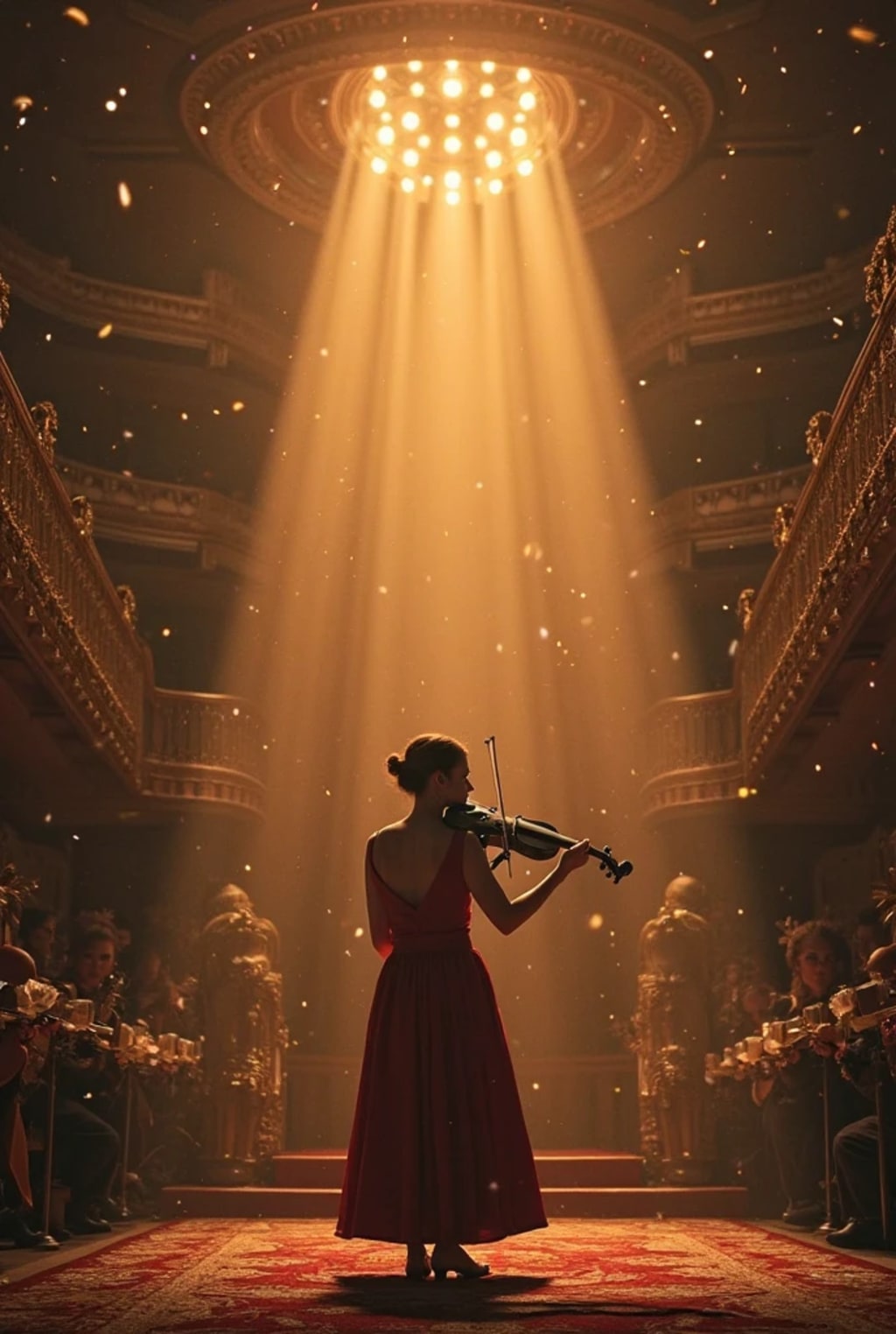
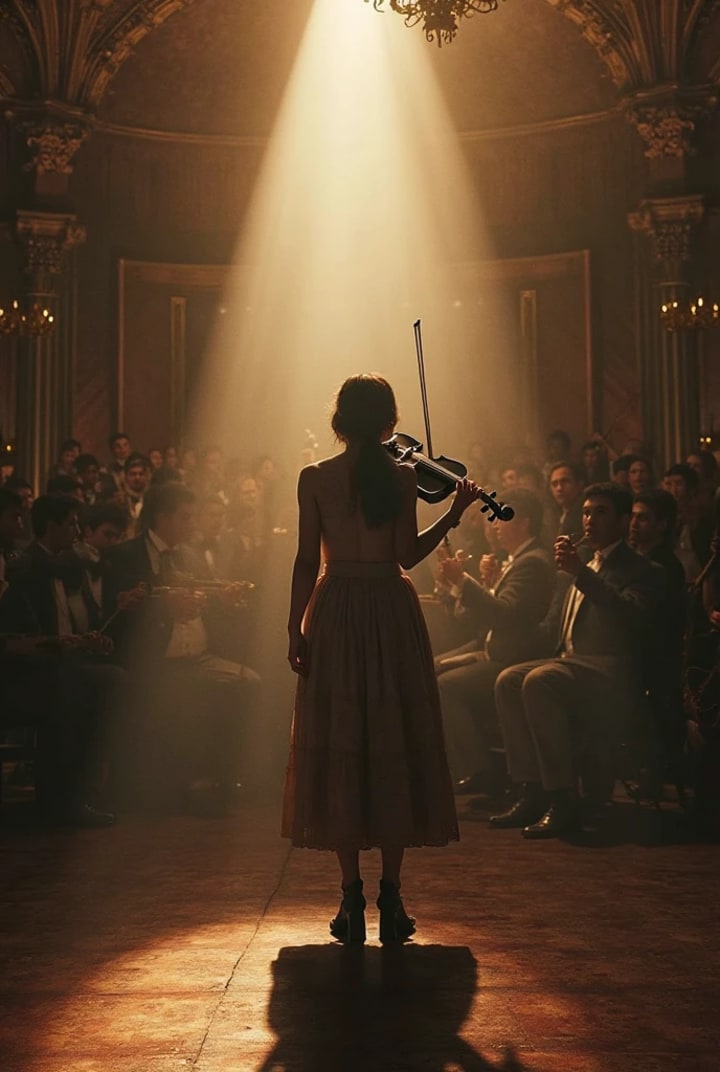
The Silent Violin: A Lesson from the Orchestra of Life
In the heart of Vienna, where classical music drips from the air like the scent of roasted chestnuts in winter, the city’s grandest concert hall echoed with the hum of instruments warming up. The air buzzed with nervous energy and anticipation. The Vienna Philharmonic Orchestra was preparing for its season's opening night, and every musician was tuned not only to their instrument but to the unspoken rhythm of perfection the city demanded.
Among them sat 19-year-old Clara Weiss—young, reserved, and barely noticed—positioned quietly on the second row of the violin section. Her violin was vintage but unremarkable to most eyes, its wood worn by generations of modest musicians. Clara had won her place through a scholarship, countless hours of practice, and a miracle. But she wasn’t a prodigy. She was steady, humble… and, as some critics murmured, forgettable.
She knew the whispers. The “stand-in violinist.” The one who never shone too bright. The one who always played the right notes, but never with the fire of a star.
What they didn’t know—what no one cared to notice—was that Clara’s talent wasn’t in showing off. It was in listening.
I. The Opening Movement
The orchestra’s conductor, Maestro von Richter, was a legend. His baton, like a lightning rod, commanded the heavens of harmony. He was exacting, cold, and brilliant. No one questioned him. Especially not Clara.
During rehearsals, Clara played every note as written, but she paid more attention to the spaces in between. She listened for the heartbeat of the music. For the tiny changes in breath when the flautist was about to come in a split-second early, or when the cellist’s bow trembled just enough to foreshadow emotion.
She never interrupted.
She never needed to.
Until the soloist arrived.
II. The Guest Violinist
Luca Antonelli was fire and fame. Italy’s 27-year-old violin genius, dressed more like a rock star than a classical musician, was invited to perform Tchaikovsky’s Violin Concerto in D Major as the centerpiece of the opening night.
From the moment he entered the hall, all eyes shifted.
His playing? Breathtaking. But volatile.
He took liberties with the tempo. Added personal flourishes. And above all—he ignored the orchestra’s rhythm.
By the second rehearsal, it became clear: Luca wasn’t just playing the concerto—he was battling it.
Maestro von Richter was visibly strained but allowed it. After all, Antonelli was the draw. The media darling. The sold-out reason for the hall’s 2,000 seats being filled.
But Clara heard something else beneath the chaos: misalignment. Mistrust. A quiet unraveling of what made an orchestra… an orchestra.
Still, she said nothing.
Until Luca turned to her mid-rehearsal and snapped, “You’re flat. Again.”
Heads turned.
Clara blinked. She wasn’t flat. She knew it. So did most of the violin section. But Maestro said nothing. The rehearsal moved on.
And Clara kept playing—with more grace than pride.
III. The Violin’s Silence
The night of the concert arrived. The hall was packed. The chandeliers above glistened like frozen stars. Musicians took their seats in polished black, hearts pounding.
The performance began.
Beethoven. Flawless.
Mozart. Smooth.
Then—Tchaikovsky.
Luca stepped onto the stage like a storm. The orchestra followed. Barely.
He soared in and out of the tempo, pulling the strings of the piece like it was a personal diary entry, not a shared language.
Halfway through the first movement, Clara felt it—something small. A missed cue. A dissonance. The winds lagged behind by a breath. The violas tried to adjust. The cellos strained to keep up.
She knew what had to happen. And for the first time in her life—she didn’t play.
For four bars, Clara’s violin was still.
No one noticed. Not even Luca.
But the second violins did. The first chair turned to glance.
She came in again—soft, precisely in time with the original tempo.
The section re-aligned.
And slowly, like a ripple, the orchestra centered itself again—not around Luca’s feverish pace, but around the unshaken, invisible rhythm of the music as written.
The audience never knew. But the musicians felt it.
Clara had not corrected Luca.
She had corrected the music.
IV. After the Applause
The concert ended in a standing ovation. The critics applauded Luca, Maestro, the grandeur of the hall.
Clara quietly packed her violin.
As she turned to leave, she felt a gentle hand on her shoulder.
It was the first chair violinist. Anna.
“You saved us tonight,” she said softly.
Clara shook her head. “I didn’t do anything.”
“No. You listened. And you knew when not to play. That takes more wisdom than most musicians ever learn.”
V. The Unwritten Coda
Weeks passed. The buzz of the concert faded into Vienna’s endless calendar of cultural events.
One day, Clara received a letter. It was hand-written, the ink smudged in places:
Clara,
You are not loud. You are not flamboyant. But you are true. What you did during the concerto—holding silence with courage—that was the purest form of leadership I’ve ever seen. Most people believe power comes from standing in front. But sometimes, it comes from knowing when to disappear for the sake of the music.
Never change that.
Maestro von Richter
She kept that letter in her violin case for the rest of her life.
Years later, Clara became the youngest concertmaster in the orchestra’s history. Not because she demanded attention—but because she conducted connection without a baton.
And in every performance she led, she taught young musicians one sacred rule:
"Never fear silence. It is not emptiness—it is space for others to be heard."
💡 The Lesson:
In life—just like in an orchestra—there are times to shine and times to step back. Leadership doesn’t always mean being the loudest or the most visible. Sometimes, it means knowing when to listen, when to hold space, and when to play the exact right note… or none at all.
The true harmony of life is not in commanding the stage—but in serving the music.
About the Creator
Fazal Hadi
Hello, I’m Fazal Hadi, a motivational storyteller who writes honest, human stories that inspire growth, hope, and inner strength.
Keep reading
More stories from Fazal Hadi and writers in Humans and other communities.
West Coast Gold: The Treasure That Wasn't Buried
West Coast Gold: The Treasure That Wasn't Buried The salt of the sea hung thick in the air as Liam stepped off the rickety bus, its brakes squealing like seagulls overhead. Fort Bragg, a sleepy stretch along California’s northern coast, was not where most 23-year-olds planned to spend their summer. But Liam wasn’t most 23-year-olds. He wasn’t looking for sun or surf—he was chasing a ghost.
By Fazal Hadi8 months ago in Humans
Restoring Balance in Medicine: Andrew Rudin MD on Why Prevention Must Come First
Modern healthcare has delivered extraordinary achievements. Medications control conditions that once shortened lives. Procedures restore heart rhythm, open blocked arteries, and prevent sudden cardiac events. Imaging technologies allow physicians to detect disease earlier and with greater precision than ever before. Yet despite these advances, many patients feel that care often begins too late. Treatment is efficient, but prevention is inconsistent. According to Andrew Rudin MD, this imbalance now represents one of the most significant challenges facing modern medicine.
By Dr. Andrew Rudin5 days ago in Humans


Comments
There are no comments for this story
Be the first to respond and start the conversation.