
The Paradox of Choice: Why Too Many Choices Leave Us Unhappy
How Too Many Options Can Sabotage Happiness—and What to Do About It

Introduction: Drowning in Choice
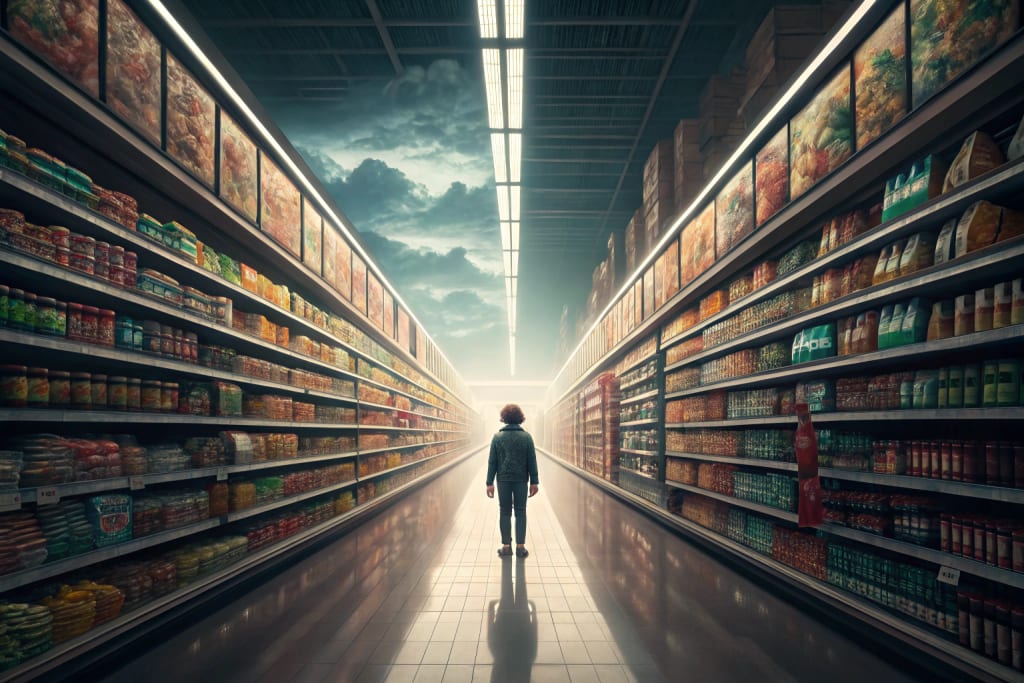
Browse Netflix on a Friday night, and you find yourself doing something strange. With thousands of TV shows and films to choose from, you sit there paralyzed—scrolling forward and backward, unable to decide. The freedom that is meant to feel exhilarating instead chokes you. And when finally you do decide, you can't help but wonder whether something greater was left unseen.
It is not merely an humble nuisance of the computer era. It's a psychological phenomenon known as the paradox of choice: the notion that, while some degree of choice is essential for happiness and liberty, too much of it creates anxiety, unhappiness, and even regretfulness.
In this day and age—when we can personalize our lattes, browse through endless dating profiles, and choose careers from borders away—the issue has only grown more severe. Having more options doesn't necessarily mean more happiness. Sometimes they make us more uncertain about ourselves than ever.
Let's dig in why.

The Psychology of Decision-Making
In the middle of every choice is a balancing act in the head. Decision-making, psychologists call it weighing perceived gain against possible loss. When there are few alternatives, the process is simple. But as possibilities increase, so does the possibility of not knowing.
Barry Schwartz, a man who has coined the term "paradox of choice," argues that modern abundance forces us to make constant calculations: What if this isn't the best deal? What if I'm going to regret it? Our minds, designed to survive in less complex environments, stumble over such endless evaluation.
This leads us to two types of decision-makers:
• Maximizers: people who try to make the absolutely best choice each time. They continually compare, analyze, and search for perfection—most often at the cost of happiness.
• Satisficers: people who choose what's "good enough" and move on. They're less anxious and happier.
Theoretically, more choice means more freedom. In reality, it can overload our cognitive ability, causing indecision, second-guessing, or constant dissatisfaction.
Why More Options Often Increase Anxiety
Imagine going into an ice cream shop. The menu has three choices: vanilla, chocolate, strawberry. Choice-making is quick. Imagine the menu having fifty choices—mango sorbet, rocky road, pistachio, salted caramel swirl. Now, the enjoyment of ice cream is interrupted by mental math. What if pistachio would be better than rocky road? Did I forget hazelnut?
This is the panic of abundance. The greater the choices, the higher the expectations. If you have endless choices, there has to be a perfect one. If your choice is not perfect, then you've failed somehow.
This is more than dessert-stress. Psychologists Sheena Iyengar and Mark Lepper famously experimented with samples of jam. In the test, one grocery store had customers offered 6 or 24 varieties of jam. While more people stood to look over the wider range, only 3% bought jam compared to 30% from the smaller sample. Having too many choices discouraged action.
It's not that we hate variety—it's that too much variety leads to paralysis and regret.
Real-World Examples: From Shopping to Dating
The paradox of choice plays out in nearly every aspect of modern life.
Shopping
E-commerce promises infinite aisles of products, but it's actually decision fatigue. Buying something as mundane as headphones is an exercise in hours of comparison of features, reading reviews, and worrying about buyer's remorse. Which is why minimalist brands—those offering fewer, carefully curated items—are successful. They take away the weight of choice.
Relationships
Dating websites expose a person to thousands of profiles. Ideally, this optimizes romantic potential. Practically, it generates "grass-is-greener" syndrome, whereby every potential partner is compared with endless others. Instead of reinforcing commitment, abundance breeds doubt and constant searching.
Technology
From choosing which smartphone model to purchase to managing app notifications, technology gives us endless micro-decisions each day. Even the choice of filter on Instagram can be an identity performance act. And if everything is editable, we are responsible for making the "right" decision every time.
The irony? What was designed to liberate us has a tendency to trap us in infinite rounds of indecision.
The Science Behind Decision Fatigue
Overchoice not only makes us anxious—it exhausts us.
Decision-making is a finite resource. Each decision, however small, depletes us. It's called decision fatigue by psychologists. At night, after making countless decisions (what to wear, what to eat, how to respond to messages), our minds are depleted. That's when we default to poor decisions—fast food, impulse buys, or skipping the gym.
A dramatic example is the case of a study of parole judges. Judges were discovered to grant parole earlier in the day or following a lunch break. The more they were fatigued, the more they defaulted to denying parole—not because they were biased, but because they were tired.
If specialists assigned with life-changing decisions aren't immune to it, then we are not either. That's why even mundane tasks like pre-preparation of meals or sticking to morning routines can protect us from burnout.

Strategies to Simplify Choices
So how do we flourish amid abundance without getting swamped by it? The answer isn't to eliminate choice but to impose boundaries that free us.
1. Limit Options Intentionally
Instead of mindlessly scrolling, put limits. For example, stick to three brands when you go shopping. Or time limits on the dating apps. Limits create clarity.
2. Be the "Good Enough" One
Move from maximization to satisficing. Instead of searching out the perfect sweater, choose one that is warm, feels good, and you like. Making "good enough" really be enough relieves pressure.
3. Automate Routine Decisions
Steve Jobs wore the same black turtleneck daily. Barack Obama wore blue or gray suits every day. Why? Save mental energy for bigger choices. Eliminating small decisions (e.g., preparing meals or morning attire) saves energy.
4. Practice Gratitude After Choosing
When a decision has been made, concentrate on enjoying it and not dwelling on what could have been. Gratitude re-maps the brain to find joy in what is, rather than what could have been.
5. Design Rituals of Simplicity
Digital detoxes, capsule wardrobes, or minimal living aren't fads—they're protective gear against decision fatigue. Carefully curated simplicity gives mental breathing space.
Finding Freedom Through Simplicity
Paradox of choice is no call to retreat from the modern age. It's an invitation to rethink what freedom is. True freedom isn't in infinite choice—it's in the ability to choose with clarity, unencumbered by the ocean of doubt.
Philosophically, it sounds through the ages. Stoic philosophers like Epictetus demanded focusing on what we can control. Buddhists taught letting go of desire. Today, the same remains: with embracing of limits comes peace.
When we stop chasing the fantasy of ideal choice, we are available for happiness in the choices we do make. The dinner we eat, the friend we date, the course we pursue—each is more important when we stop imagining the limitless "what-ifs."

Conclusion: Less, But Better
We live in an age of unprecedented abundance. That abundance can feel like both a blessing and a curse. The paradox of choice teaches us that happiness isn’t found in infinite options but in mindful selection, intentional boundaries, and the courage to embrace “enough.”–
Next time you’re overwhelmed by a menu, a playlist, or a crossroads in life, pause. Remember: simplicity is not a lack. It’s clarity.
And in simplicity, we usually find something much greater than the ultimate decision—peace with our decisions.
About the Creator
The Chaos Cabinet
A collection of fragments—stories, essays, and ideas stitched together like constellations. A little of everything, for the curious mind.
Keep reading
More stories from The Chaos Cabinet and writers in Humans and other communities.
The Brain's Hidden Orchestra: How Music Rewires Our Minds
Introduction: When Sound Becomes Memory A melody floats by—a song that you know—and suddenly, you're not here. You're back in your bedroom, singing along to the radio. Or on your wedding day, dancing to the dance floor. Or alone in a moment of need, comforted by a song that once helped you survive heartbreak. Music has an odd ability to transport us across time and space, combining fragments of our lives with invisible threads of rhythm and melody.
By The Chaos Cabinetabout a month ago in Humans
Light the Spirit of Winter
The winter season often holds bittersweet nostalgic memories. In the Southern hemisphere, locals will recall long winter days and a BarB at the beach, but in the Northern hemisphere, the ghosts of Christmas past are released during the longest nights before solstice. For many, 'tis the season of Anhedonia. The lack of interest, enjoyment or pleasure is a common symptom of many mental health conditions.
By Katherine D. Graham27 days ago in Humans
'20/20'
"Do It Again" the track that would ultimately open the Beach Boys final album on Capitol Records which was released on February 10th 1969 had originally been released as a single in August of 1968. The track was the first of many post-Pet Sounds era throwbacks to the early Beach Boys sound which would become continually more cliched and eventually lead the Beach Boys to the level of self-parody they would eventually succumb to in the 1980s while their closest contemporaries The Beatles nearing the end of their run in 1969 would go on to be viewed as the most influential band of all time. However, the song itself is not bad on its surface, and it opens with a futuristic sounding (for 1969) drumbeat captured by then-Beach Boys engineer Stephen Desper using tape delays on the drums performed by Dennis Wilson and John Guerin. The song has been re-recorded numerous times over the years on various Beach Boys-related projects most notably the 2011 re-recording at Capitol studios featuring the five surviving Beach Boys at the time backed instrumentally by various members of both the Brian Wilson Band and Mike Loves touring "Beach Boys" to promote the then upcoming Beach Boys 50th Anniversary reunion tour in 2012. The hammering and power drill sound at the end of the song was an excerpt from a track called "Workshop" that was to be a part of the uncompleted "SMiLE" album.
By Sean Callaghan6 days ago in Beat


Comments (1)
Very beautiful