
The Odyssey Within: Unlocking the Boundless Human Self
Human self

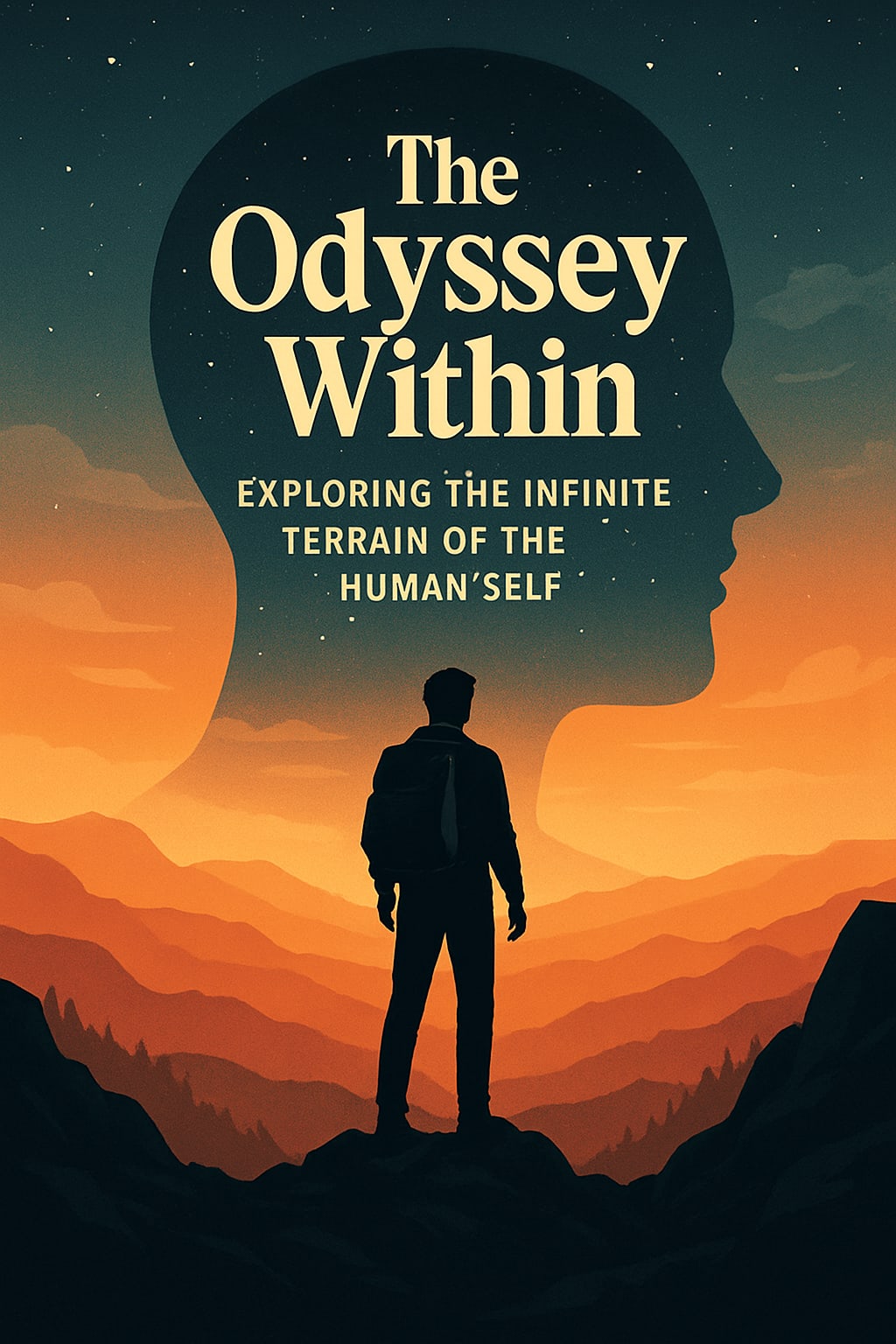
In the age of artificial intelligence, interstellar aspirations, and bioengineering, we often overlook the most extraordinary and uncharted frontier—the human self. It is the place where all journeys begin and ultimately end. We can cross continents, build empires, and decode the cosmos, but if we fail to understand who we are—what makes us feel, think, act, and exist—then all outward accomplishments are but shadows on the wall of our inner cave.
The self is both a battleground and a sanctuary, a library of memories and a forge of destiny. Its boundaries are as elusive as the horizon, and its depth rivals the universe itself. To explore the human self is to embark on an adventure so intricate and vast that it demands not only intellect but bravery, imagination, and deep introspection.
I. The Origins of the Self: Nature and Nurture in Collision
The birth of the self is not marked by the cutting of an umbilical cord alone. It begins in the womb, where the genetic whispers of our ancestors align with the subtle rhythms of our mother’s heartbeat. But biology is only the foundation. The structure of the self is erected through experience—through the warmth of a first embrace, the confusion of pain, the joy of discovery.
Nature gives us the clay, but nurture shapes the sculpture. From infancy to adolescence, the self is sculpted by language, culture, values, and trauma. Each interaction, each emotional encounter, adds detail to our developing inner landscape. A child who grows up surrounded by love and affirmation may construct a self that feels safe and open, while another raised in fear or neglect may craft a self that is armored, vigilant, or fragmented.
Yet the human self is not a passive product—it is an active alchemist. Even in the darkest environments, it seeks meaning, adapts, and often survives through resilience that borders on the miraculous.
II. The Hero’s Journey: The Self as Seeker
Every myth across every culture speaks of a hero venturing out into the unknown to face trials, gain wisdom, and return transformed. This narrative mirrors the fundamental journey of the human self.
We are all born as seekers. Whether through education, career, relationships, or spiritual exploration, the self is on a perpetual quest for identity and belonging. We seek to answer questions that echo across generations: Who am I? Why am I here? What is my purpose?
The self evolves in stages, often marked by disruption. Adolescence challenges our inherited beliefs; adulthood tests our convictions with responsibility and compromise. Crisis—be it existential, emotional, or spiritual—is the crucible in which a new self may emerge. These moments, painful though they are, allow the false identities we wear like armor to melt away, revealing the raw and real self beneath.
The journey is not linear. It loops, reverses, spirals forward. Some never begin it, content with borrowed truths. Others venture too far, losing their way. But those who walk the path with courage and reflection discover that the greatest treasures lie not outside, but within.
III. The Layers of the Self: A Multi-Dimensional Tapestry
To understand the human self, one must think beyond a single layer of personality or thought. The self is a tapestry woven from many threads:
1. The Physical Self: Our bodies are our vessels—mortal, changing, expressive. They carry our consciousness and respond to our inner state. Every heartbeat, every breath, is a dialogue between our biology and our awareness.
2. The Emotional Self: Emotions color our experiences and drive much of our behavior. The emotional self is sensitive, reactive, and vital for human connection. It is through emotion that we form attachments, experience empathy, and understand suffering.
3. The Rational Self: Our thoughts and judgments construct our worldview. The rational self is the architect of logic and the sculptor of language. It seeks to understand patterns and make decisions. But it is not always in control.
4. The Shadow Self: First described by Carl Jung, the shadow represents the aspects of ourselves we reject or hide—anger, jealousy, fear, desire. Confronting the shadow is essential to wholeness. It holds the keys to our deepest truths and our darkest tendencies.
5. The Higher Self: The aspirational dimension of our being. It embodies our highest values—compassion, purpose, integrity, creativity. It is the voice within that calls us to become more than what we were yesterday.
The interplay between these layers defines the complexity of being human. We are not one thing—we are many, and we shift between selves depending on the moment, the context, and the company we keep.
IV. The Self in Reflection: Identity, Illusion, and Authenticity
In our modern world, identity is often confused with labels—gender, profession, ethnicity, ideology. While these can be meaningful, they are not the essence of the self. They are roles we inhabit, masks we wear in different theatres of life. But behind them all is something more elusive and constant—the witness self, the observer behind the experience.
Authenticity is the alignment of the inner and outer self. To be authentic is to act in accordance with one's true values and essence—not to please, not to conform, but to express truth. This takes immense courage, especially in a society that rewards assimilation and punishes divergence.
But illusion, too, plays a role. The ego constructs stories to protect us. It tells us who we are based on past wounds and future fears. These stories are seductive, and often imprison us in identities that no longer serve our growth.
Breaking free requires silence. Stillness. Space. In meditation, nature, or solitude, the noise of the world fades, and the real self speaks—not in language, but in clarity.
V. The Self in Society: Connection and Collision
Though we are individuals, the self is relational. It exists in dialogue—with family, community, culture, and the collective consciousness. We are shaped by the stories we inherit and the systems we live in. But we also shape those systems.
The human self thrives in connection. Love, friendship, and collaboration are essential nutrients. Through the eyes of another, we often see ourselves more clearly.
But society can also distort the self. Social media, for example, rewards performance over presence, comparison over contentment. In such spaces, the self becomes fragmented, constantly adapting to external approval.
To protect and nurture the authentic self, we must be discerning. We must choose environments, relationships, and influences that resonate with our deeper values, not our temporary insecurities.
VI. The Self in Crisis: Breaking, Becoming, and Rebirth
No journey of the self is complete without moments of profound crisis. These are the “dark nights of the soul,” when meaning evaporates and identity dissolves. A breakup, a loss, a failure, an illness—these events crack the armor of the constructed self.
Yet it is through these cracks that light enters. When we are stripped of titles, roles, and routines, we are forced to ask the deeper questions: What remains when everything falls away?
In such moments, the self may break—but in breaking, it often becomes. Crisis is not the end—it is the threshold. The mythological phoenix burns only to be reborn in flame. So too, the self sheds skins that no longer fit, growing into a more expansive version of itself.
VII. The Expansive Self: Consciousness and the Infinite
Beyond psychology and identity lies a more mystical understanding of the self. Philosophical and spiritual traditions across time have spoken of a universal self, a field of awareness that transcends the individual ego.
In such states—through meditation, art, love, or awe—we experience a self that is not separate from the world, but one with it. The boundaries between self and other blur, and we touch the divine within. This is the realm of the transcendent self—eternal, limitless, interconnected.
While this state may not be permanent, its glimpses change us. They humble the ego and awaken a deeper sense of purpose. They remind us that we are more than our stories—we are consciousness itself, dreaming the dream of a person.
VIII. Becoming the Self: The Lifelong Mastery
To become oneself is the greatest work of art. It is a process of refinement, experimentation, failure, and evolution. It requires both solitude and community, both stillness and action.
It is not about perfection, but integration. Wholeness. To be human is to be a mosaic of contradictions—joy and sorrow, strength and vulnerability, control and surrender.
True maturity lies not in fixing the self, but in embracing its complexity. It is in knowing that we are always in motion, always becoming.
The tools of this mastery are available to all:
Reflection: the mirror of thought and memory.
Curiosity: the engine of growth.
Compassion: the bridge between selves.
Creativity: the expression of essence.
Courage: the willingness to confront truth.
---
Conclusion: The Infinite Voyage
The human self is not a destination. It is an infinite voyage through identity, emotion, thought, and spirit. It is the great frontier within, more vast than any galaxy, more mysterious than any myth.
To explore it is to live fully. To know it is to love deeply. To become it is to fulfill the silent promise we were born with—to bring the inner light into the world.
So if you are seeking adventure, don’t just look to the mountains or stars. Turn inward. There, in the silence behind your thoughts, a world awaits.
_ _ _
Thanks for reading.
About the Creator
Keep reading
More stories from Heavenly emperor Huang and writers in Humans and other communities.
Spirituality: The Grand Odyssey Within
Prologue: Into the Unknown In the symphony of human experience, there exists a note that hums beneath the noise of modern life—a quiet, persistent vibration that calls us inward. It is not tied to religion, nor defined by ritual. It does not demand temples or translations. It simply is. This note is the pulse of spirituality, and to follow it is to embark on the greatest adventure of all: the exploration of the self in its truest, most boundless form.
By Heavenly emperor Huang 8 months ago in Humans
Autonomy Is The Real Privilege
Good morning, freedom-seekers! Today we’re gonna be looking at autonomy. A strange word, I know; one many would probably look at blankly and run away from on sight. We’re gonna figure out what it actually means, consider how it’s achieved, and decipher just how deeply most of us are tangled up in dependence without realising it.
By That ‘Freedom’ Guya day ago in Humans
Valentine’s Day Chat Up Lines That Get Replies Not Ghosted
Valentine's Day adds strain. Messages are more important. With one lousy opening, the conversation dies. We've all seen it. A dry greeting. A copied line. There was silence afterwards. Attention is quickly gained and lost by Generation Z. That's why Valentine's Day chat lines require more than just charm. They require timing, tone, and genuine intent.
By Relationship Guide7 days ago in Humans



Comments
There are no comments for this story
Be the first to respond and start the conversation.