
The Lost Art of Listening
How Distractions and Echo Chambers Are Silencing Meaningful Conversations


Hello?
Is there anybody in there?
Just nod if you can hear me Is there anyone at home?
— Comfortably Numb, Pink Floyd
Pink Floyd's lyrics from Comfortably Numb echo a familiar frustration: Do you ever feel like people are not really listening when you talk to them, whether in person or on the phone? Plenty of times, I have been chatting on the phone with one of my children or a friend. They had called me, and after we shared a little tidbit of back-and-forth conversation, I am met with complete and utter silence.
"Hello? Hello?" I asked, knowing the line hadn't dropped since I could still hear something on the other end.
"What? What did you say again? Sorry, I got distracted by something on my screen."
Thanks to my high school Latin teacher, Mr. Frank Smith, I always look at the root word when trying to fully understand words. Communication comes from the Latin word communicare, meaning "to share." Communication is a two-way street, although it seems more and more people treat it as one-way. Too often, people are simply too focused on making sure their thoughts and opinions are expressed rather than genuinely listening to others. But the key to effective communication is listening.

Listening is a crucial part of communication and should not be confused with hearing. Hearing is simply the physical ability to perceive sound. Listening, however, requires focus and concentration. It is the ability to accurately receive and interpret messages in the communication process. Unlike hearing, which is passive, listening is an active process in which the listener is as engaged as the speaker.
Too many people today fail to understand the difference between hearing and listening.
"I hear you" is not the same as "I'm listening to you." Many believe they are listening when, in reality, they are just waiting for their turn to speak. Some might even interrupt to make their point before the speaker has finished. One primary reason for this is the difference in processing speeds: while the average person speaks at 125-175 words per minute, our brains can process 400-800 words per minute. This gap leaves plenty of room for distractions.
A particularly frustrating modern-day barrier to effective listening is technology. Too often, I notice people engaging in conversation while simultaneously scrolling on their phones. "I'm listening—I'm just multitasking," "I have to check my email, but keep talking," "I'm just playing a word game—go on, I'm listening." [note: these were all said to me during a face-to-face conversation] But the reality is, if their phone is in their hand, they are not fully present in the conversation. I have been guilty of this myself. I’ve been accused of "not being present" while scrolling Instagram and claiming I was still engaged. Guilty as charged.
According to the website Skills You Need, one of the key purposes of listening is "to specifically focus on the message being communicated, avoid distractions and preconceptions." Most of us acknowledge that listening means paying attention to someone’s words, but we often fail at avoiding distractions and preconceptions. You should be looking at the speaker talking to you and nothing else. And this is an important one - check your preconceptions at the door.

Technology is an obvious distraction, but what about preconceptions?
Even more troubling is how many people today are so obsessed with their own opinions that they refuse to truly listen. They don't want to listen. If your thinking isn't in lockstep with their beliefs, they tune you out, and dismiss anything that challenges their worldview. Then, they often disparage you in the process.
Instead of engaging in meaningful discussions, many people only seek validation, not conversation. They don't want to listen—they want their opinions heard and echoed back to them. This creates an echo chamber where perspectives remain unchallenged, and real dialogue becomes impossible. Many people listen through the filter of their own beliefs, making it difficult to truly hear and understand different perspectives. Conversations become one-sided because people refuse to consider viewpoints that challenge their own—and they refuse to even entertain another perspective.
Beyond merely hearing the words, effective listening involves critical assessment and observation. Listening requires paying attention to the speaker's tone, body language, and facial expressions. You have to look at the person speaking to truly listen! Observing these non-verbal cues helps deepen our understanding of what is being communicated.
Listening also serves an emotional purpose: to show interest, concern, and engagement. Anyone who has spoken in front of an audience, whether large or small, knows how discouraging it is to see people looking down at their phones rather than making eye contact. When we fail to listen fully, we discourage open and honest communication.

One of the biggest barriers to meaningful conversation is our obsession with multitasking. When we attempt to "listen" while doing something else, we prioritize our own needs over the speaker’s. True listening requires putting the other person first. Perhaps most importantly, listening helps us reach a shared understanding. This is especially relevant in political and social discourse, where people often talk past each other rather than genuinely listening to opposing views.
I originally published a version of this piece on my blog in 2019. Since then, I have been making a concerted effort to put my phone down when I am with family and friends. While my habits have improved and I continue to work on them, I can't help but notice that the need for this message has only grown. Technology’s grip on our attention is stronger than ever, making it even more crucial to be intentional about how we engage with the world around us. I hate the way the technology has pervaded family relations, let alone friendships. Putting the phone face-down or out of sight allows me to be more present and attentive. When being more present, conversations feel more meaningful and enable connections to deepen - an intimacy is regained. It’s a small change, but it makes a powerful impact.

Have you ever put your phone away and felt a real difference in the quality of your conversations? Emails can wait, and word games can be played alone in quiet moments. When I go out, my phone stays in my pocket or purse to eliminate distractions and keep me fully engaged with the people around me. I take fewer pictures on my walks than I once did, but I am much more in tune with the beauty of my surroundings in the moment. Leaving me with a memory and feeling better than even the best photograph could capture.
So next time you talk with a friend, notice whether either of you have your phones out. When you are speaking notice - are you looking at your friend? or your phone? And are they looking at you? Or are they looking at their phone? Remember to take stock of your own habits—are you truly engaged? Are you truly listening or just waiting for your turn to talk?
"Listening is an art that requires attention over talent, spirit over ego, and others before self." —Dean Jackson
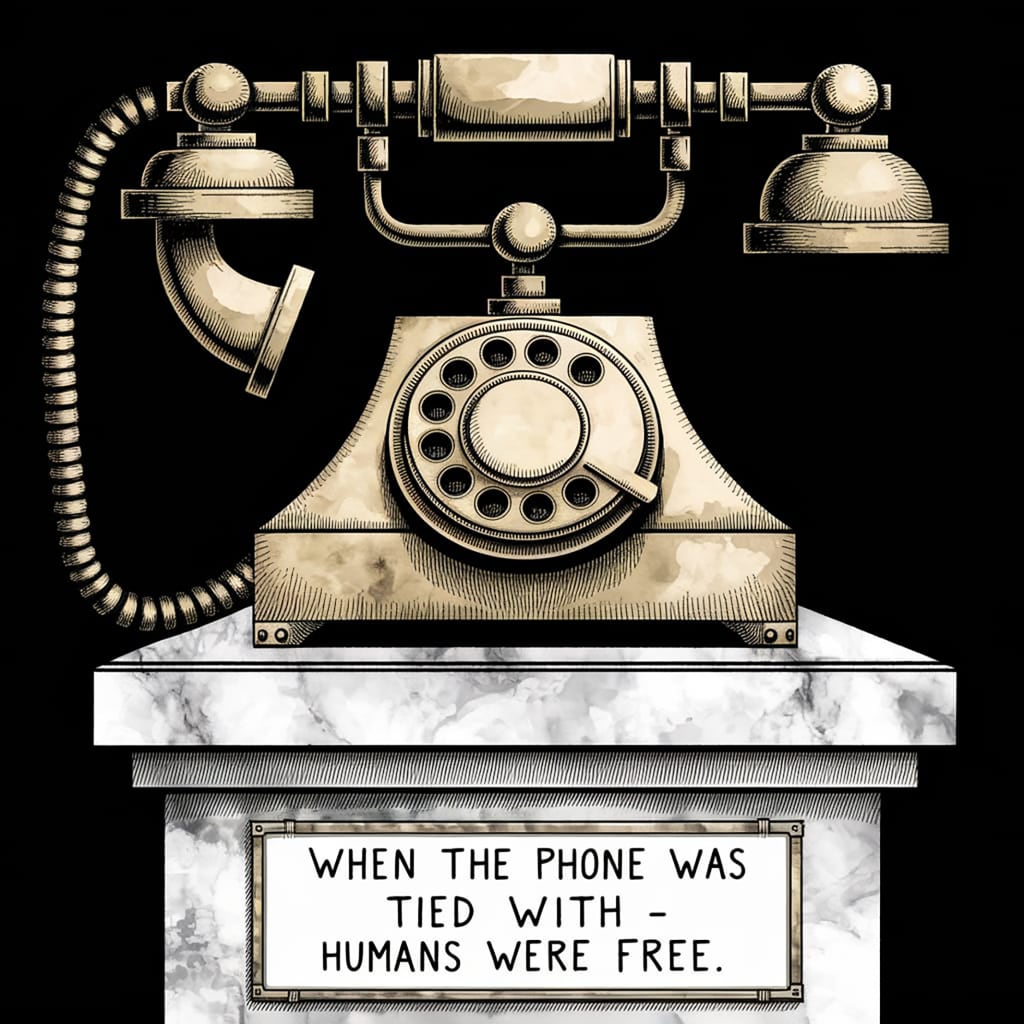
All the artwork in this article is by the author and done in NightCafe Studio
About the Creator
Xine Segalas
"This is my art - and it's dangerous!" Okay, maybe not so dangerous, but it could be - if - when I am in a mood.
Reader insights
Outstanding
Excellent work. Looking forward to reading more!
Top insights
Easy to read and follow
Well-structured & engaging content
On-point and relevant
Writing reflected the title & theme
Expert insights and opinions
Arguments were carefully researched and presented
Compelling and original writing
Creative use of language & vocab
Heartfelt and relatable
The story invoked strong personal emotions
Masterful proofreading
Zero grammar & spelling mistakes
Eye opening
Niche topic & fresh perspectives
Excellent storytelling
Original narrative & well developed characters
Keep reading
More stories from Xine Segalas and writers in Humans and other communities.
Remembering Gene Hackman
We learned today that Gene Hackman died at the age of 95. And it looks like Santa Fe Police have a mystery worthy of Popeye Doyle to solve. Back when I used to go to the movies, when a film came out and Gene Hackman was in it - it was probably going to be pretty good.
By Xine Segalas11 months ago in Humans
5 Things to Know About Intensive Outpatient Care and How It Works
Intensive outpatient care has become an important treatment option for individuals seeking support for substance use or mental health challenges without entering residential treatment. This level of care offers structured therapy while allowing people to maintain daily responsibilities such as work, school, and family life.
By Jordan Blake5 days ago in Humans



Comments (15)
Great story, it is very inspiring.
Congrats on Top Story, Love the Story and you nailed it. Very proud of you…
Superb.I thoroughly enjoyed reading the article.
Excellent concepts
Well written, congrats
What a great expose of where the world is going. Technology is amplifying an already growing tendency that no one talks about anymore; very few people and even fewer listen, as you say. Well done on Top Story as well. Good job.
I thought this was great - and you’re right, there’s such a difference between hearing and listening. I went backpacking for three months without a phone and I can’t tell you how liberating it was. Really enjoyed your article.
its wonderfull i must share it on https://policenbiclearance.ph .
I agree wholeheartedly. Where are the listeners? They're not common, that's for sure. I too am going to make a concerted effort to be present when I am engaging with people and be devoted wholly to that conversation. I think this is a timely article, Xine.
Well written, congrats 👏
This is a fantastic and in-depth piece. You raise many great points here. I agree, it's important to focus on listening to the person and moment in front of you when communicating with each other - especially the looking at the person speaking part. Thank you for writing this one! This was a pleasure to read. Congratulation on a great Top Story!
Great article, and I agree completely. It's hard to have a conversation when someone is scrolling on their phone. Also, the point about hearing to respond. That's so true of some people, and it's frustrating.
Very true. One of my pet peeves is having to tell people the same thing over and over and it never seems to get through to them.
Great article So many ppl don't want to learn how to lesson
Excellent article with mainy points to ponder