
The Incredible Survival Story of Harrison Okene
A man found alive 3 days after being trapped for in the bottom of the ocean
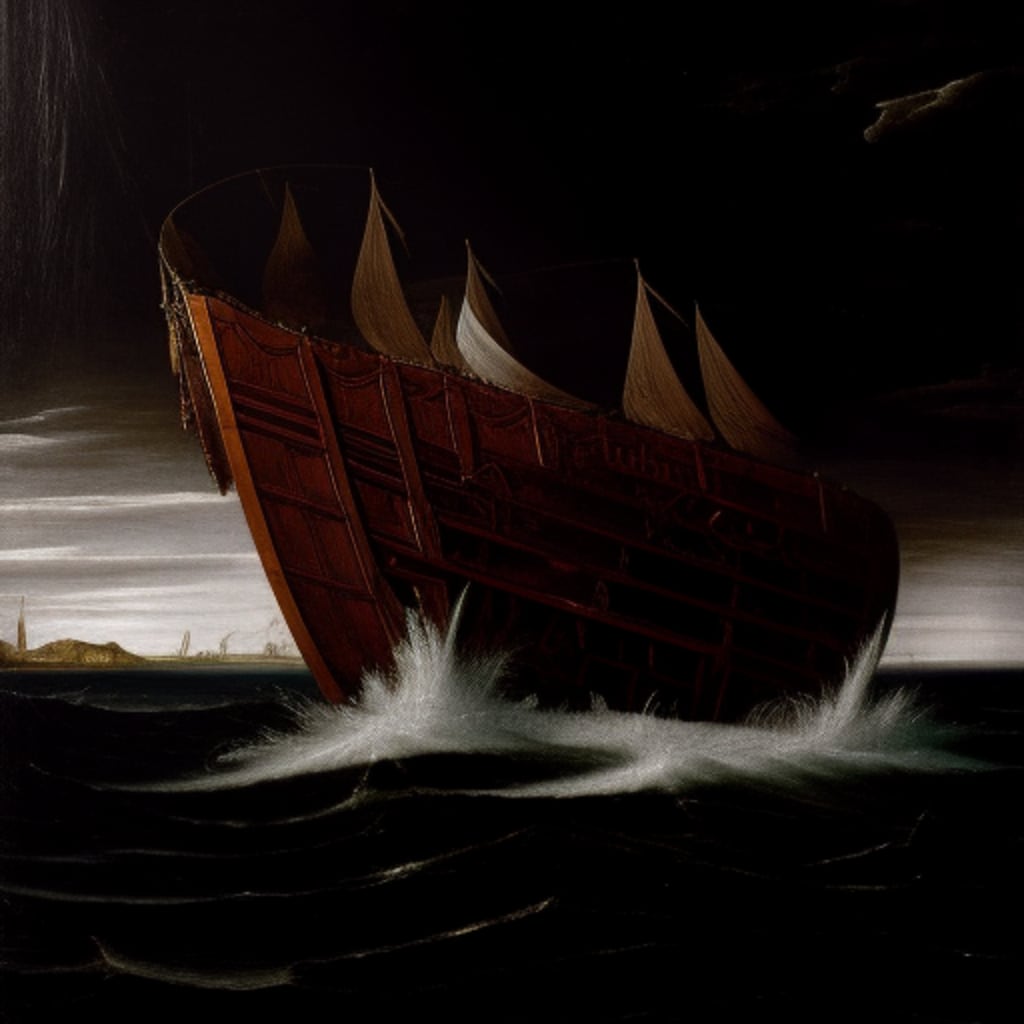
Harrison Okene was a cook on board the Jascon-4, a tugboat that set sail off the coast of Nigeria. The crew's mission was to secure a Chevron oil tanker full of gasoline in the Atlantic Ocean. However, nothing could have prepared the crew for what was about to happen. Heavy rain, dangerous waves, and turbulent black waters surrounded the boat as the crew slept. Harrison Okene, who woke up at 4:30 AM to prepare breakfast, was the only survivor of the disaster.
As he walked to the restroom in his boxers, a huge wave slammed into the ship, causing it to capsize. Harrison was thrown out of the washroom and tumbled around the ship as water poured into its halls and cabins. The vessel began sinking faster and faster, down into the sea. Harrison groped around, trying to find safety, but all the doors around him were locked from the inside. This was a practice to protect the ship's passengers and content since pirates were known to raid boats in the region.
As they sank down, 30 miles away from the Nigerian coast, Harrison managed to find his way to the ship officer's cabins, which were unlocked but flooded with water. He was forced into a small attached room inside the cabin that must have been the officer's attached washroom. As the boat settled at the bottom of the sea, 30 meters below the surface, an air bubble formed in that tiny washroom with Harrison in it. The pocket of precious air was only about one meter wide, but it was enough to keep someone alive... for now.
As he sat stuck in the dark, Harrison had nothing to do but think about his dire situation. The fate of his crewmates was unknown, but Harrison assumed they had managed to evacuate to safety and perhaps thought he had perished in the disaster. He was alone, not sure if anyone was coming or if they would come too late. The water level was slowly rising, but he was determined to survive as long as he could.
He left his air pocket to search for supplies, wandering and feeling around the ship. He managed to find some tools and two mattresses, which he stacked on top of each other to create a simple platform that kept his body partially out of the water and to delay the possibility of hypothermia. Still, it was almost unbearably cold, and Harrison was wearing nothing but underwear. He was hungry and thirsty, with only a bottle of coke he had found to survive on. He knew he had to get out as soon as possible—the longer he waited, the more his air pocket became concentrated with carbon dioxide from his breathing, and eventually, he would not be able to survive.
Harrison tried to find a way out of the chamber using a rope he found to find his way back to the air pocket during his attempts, but he was unsuccessful. With no other options, he stayed there, shivering, and prayed and prayed. He was only days away from his five-year wedding anniversary. He reflected on his life and thought about his wife, his family, his friends, and what would happen to them.
Two days passed without any progress, and Harrison wasn't sure if help was even coming. At one point, he heard what he believed were the sounds of a creature eating something in the boat. He was running out of time—every breath he breathed out was filling his space with more and more CO2, which would eventually take his life. Was anyone going to look for him?
Thankfully, Okene's prayers were eventually answered when a team of South African divers discovered the sunken boat. However, this mission was not a rescue operation, and the divers did not expect to find anyone alive. Since all the doors to the rooms were locked as a safety precaution against pirates, they had been told that all the boat crew members had lost their lives as they were locked in their rooms. Four bodies had already been retrieved from the water, and Harrison's family were notified of his passing.
However, Harrison was still alive. He had heard the sounds of the crew reaching the shipwreck 60 hours after the sinking. The humming of a boat's engine, an anchor dropping, and the paddling of divers would have alerted him that divers were on the way. He used a hammer to hit the steel of the boat, trying to make enough noise to alert someone to the fact that he was alive in there. Unfortunately, the divers were far from him, and he heard their sounds fade away.
As the divers explored the vessel, one man, Nico van Heerden, made his way into the officer's cabin. He moved around the space and found the washroom, little did he know that's where Harrison was waiting. His time had been running out for over the last two days, so Harrison took no chances and jumped into the water towards his potential rescuer. He reached out to touch the diver's head, careful to withdraw quickly and not scare him too much. Nico was shocked. He stretched out towards the hand he had felt, and Harrison grabbed it. Nico cried out to his team that a person was alive, and he held on to Harrison's hand to let him know help was here.
When he rose up to see his saviour face to face, Harrison started crying with joy, disbelief, and gratitude, overwhelmed that someone had finally come. Rescue had arrived at a critical moment because Harrison's air pocket was becoming concentrated with carbon dioxide from his breathing, and he would not have been able to survive much longer. He was in the first stages of hypercarbia, a buildup of carbon dioxide in the bloodstream. The air bubble had kept Harrison alive, but being trapped in there for so long also put his life at risk. He had breathed in a dangerous amount of nitrogen, and the effects on his body from being underwater for so long were severe.
When we breathe air, the body takes in the oxygen, replaces some of it with carbon dioxide, and does nothing with the nitrogen. At regular surface pressure, some nitrogen and oxygen dissolve in the fluid in our blood and tissues. But when a scuba diver goes deep underwater, the pressure on the body increases, so more nitrogen and oxygen dissolve in the bloodstream. The oxygen is used by our tissues, but the nitrogen forms nitrogen bubbles in their bloodstream. If a diver were to go straight up to the surface, that gas would be released, just like when you open a bottle of soda. This can be extremely painful and fatal.
To prevent this, the rescue team had to bring Harrison up to the surface very slowly and make many decompression stops along the way, allowing the gas to escape gradually. It was a delicate and painstaking process, but they knew that Harrison's life depended on it, Harrison was fitted into a special diving suit and helmet, designed to maintain his internal pressure and prevent decompression sickness or "the bends." However, his prolonged stay underwater meant that he still had to make several long decompression stops. Nico was astonished by how calm Harrison was throughout the entire ordeal. Despite the immense physical and emotional strain he must have been under, Harrison remained composed and cooperative.
As they brought Harrison up to the surface little by little, he eventually passed out but managed to survive. However, the danger was far from over. Bringing him straight to land would have been fatal, as he would have experienced severe decompression sickness. Instead, Harrison was transferred to a diving bell under pressure and then to a decompression chamber, where he spent the next two days.
The experience took a toll on Harrison's body and mind. He suffered from recurring nightmares and had to endure the agony of his skin peeling. Despite being fed, he had a hunger that wouldn't go away. The physical and emotional trauma Harrison went through was undoubtedly immense and left a lasting impact on him.
Harrison's story is truly remarkable and inspiring. Despite facing near-death and experiencing trauma, he was able to conquer his fear and pursue his passion for diving. His determination and willpower are admirable and serve as an example of how one can overcome adversity.
It's also important to note the dangers of working at sea and the importance of safety measures. Harrison's survival was due in part to the quick actions of the rescue team and their knowledge of decompression sickness. It's essential to prioritize safety when working in any environment, but particularly in high-risk areas such as the ocean.
Finally, it's fascinating to see how Harrison's experience with Fick's Law of Diffusion played a role in his survival. Science can help us understand and explain the world around us, even in the most unexpected and extreme situations.
About the Creator
Keep reading
More stories from writers in Humans and other communities.
The CEO of Everything
They say "jack of all trades, master of none," but they forgot to mention the part where the jack of all trades is also the camera woman, the makeup artist, and the person currently yelling at a tangled Wii microphone cable in a her own bathroom while recording herself singing and trying to make it look realistic and professional. (As professional as you can make it with nothing but a cell phone camera and a mic that doesn't work)
By Sara Wilson7 days ago in Humans
Why Indigo Children Struggle With Authority Systems.
Indigo children often face conflict with authority systems early in life. Schools, institutions, and hierarchical environments create tension. The struggle does not come from rebellion for attention. It comes from deep inner alignment with truth, fairness, and autonomy. Authority systems often rely on control, compliance, and rigid structure. Indigo traits oppose those foundations.
By Wilson Igbasi3 days ago in Humans
The Path to Salvation
The late autumn evening air filled the monk's lungs, but it wasn't the season that chilled his bones. The heavy-handed presence of evil he had sensed upon entering the woods surrounding this mountain village had not bothered to conceal itself from him.
By Made in DNA3 days ago in Fiction



Comments
There are no comments for this story
Be the first to respond and start the conversation.