
The Ghost in the Dewey Decimal System: Marianne Keller’s Silent Rebellion
In the winter of 2015, Chicago froze over. While the city shut down and the shelters overflowed, a librarian turned her building into a sanctuary for a ghost she wasn't supposed to see. It was a felony, a fireable offense, and the only thing that kept a boy alive.


The gripping true story of a Chicago librarian who risked her career and freedom to hide a homeless teenager inside the library during the deadly Polar Vortex of 2015.
Introduction: The Vortex
In January 2015, Chicago ceased to be a functioning city and became a survival scenario. Meteorologists called it a "Polar Vortex." The wind chill dropped to forty degrees below zero. It was the kind of cold that freezes exposed skin in minutes, snaps train tracks, and turns the breath in your lungs into ice crystals.
The Mayor urged citizens to stay indoors. Schools closed. Businesses boarded up. The homeless shelters were at 200% capacity, turning people away into the lethal night.
Marianne Keller was the head librarian of a branch on the South Side. She was fifty-four, a woman of cardigans, silence, and strict adherence to the rules. She had worked for the Chicago Public Library system for twenty years. She knew the code of conduct by heart.
No sleeping.
No eating.
No lingering after hours.
But as the sun went down on a Tuesday that felt like the end of the world, Marianne watched the security cameras, and she saw the anomaly.
He was a boy. Maybe sixteen. He was wearing a hoodie that was too thin and canvas sneakers that were soaked through with gray slush.
He wasn't reading. He was sitting in the back corner of the reference section, near the radiator, vibrating. He wasn't shaking; he was vibrating with a frequency that suggested his core body temperature was crashing.
The library was closing in ten minutes.
If she followed protocol, she would call security. They would escort him out. He would walk out the glass doors into a wind that was currently killing people.
Marianne looked at the clock. She looked at the boy. And for the first time in twenty years, she decided to become a criminal.
Part I: The Protocol
The library was a fortress of rules. It had motion sensors. It had silent alarms. It had a roving security patrol that checked the perimeter.
Marianne walked over to the boy.
Up close, he smelled of wet wool and exhaustion. His lips were cracked and bleeding. He didn't look up when she approached; he flinched, expecting the eviction notice.
" The library is closing," Marianne said. Her voice was a whisper.
The boy nodded. He grabbed his backpack—his entire life—and started to stand up. His legs were stiff. He stumbled.
"Sit down," Marianne commanded.
The boy froze. He looked at her, eyes wide, terrified.
Marianne crouched down. She checked the sightlines. The security guard, a burly man named Davis, was at the front desk, packing his bag.
"Where are you going?" she asked.
"Shelter," the boy lied. His voice was a rasp.
"The shelters are full," Marianne said. "I called three of them for another patron an hour ago. There’s no room."
She looked at the window. The snow was moving horizontally, slamming against the glass like gravel.
"If you go out there tonight," she said, "you aren't going to wake up tomorrow."
It wasn't a threat. It was a diagnosis.
The boy didn't argue. He just slumped. The fight went out of him. He looked at his hands.
"I don't have anywhere else," he whispered.
Marianne’s heart hammered against her ribs. She was about to cross a line that could cost her everything. Her pension. Her reputation. Her freedom. If anything happened—if he stole something, if he started a fire, if he died in the building—she would be liable.
She took a breath.
"Listen to me very carefully," she said.
Part II: The Heist
This wasn't just about letting him stay. It was a tactical operation.
"The motion sensors are set to trigger at anything above three feet tall moving in the main aisles," she whispered, reciting the security specs she had learned during the installation years ago. "But the History section—Aisle 14—has a blind spot. The sensor is blocked by the new archive stacks."
The boy stared at her.
"When I dim the main lights," she continued, speaking fast, "you are going to crawl—do not walk, crawl—into the gap behind the World War II encyclopedias. You lie down. You do not stand up. You do not cough. You do not move until I unlock the front door at 7:00 AM."
"You're serious?" the boy asked.
"I am risking my job for this," she hissed. "So you better be serious."
She stood up and walked away.
The lights flickered. The "five-minute warning" announcement played.
Marianne walked to the front desk. "Goodnight, Davis," she said to the guard.
"Brutal out there, Marianne," Davis said, zipping his parka. "Get home safe."
"You too."
She walked to the control panel. She punched in the code. Beep. Beep. Beep. The alarm system armed itself.
She had thirty seconds to exit.
She looked back at the History section. It was empty. There was no movement.
She walked out the front door, locked it, and stepped into the biting cold.
Part III: The Longest Night
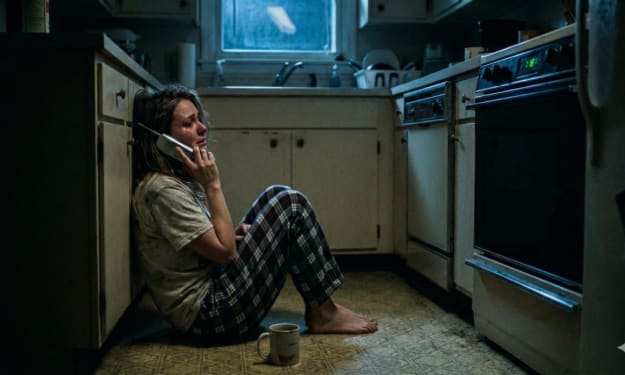
Marianne went home, but she didn't sleep.
She sat in her kitchen, staring at her phone. She was waiting for the call from the security company. Alarm triggered at South Branch. Police dispatched.
Every time the wind rattled her windows, she jumped.
She imagined the boy sneezing. She imagined him stretching his leg and tripping a laser. She imagined a pipe bursting.
She was playing a game of Russian Roulette with the city’s infrastructure.
Inside the library, the boy—his name was Leo, though she wouldn't learn that for days—was living in a thriller of his own.
The library at night is not silent. It groans. The heating pipes bang. The books settle. To a kid running on adrenaline and hunger, every sound was a footstep.
He lay curled in a ball behind the shelves on the Great Depression. The carpet was industrial and hard, but the air was warm. It was 68 degrees.
He listened to the wind howling outside. He knew what that wind felt like. It felt like knives. Here, in the dark, surrounded by the smell of old paper and dust, he felt something he hadn't felt in months.
Safe.
But he couldn't sleep. He was terrified of snoring. He was terrified of turning over. He held his breath every time the HVAC system kicked on, thinking it was the door opening.
At 3:00 AM, a police cruiser drove by, its spotlight sweeping the front windows.
Leo saw the flash of blue light hit the ceiling above the stacks. He squeezed his eyes shut and prayed to a God he wasn't sure he believed in. Don't let them see me. Don't let her get caught.
The light passed. The cruiser moved on.
Part IV: The Morning Ritual
7:00 AM came with the gray, bleak light of a frozen dawn.
Marianne’s hands shook as she put the key in the lock.
She disarmed the alarm. Beep. Beep. Beep. Ready.
No trigger. No police report.
She locked the door behind her—staff weren't supposed to be there until 8:00, but she always came early.
She walked to Aisle 14.
"Hello?" she whispered.
A head popped up from behind the encyclopedias. His hair was messy, his eyes red-rimmed, but he was alive. And he wasn't shivering.
"Bathroom," Marianne said, pointing. "Then the staff break room. Quickly."
He ran.
In the break room, she gave him what she had brought: A thermos of hot coffee, two bagels with cream cheese, and an orange.
He ate with the ferocity of a starving animal. He didn't speak. He just ate, wiped his mouth, and looked at her.
"Thank you," he said.
"Don't thank me," she said, her voice stern to mask her relief. "Eat. You have to be back out in the public area by 8:00. You look like a patron waiting for the doors to open. Understood?"
"Understood."
Part V: The Siege
The cold snap didn't last one night. It lasted ten days.
And for ten nights, they performed the ritual.
It became a silent dance. At 8:55 PM, Leo would move to the History section. At 9:00 PM, Marianne would arm the system. At 7:00 AM, she would release him.
The tension never broke.
On the fourth night, the janitorial crew came in late.
Marianne was at home when she realized the schedule change. She nearly vomited.
She called the library landline, praying the janitor would pick up.
"Hello?"
"Hi, it's Marianne," she stammered. "I... I think I left my personal keys on the desk. Can you check?"
She kept the janitor on the phone for twenty minutes, walking him through a fake search of the front desk, keeping him away from the stacks, buying time for Leo to hear the voices and hide deeper.
Leo heard the buffer machine roaring in the next aisle. He pressed himself flat against the wall, watching the reflection of the janitor's boots in the glass of a display case.
The buffer turned the corner. It stopped inches from his aisle.
Then, the janitor turned around. "Not here, Marianne!" he shouted into his headset.
"Okay, thanks, never mind!"
The janitor left. Leo exhaled.
Part VI: The Departure
By the second week, the weather broke. The temperature rose to a balmy 20 degrees. The shelters began to clear out.
A social worker named David, whom Marianne trusted, came in for his weekly literacy program.
Marianne pulled him aside.
"There is a boy," she said. "He is here every day. He needs a placement. Not a shelter. A placement."
She pointed Leo out.
David sat with him. They talked for an hour.
That afternoon, Leo walked up to the circulation desk. He had a piece of paper in his hand—an address for a youth transitional housing program.
He looked at Marianne. There were patrons around. He couldn't say what he wanted to say.
He placed a book on the counter. It wasn't a library book. It was a small, battered paperback he had found in a "Free" box somewhere.
"I'm done with this," he said.
Marianne opened it. Inside the cover, he had written one word in pencil:
Warm.
"Good luck," Marianne said.
"Bye," Leo said.
He walked out the automatic doors. He didn't look back.
Part VII: The Unspoken Audit
Months later, the library system conducted a security audit. They reviewed alarm logs, sensor patterns, and blind spots.
The auditor sat in Marianne’s office.
"It's funny," the auditor said, tapping a graph. "We have these weird sensor ghosts in the South Branch. For about two weeks in January, the humidity sensors in the History section were reading slightly higher than the rest of the building at night. Probably a leaky pipe."
Marianne didn't blink. She adjusted her glasses.
"Old buildings," she said. "They breathe."
The auditor shrugged. "Yeah. We should probably fix that blind spot in Aisle 14, though."
"Yes," Marianne said. "You should."
Conclusion: The Moral Felony
We are raised to believe that doing the right thing and following the rules are the same thing.
Marianne Keller proves that sometimes, they are opposites.
If she had followed the rules, she would have been a perfect employee. She would have had a clean record. And a boy would have frozen to death on a bench three blocks away.
Instead, she chose to be a "bad" employee. She chose to steal heat. She chose to compromise security.
This story is a thriller because the stakes were life and death. But it is inspiring because it exposes the quiet, subversive courage of ordinary people.
Marianne wasn't an activist holding a sign. She was a bureaucrat holding a key.
She saved a life not by making a speech, but by creating a pocket of silence in a loud, cold world.
She reminds us that in the face of a system that is indifferent to suffering, the most radical act of rebellion is simply to unlock a door.
And to keep a secret.
Because sometimes, humanity is found in the blind spots.
About the Creator
Frank Massey
Tech, AI, and social media writer with a passion for storytelling. I turn complex trends into engaging, relatable content. Exploring the future, one story at a time
Keep reading
More stories from Frank Massey and writers in Humans and other communities.
The Proxy Mother: The Wrong Number That Became a Sacred Duty
The heart-wrenching true story of Sarah Whitman, who answered a wrong number from a dying soldier in Iraq and chose to comfort him in his final moments, proving that humanity transcends bloodlines.
By Frank Massey about 21 hours ago in Humans
Autonomy Is The Real Privilege
Good morning, freedom-seekers! Today we’re gonna be looking at autonomy. A strange word, I know; one many would probably look at blankly and run away from on sight. We’re gonna figure out what it actually means, consider how it’s achieved, and decipher just how deeply most of us are tangled up in dependence without realising it.
By That ‘Freedom’ Guyabout 9 hours ago in Humans



Comments
There are no comments for this story
Be the first to respond and start the conversation.