
The Comfort of Borrowed Minds
Why Most People Avoid Thinking for Themselves

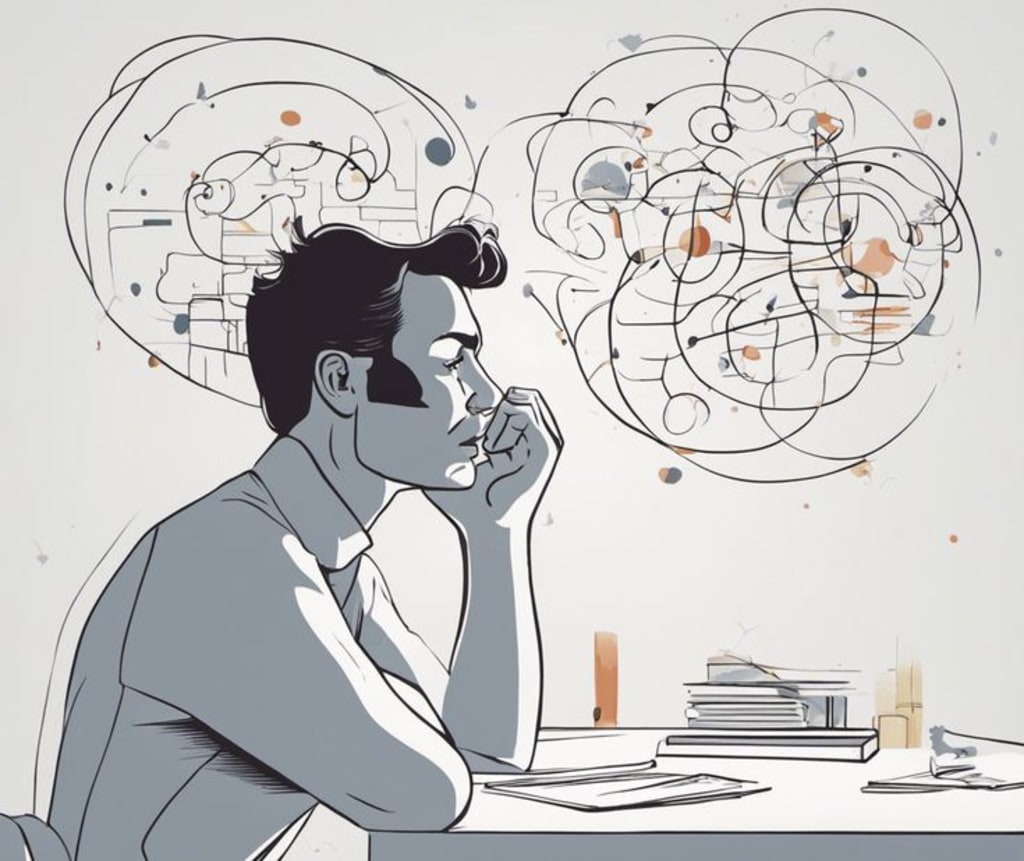
Thinking for yourself sounds powerful.
Almost everyone claims they do it.
Very few actually practice it.
Because real independent thinking is uncomfortable. It forces you to question beliefs you’ve held for years. It asks you to stand alone when the crowd moves in another direction. It exposes you to doubt, uncertainty, and sometimes isolation. Following the majority is easier. Borrowing opinions is safer. Repeating popular narratives feels like belonging.
Belonging is one of the strongest human desires.
And it shapes more decisions than people are willing to admit.
From childhood, most people are trained to absorb, not to analyze. You’re rewarded for giving correct answers, not for asking uncomfortable questions. You’re taught what to think long before you’re taught how to think. Over time, this creates mental habits. When authority speaks, you listen. When trends rise, you follow. When the crowd agrees, you assume it must be right.
Not because you evaluated it.
But because it feels socially safe.
Independent thinking requires friction. It requires slowing down when everyone is rushing. It requires sitting with uncertainty instead of rushing toward comforting conclusions. It requires accepting that you might be wrong and being willing to change your mind. Most people don’t avoid independent thinking because they’re incapable.
They avoid it because it threatens their sense of stability.
If you start questioning your beliefs, you might realize some of them were never yours. They were inherited. Absorbed. Repeated. That realization can feel like losing the ground beneath your feet. So instead of risking that discomfort, many people choose mental autopilot.
Autopilot feels easy.
You don’t have to defend your views.
You don’t have to research deeply.
You don’t have to confront contradictions.
You just align with whatever environment you’re in.
Different room.
Different opinion.
Same person.
Another reason people avoid thinking for themselves is fear of judgment. Humans are social creatures. Rejection hurts. Being labeled “different” can feel like danger. So people soften their thoughts. They dilute their perspectives. They stay quiet when they disagree. Over time, silence becomes habit. Habit becomes identity.
Eventually, they forget they ever had original thoughts.
Social media intensifies this problem. Algorithms reward extremes and repetition. The loudest opinions rise. Nuanced thinking gets buried. People scroll through thousands of confident statements every day. Confidence is mistaken for truth. Repetition is mistaken for accuracy. If you hear something enough times, it starts feeling real.
Not because it is.
But because familiarity creates comfort.
Independent thinking isn’t about rejecting everything. It’s not about being contrarian for the sake of it. It’s about developing the ability to evaluate information instead of swallowing it whole. It’s about asking simple but powerful questions.
Who benefits from this idea?
What evidence supports it?
What evidence challenges it?
Why do I believe this?
Would I still believe it if everyone around me didn’t?
These questions are small.
But they are disruptive.
They interrupt passive consumption.
They turn the mind from a container into a filter.
Most people don’t realize how much of their identity is constructed from borrowed pieces. Political beliefs. Moral stances. Lifestyle goals. Definitions of success. Even their fears. Many of these were never consciously chosen. They were absorbed through repetition, culture, and social reinforcement.
This doesn’t make people stupid.
It makes them human.
But remaining unconscious of this process keeps people mentally dependent.
Mental freedom begins with noticing when you’re outsourcing your thinking. When you repeat something without understanding it. When you defend an opinion you’ve never examined. When you feel emotionally attached to a belief but can’t explain why.
That moment of noticing is powerful.
Because awareness creates choice.
You don’t have to abandon everything you believe.
You just have to start owning your beliefs.
Refining them.
Updating them.
Letting some of them die.
Thinking for yourself doesn’t mean you’ll always be right.
It means you’ll be honest.
Honest about what you know.
Honest about what you don’t.
Honest about uncertainty.
That honesty builds intellectual integrity.
And integrity builds quiet confidence.
Not the loud, performative kind.
The grounded kind.
The kind that doesn’t need constant validation.
The kind that can stand alone without feeling lost.
Most people don’t need more information.
They need better thinking habits.
Slow down.
Question more.
React less.
Reflect more.
Your mind is not a storage unit.
It’s a tool.
Use it.
About the Creator
Time to change your life.
Is it even possible for you to change your life? A lot of people, more than there should be, are unhappy with their lives. But what are they doing about it? Usually nothing. People talk about how shitty their lives are and want change, but are they not taking the actions to change?
By Jen Phillips6 days ago in Humans
Across Two Worlds, We Chose Love
On the eastern edge of Istanbul, where the call to prayer echoed softly between ancient buildings and the Bosphorus shimmered like a living memory, Lina Demir began her mornings with quiet reflection. She worked as an architect, passionate about restoring old structures without erasing their soul. Istanbul had shaped her — a city balanced between continents, traditions, and contradictions. She believed deeply in family, in shared meals, in history passed through stories rather than books.
By Ahmed aldeabella4 days ago in Humans


Comments
There are no comments for this story
Be the first to respond and start the conversation.