
The Black Book on the Subway
An illustrated short story.
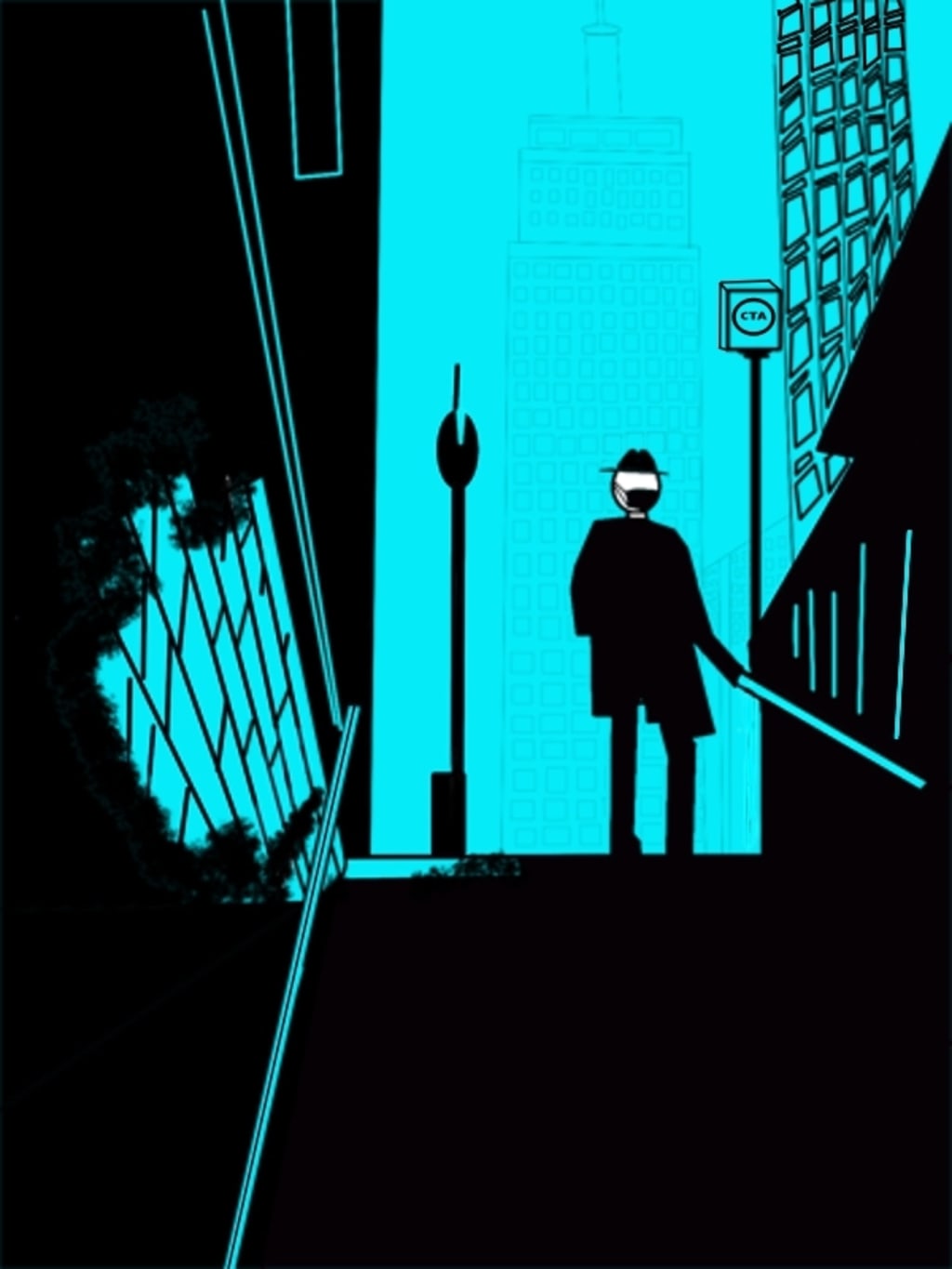
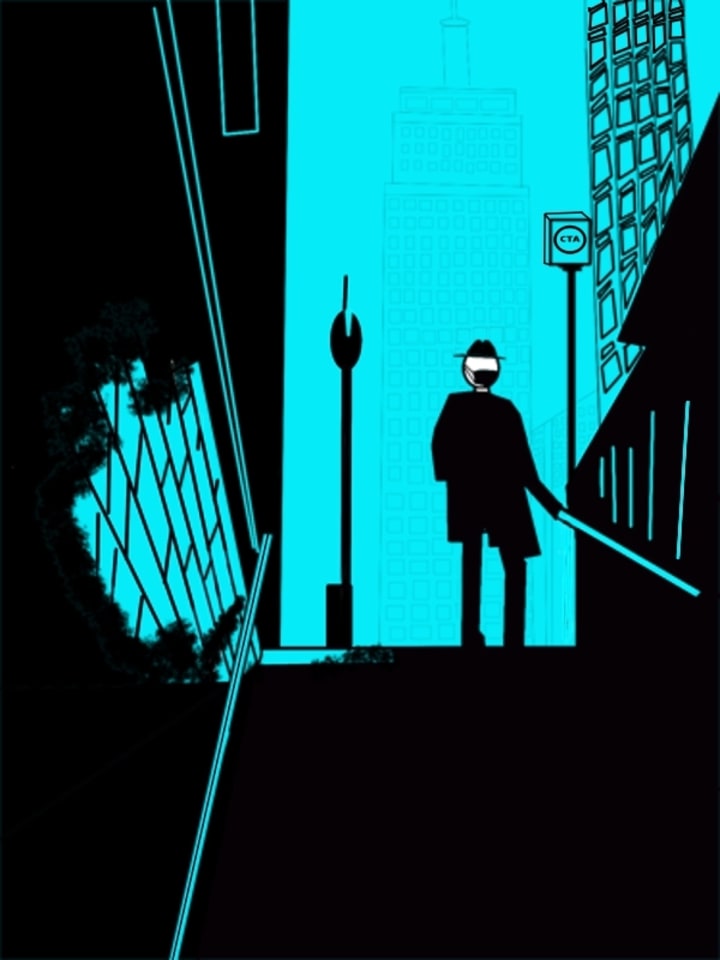
I got on the subway in Chicago and stood by the door, heading for work and eager to escape the subzero temperatures outside. While holding onto a railing, I watched as the masked passengers swayed in unison as the train car started to move, quietly consuming the bright lights on their smartphones.
The tranquil sound of the rumbling track below was interrupted when a woman in business attire got a call, and clearly dismayed by the conversation, she went as fast as her high heels would take her, exiting a stop later, and opening up a seat for me.
After the doors closed and the train started to move again, I noticed a little black book at my feet, so I picked it up and asked the guy next to me if he dropped it. He removed one headphone from his ear and said, “Nah. It ain’t mine,” and no one else seemed interested in claiming it.
I turned to the first page and it gave a return address, “in case of loss.” It also listed a $20,000 reward.
As nonchalantly as I possibly could, I put the book in my pocket and quietly got off at the next stop. I found a bench and sat beside a pair of pigeons as a heater above kept us warm, pulling the book back out and re-reading the first page in disbelief.
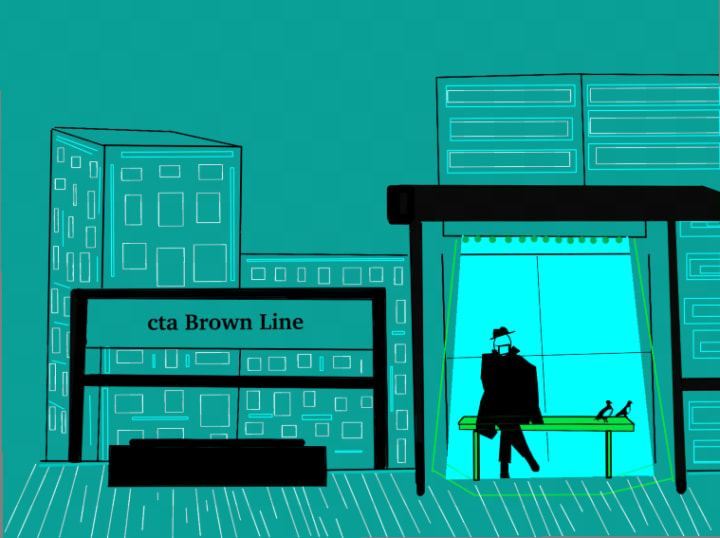
I sent an email to my boss, letting her know that I couldn’t make it to work. I lied and told her that I wasn’t feeling well and that I was sorry for the late notice. I then plugged the address from the book into my phone, finding directions, and transferring to a train that would take me there.
While a bit too crammed between passengers for my liking, I thought about the businesswoman from the previous ride, wondering who would be the type of person to pay such a high price for this tiny piece of property—what is possibly in this book that’s worth $20,000? I considered looking inside, but decided against it, slipping the book back into my pocket and waiting for my stop.
I arrived downtown. The address that was listed in the book was in a nice area called the Gold Coast—a neighborhood littered with high-end shops, pricey restaurants, and luxury apartments. I couldn’t help but think that the owner of this lost property might be good for the money.
After I got off the train, the GPS directed me to a high rise a short walk away. I entered the lobby, approached a marble desk, and a uniformed doorman greeted me.
“How may I help you,” he asked in an overly polite tone.
“Well,” I responded. “I was hoping you could locate the owner of this little black book.” I held it up to show him. “I found it on the train earlier and the first page listed this address for it to be returned to if lost. Is there a way you could get in touch with the person who lives in 2601?”
The doorman was fiddling with an oversized gold ring on his finger as he talked. He scrunched his face, telling me, “I’m sorry, but there isn’t an apartment 2601 in this building. In fact, there are only 25 floors.”
“Oh,” I said, confused. “Is this the correct address for this building?” I showed him the first page of the book, covering the reward with my thumb.
“That’s this address,” he confirmed. “But like I said, there’s no apartment 2601. Sorry to say.”
I told him thanks anyway and headed back out, feeling defeated. I’d hit a dead end, and it wasn’t like I could suddenly show up to work after lying to my boss, so I decided to take the train back home.
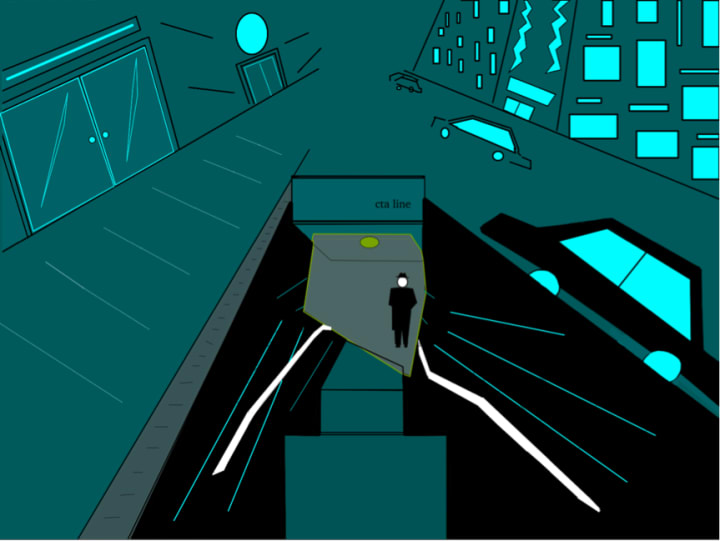
I tossed the little black book on my kitchen table and started making a pot of coffee. Maybe I was being taken for a ride, I thought to myself, staring at the book as my coffee brewed.
I poured a cup and sat down, letting it cool. Then I picked up the book and turned to the second page, noticing that the handwriting was different than the first page, like some new set of fingerprints at a crime scene.
“Elaine,” the page said in cursive. “Since we can’t be together, it’s my hope that, after this virus has run its course, after they bury my body deep in the ground—after I am long gone—these words will provide some comfort for you, as your letters did for me in my final months.”
That’s when I heard loud cracking and banging sounds at my front door. I set the book down and quickly got up to look out the peephole. Two men were standing in my doorway wearing masks. One of them was using a crowbar to break in but the deadbolt was locked so he was struggling a bit. The other man had a gun.
With my heart in my stomach, I ran to the fire escape out the back, grabbing the little black book on the way out.
I sprinted to the subway station and I somehow managed to board the train as the doors were closing. And not a moment after they shut, a fist slammed on the window outside, breaking the glass.
It was the doorman from the high rise, with his gaudy gold ring. Our eyes met and he raised his gun in my direction, but the train picked up its pace, leaving him standing on the platform.
I sat down, breathing heavily.
“You good, buddy?” a man asked.
“Yeah. Yeah. I’m fine, thanks,” I said, instinctively, trying to be polite.
I suddenly thought of the book and felt around my pockets to make sure it was secure.
I was about to call the police when I had another thought: the doorman must have been lying earlier. Instead of calling the cops right away, I transferred trains and headed back downtown to the Gold Coast.
I tried to remain inconspicuous as I went into a coffee shop across the street from the high rise where the doorman worked. I wanted to stake out the entrance and see if he or his crowbar-wielding buddy showed up. I also wanted to find out how many floors there were.
I kept my eyes on the front door across the street as I waited in a long, socially distanced line for a $6 cup of lukewarm coffee. I thought about the full mug sitting on my kitchen table, then about the words in the little black book and what they must mean to this woman Elaine.
“How may I help you,” a young girl at the cash register said, catching me off guard as I anxiously stared outside.
I paid for the coffee and sat down by the window, sipping it as I carefully counted the floors of the high rise. As I suspected, the doorman was lying—there were 26 floors.
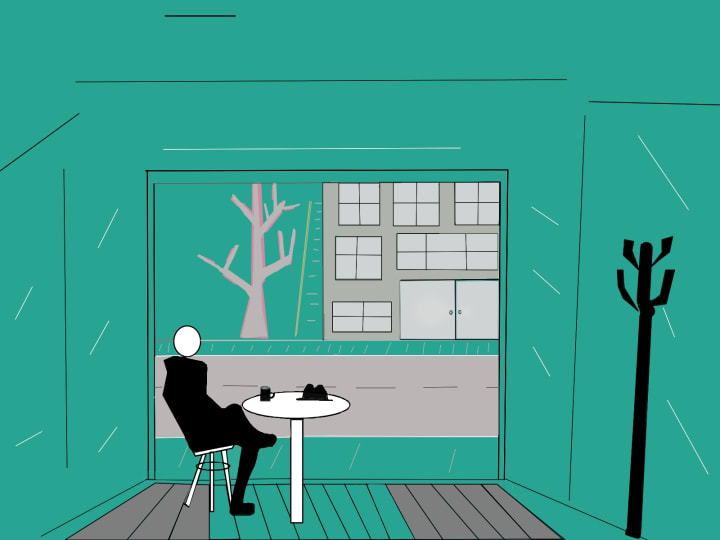
I finished my coffee and braved the line for another, wondering how long I should wait before calling the cops. I was halfway through my second cup when the doorman and his friend showed up. They were both in uniforms, heading back to work like they were on some normal break that involved lunch and cigarettes and not a gun and a crowbar.
That’s when I called the police. I told them about the little black book, the reward for its return, and about the two men who broke into my place. I could tell the other patrons at the coffee shop were uncomfortable as I excitedly relayed my story to the cops, talking under their breath and gesturing over toward my table.
“Yeah, the guy with the gun just walked into the building across the street,” I said in a voice that was far too loud for such an intimate setting. “I’ll be here waiting at the coffee shop, making sure they don’t leave.”
The police arrived minutes later and discovered a crowbar and an unlicensed gun in the doorman’s car. Both of the men were arrested.
It wasn’t until the next day that I was finally put in touch with the resident of apartment 2601. A police officer called and gave me the phone number to an Elaine Astin, encouraging me to reach out and return her lost property.
I dialed the number and a woman’s voice answered.
“Yes, hello,” I said, introducing myself. “Is this Elaine Astin? I found a little black book on the train yesterday and I heard that it might be yours.”
“Yes,” she responded, enthusiastically. “I rushed off and must have dropped it. And I am glad to hear you were unharmed from yesterday’s ordeal. The police just called and told me what happened. Are you okay? Do you need anything?”
I remember thinking, $20,000 would be nice, but what I really said was, “No. I’m fine, Mrs. Astin. Thank you.”
“Oh, call me Elaine,” she responded. “And do let me know if there’s anything I can do.”
After a brief silence, Elaine told me matter-of-factly, “Now I’m sure you saw the reward on the first page.”
I told her I did.
“That money—the $20,000— is yours if you bring the book to me.”
I said I would.
Not long after the call, I found myself on the train, heading for the high rise again. I entered the same marble-laden lobby and was greeted by a new doorman this time. He was friendlier and more sincere than the last guy but I was still looking at him sideways.
“Mrs. Astin is expecting your arrival,” he said, directing me to the elevators toward apartment 2601. I clutched the little black book inside my pocket the entire time.
The elevator doors opened directly to the apartment, a penthouse that made up the entire floor. Elaine Astin, the businesswoman from the train, greeted me and offered hand sanitizer. I applied some, then handed her the book.
“I cannot thank you enough. Please, come in. Would you like coffee?”
I said yes and we removed our masks and sat across her table. Silver stemware was meticulously placed in front of us, paintings in beautiful frames donned every wall, and hand-stitched oriental rugs covered the floors. The apartment was more like a museum than a residence and this made Elaine seem even more alone than she already was.
We talked about her husband over our coffees, about the successful publishing company they started together, and about his fight with COVID-19. She told me that he left the book for her after he died and that she hadn’t had the chance to finish it before she lost it on the train.
“I’m so grateful you found it,” she told me.
The coffee was running out and the conversation was coming to a close, but before it could, Elaine insisted I take the $20,000. “You went through so much to get this back to me,” she said, holding the little black book in front of her with both hands. She then told me that she mentioned the reward for the book to the doorman the day before, in passing, and she suspected that’s why he came after me. She said she felt responsible after hearing the story from the police.
“It’s not your fault,” I maintained. “And $20,000 is too much money. I’m happy to return the book, especially considering the circumstances.”
She smiled and told me that she wouldn’t miss the money—that her husband would want me to have it and that “he loved hard-boiled detective stories”—and that’s when she handed me an envelope.
I accepted it and thanked her.
Then I asked if I could meet her across the street sometime for coffee and she agreed. I could tell she wanted to hug but we didn’t. We said goodbye and I put the envelope in my pocket and headed back out into the cold, toward the subway.
About the Creator
William Gardner
Adjunct English Instructor
Keep reading
More stories from writers in Humans and other communities.
Autonomy Is The Real Privilege
Good morning, freedom-seekers! Today we’re gonna be looking at autonomy. A strange word, I know; one many would probably look at blankly and run away from on sight. We’re gonna figure out what it actually means, consider how it’s achieved, and decipher just how deeply most of us are tangled up in dependence without realising it.
By That ‘Freedom’ Guyabout 11 hours ago in Humans
So You Decided To Become a Nurse Practitioner:
So you decided to become an "Advanced Practice" nurse. Congratulations!... is what I would say if this was a good idea. Grad school? In this economy? What were you thinking? Likely it was something along the lines of either 1) “I've seen these other chucklefucks do it— Why can't I?” or even 2) “I've got a nice career, I should shake it up. I miss feeling like I have no clue what I'm doing.”
By Sandor Szabo4 days ago in Fiction




Comments
There are no comments for this story
Be the first to respond and start the conversation.