
The Beautiful Lies We Breathe
Exposing the Beautiful Lies of Modern Humanity—A Bold Look at Who We Pretend to Be

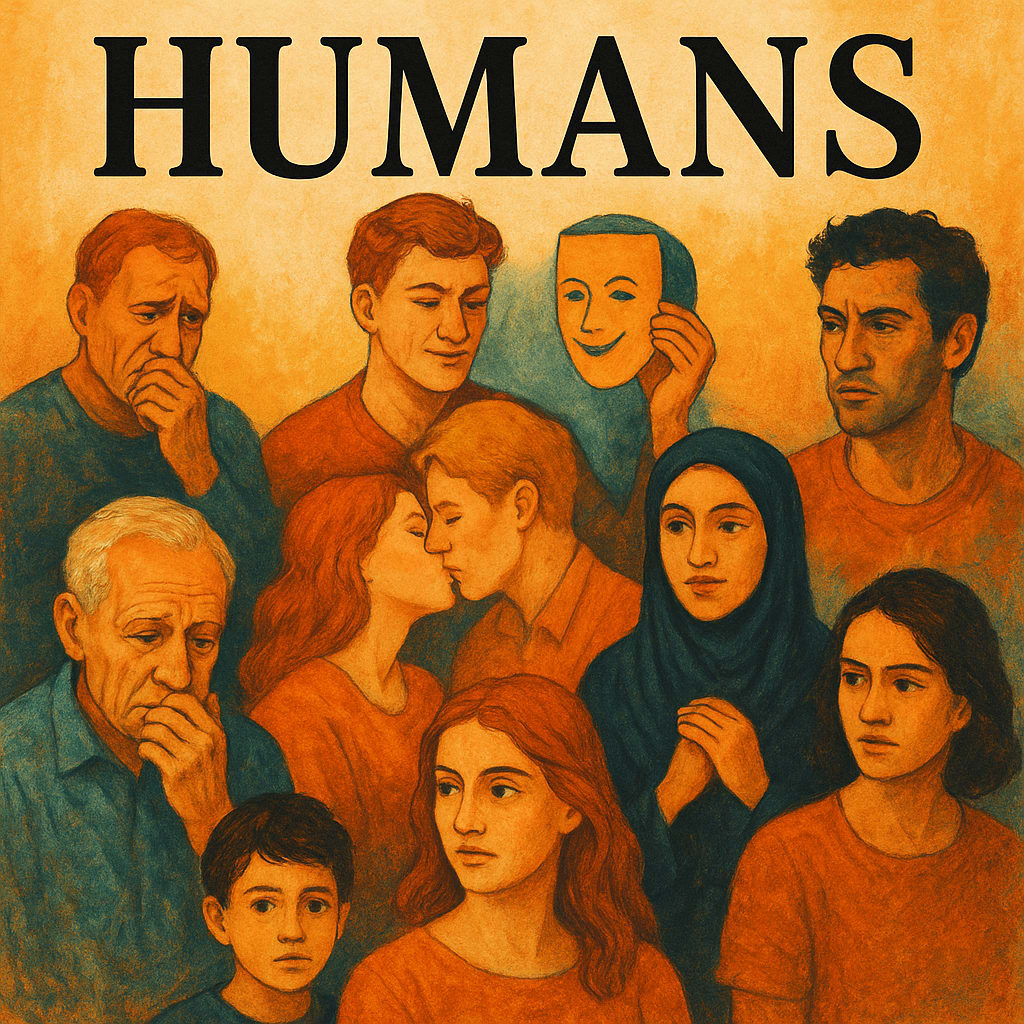
I was born human. I am told this every day—not by fact, but by function. By the way I’m asked to smile when I don’t feel like smiling. To believe when doubt lingers. To love while my heart is tired. To chase when I’ve forgotten why I run. This is not a complaint. It’s a confession. And like every good confession, it is human.
The problem with humans isn’t that we lie—it’s that we lie beautifully.
We have turned illusion into art. Our lives are PowerPoint presentations of curated perfections: symmetrical smiles, filtered faces, and flawless captions about authenticity. We are taught to live by slogans, not silence. “Live your best life,” “be yourself,” “choose happiness.” No one asks which self. No one explains the cost of happiness. No one talks about the quiet terror of choosing a version of life that doesn’t trend.
But we do it anyway. Because we are humans. And if nothing else, we are brilliant actors.
The Religion of Appearances
We live in the golden age of new religions. Once upon a time, humans kneeled to the gods of thunder, stars, and love. Now, we kneel to algorithms. Our prayers are likes. Our psalms are tweets. Our temples are glass screens held inches from our faces. And our saviors? Influencers.
God is still there, somewhere behind the smoke and mirrors. But we’ve buried Him in engagement metrics.
We worship the idea of being seen. We don’t fear death as much as we fear obscurity. This is why a man will sell his soul for an audience. This is why a woman will turn her wounds into content. Pain is no longer something to heal. It is something to monetize.
Yet even in this madness, there is meaning. For humans have always been storytellers. From cave walls to Instagram stories, we want our lives to matter in words—true or not. It is our nature to perform. Our tragedy is we often forget we are not the audience, but the actor.
Of Love, Lust, and the Lies Between
Humans are the only species that writes poetry about betrayal and still believes in love. We love blindly, stupidly, with hope that is both divine and delusional.
We marry ideals. We divorce realities.
She wanted a man who would stay through the storms, but she left at the first drizzle. He wanted a woman who was both a saint and a seductress, but he couldn’t stand her prayers or her curves. And so we circle, date, delete, and repeat, hoping the next will be different. They won’t be. But we try. Because trying is what keeps the human heart human.
And irony? Irony is that we know we are doomed to disappointment, yet we dream anyway. Hope is our drug, and love, the most intoxicating lie we keep telling ourselves. Still, if lies are beautiful enough, does it matter that they’re lies?
The Marketplace of Morality
Once, morality was sacred. Now, it’s for sale.
People who tweet about justice drink coffee grown by child laborers. Climate activists fly private. Preachers turn profits. And self-proclaimed empaths ghost without a second thought.
We’ve made virtue a costume. It fits tight in all the right places. But it tears easily when no one’s watching. We say “do the right thing,” but we really mean, “do what makes you look right.”
Still, somewhere in this mess is a desire for real goodness. We post our charity not just for praise, but because part of us hopes it will inspire others. Our hypocrisy is tragic—but not terminal. We stumble toward the truth. Often clumsily. Sometimes comically. But we move.
And that, in itself, is worth something.
The Curse of Ambition
Ambition used to be noble. Now, it’s noisy.
We chase “success” as defined by strangers. The dream isn’t to build something meaningful; it’s to build something viral. To be on the right podcast. To write the right take. To ride the algorithmic wave long enough to be paid in dopamine and dollars.
But ambition is a two-faced god. It gives purpose. It also steals peace.
We work ourselves to exhaustion and call it passion. We collapse and call it hustle. Then we post about mental health while ignoring the very voices in our heads that beg us to rest.
And for what?
To be remembered by people who don’t know us. To impress crowds who scroll past in seconds. We want legacy, but we settle for likes.
Still, ambition isn't the enemy. It just needs a compass. Humans are meant to strive. But not at the cost of our souls.
The Eternal Dance of Truth and Falsehood
Humans are walking contradictions.
We crave truth but fear it. We lie not just to others—but to ourselves. “I’m fine.” “It’s nothing.” “I don’t care.” These are the daily mantras of the emotionally exhausted.
We fear mystery yet worship it. Ghost stories. Conspiracies. Horoscopes. We pretend to love science, but spend hours trying to “manifest” money or love by writing it three times on a paper under a full moon. We want logic to rule the world—but only when it serves our feelings.
And yet, in our confusion, we are beautiful.
Because even in deception, humans often mean well. We lie to spare others pain. We hide to protect our pride. We deceive because we hope. Because we believe in better, even when we don’t see it.
Truth may be stranger than fiction, but fiction is kinder to fragile hearts.
The Child Within Us
We are all children playing grown-up games.
We want to be held, understood, praised. We want someone to say, “I see you,” and mean it. We want to matter—to someone, to something. And when we are denied this, we protest like toddlers: with tantrums, sarcasm, and silence.
The irony? We build cities, launch rockets, and code artificial intelligence—all to distract ourselves from the one thing we can’t solve: our fear of being unloved.
We think growing up means getting over things. But real maturity is understanding what still hurts—and choosing to be kind anyway.
Humans may forget birthdays, betray trusts, and abandon promises. But they also forgive, rebuild, and try again.
And that’s what makes us more than clever apes.
The Beauty We Seek
Despite our flaws—our lies, our noise, our contradictions—humans are seekers of beauty.
We stop for sunsets. We write songs about strangers. We build cathedrals for gods we no longer fear. We cry at weddings and funerals and movies we’ve seen five times. We break—and still find ways to laugh.
We are drawn to beauty not because it’s perfect, but because it’s real. A cracked smile. A tired hug. A second chance.
We may never become angels. But we can become kind.
And in this cruel, brilliant world, kindness is a revolution.
Conclusion: The Universal Truth
So what are we?
We are a paradox wrapped in poetry. A contradiction stitched in compassion. We are foolish, hopeful, brilliant messes, trying to build something worth loving.
We make gods in our image and cry when they betray us. We fall in love with liars and write books about honesty. We destroy the earth, then post pictures of sunsets with hashtags about gratitude.
We are hypocrites. We are holy.
And in our dance between darkness and light, we find something divine.
This is the human condition.
This is the beautiful lie we breathe.
And perhaps, just perhaps—that lie is worth living for.
About the Creator
Muhammad Abdullah
Crafting stories that ignite minds, stir souls, and challenge the ordinary. From timeless morals to chilling horror—every word has a purpose. Follow for tales that stay with you long after the last line.
Keep reading
More stories from Muhammad Abdullah and writers in Humans and other communities.
The First Time We Breathe
I don’t remember the first time I breathed. No one does. Yet somehow, it defined everything that followed. That first cry wasn’t just air filling lungs—it was existence announcing itself. And from that moment onward, every “first time” became a thread in the tapestry of being human. We stumble, we reach, we burn, we break—and we become.
By Muhammad Abdullah9 months ago in Humans
Staying sane in the insane world.
”It is no measure of health to be well adjusted to a profoundly sick society.” Jiddu Krishnamurti This quote has been one of my favourites since the moment I first laid my eyes on it. To me, it cuts right through the fog of the illusion of normality that permeates our lives. And since I am someone who has never felt (well) adjusted to this society, Krishnamurti’s words gifted me with the realisation that there isn’t anything inherently wrong with me.
By Eva Smitte6 days ago in Humans
The Rise and Fall of Hamnaie
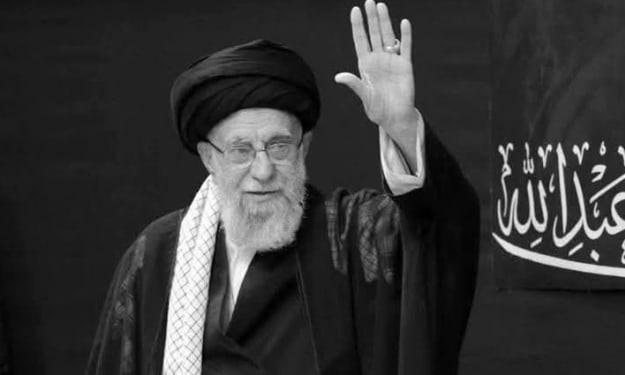
In the complex landscape of Middle Eastern politics, few figures have shaped the course of modern Iran as forcefully as Ayatollah Ali Khamenei. From his early years as a religious student to his long tenure as the Supreme Leader of the Islamic Republic, Khamenei’s story is one of ambition, influence, controversy, and ultimately, dramatic political upheaval. This article explores the arc of his life and leadership—what propelled him to power, how he governed, and the circumstances that led to his fall. Early Life and Ascent Born in 1939 in the small city of Mashhad in northeastern Iran, Ali Khamenei grew up in a devout Shiite Muslim family. From a young age, he showed a deep interest in religious scholarship and spent his formative years studying Islamic jurisprudence and philosophy. His education immersed him in the teachings of Shi’a Islam, shaping his worldview around principles of faith, authority, and the role of religion in public life. Khamenei’s early political involvement grew out of opposition to the secularizing policies of Shah Mohammad Reza Pahlavi. In the 1960s and 1970s, he became known as an articulate and committed critic of the monarchy. His activism brought him into close contact with other leaders of the Iranian revolutionary movement, including Ayatollah Ruhollah Khomeini, whose vision for an Islamic state would soon redefine Iran’s future. The Revolution and Rise to Power The 1979 Iranian Revolution was a watershed moment for both Iran and Khamenei. The overthrow of the Shah ended centuries of monarchical rule and brought religious leadership to the center of political power. Khamenei, now an influential cleric, became a key figure in the newly established Islamic Republic. In the years that followed the revolution, he served in several important roles, including as a representative in the Islamic Consultative Assembly (Iran’s parliament) and as the president of Iran. These positions allowed him to build alliances, consolidate support within religious and political networks, and enhance his reputation as a defender of the Islamic Republic’s ideals. Following the death of Ayatollah Khomeini in 1989, Iran’s Assembly of Experts selected Khamenei to succeed him as Supreme Leader—the highest authority in the country. At 50, he became one of the youngest leaders in the modern Middle East, with control over the military, judiciary, and media, alongside influence over foreign policy and religious institutions. Leadership and Controversy During his decades in power, Khamenei navigated an array of domestic and international challenges. Relations with the West, particularly the United States, remained tense. Internal tensions with reformist movements and demands for greater social freedoms also marked his tenure. Khamenei championed a vision of governance rooted in conservative religious principles, reinforced by a powerful security apparatus and ideological institutions. Supporters viewed him as a steadfast guardian of Iranian sovereignty and Islamic values. They praised his resistance to external pressure and his commitment to maintaining the revolution’s achievements. To many inside Iran and across the region, he symbolized continuity and stability in an era of upheaval. Critics, however, argued that his policies suppressed dissent, limited social freedoms, and isolated Iran economically and diplomatically. Human rights organizations raised concerns about restrictions on free expression, political opposition, and civil society. These internal tensions, combined with international sanctions related to nuclear and regional policies, created persistent pressures on the Iranian state. The Fall of a Leader In early 2026, events unfolded that dramatically altered the political landscape of the Middle East. A military conflict with Israel escalated into a full-scale confrontation involving multiple nations. Reports emerged—confirmed by some international officials—that Ayatollah Khamenei was killed during this conflict. The news sent shockwaves through Iran and beyond. Whether viewed as martyrdom by his supporters or as a dramatic turning point by his critics, Khamenei’s death marked the end of an era. For decades, he had embodied the religious and political identity of the Islamic Republic. His absence has raised urgent questions about the future direction of Iranian governance, the stability of its institutions, and the prospects for peace in a volatile region. Legacy and Future The legacy of Ayatollah Ali Khamenei will be debated for years to come. To many, he was a leader who fiercely protected national sovereignty and religious values. To others, he was a symbol of authoritarianism and missed opportunities for reform. Regardless of perspective, his life underscores the profound influence an individual can wield in shaping the history of a nation. As Iran and the wider world contemplate what comes next, the rise and fall of Khamenei offers lessons about leadership, ideology, and the complex interplay between religion and statecraft in the modern era. If you want, I can also write a shorter version, a social media summary, or an analysis piece on regional impacts of his fall.
By Hasbanullah4 days ago in Humans


Comments
There are no comments for this story
Be the first to respond and start the conversation.