
The 7 Deadly Sins: The Ancient Shadows Still Ruling Our Modern Lives
From envy to pride, these timeless vices still shape our emotions, decisions, and society in more ways than we think.

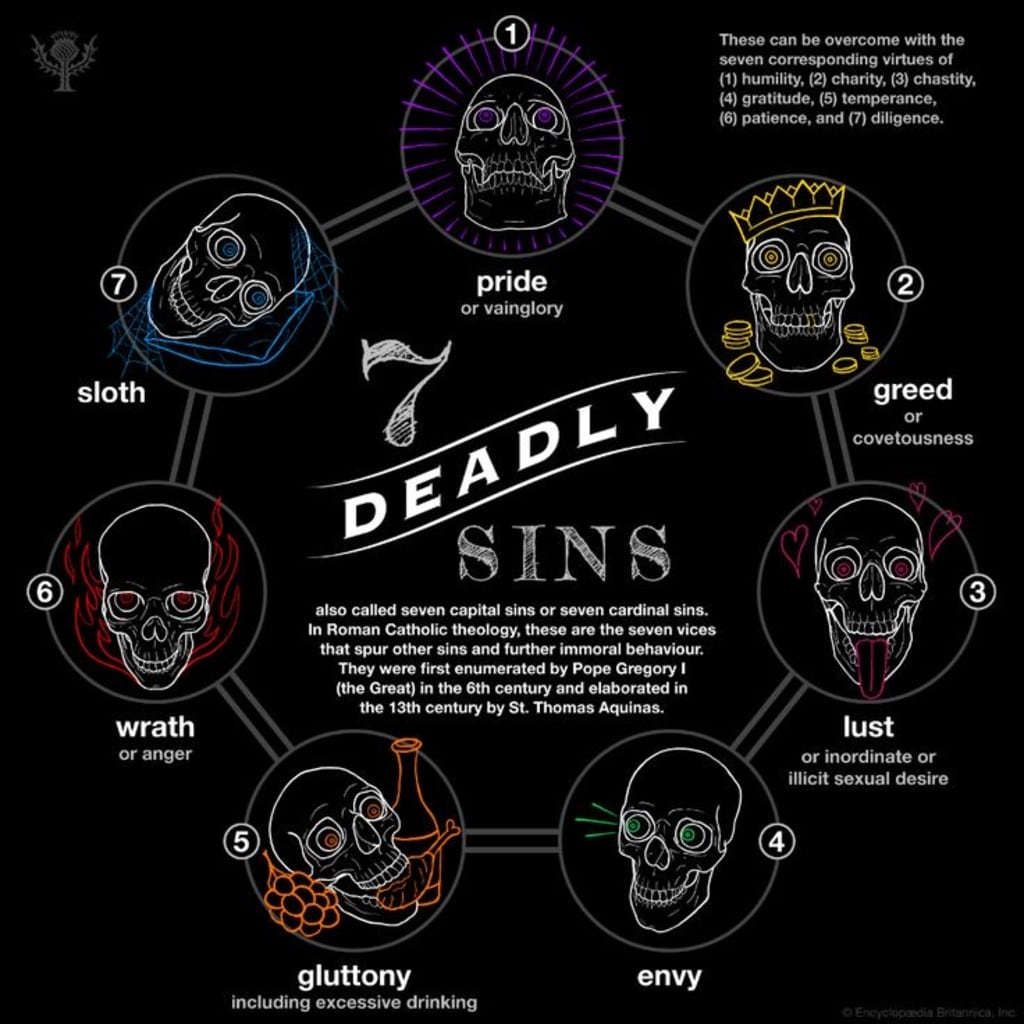
The concept of the seven deadly sins dates back centuries, rooted in Christian theology but transcending religion to become a psychological and philosophical lens for understanding human behavior. These sins—Pride, Envy, Wrath, Sloth, Greed, Gluttony, and Lust—are not simply bad habits. They are emotional distortions that, when left unchecked, corrupt the soul and sabotage a balanced life.
Today, in a society driven by technology, materialism, and instant gratification, these sins remain as relevant as ever—sometimes even glorified.
Let’s take a closer look at each one, how it manifests in modern life, and why understanding them matters.
⸻
1. Pride: The Root of All Ruin
Pride is often referred to as the “mother” of all sins. It’s the inflated sense of self-worth, the belief that we are superior to others. In the age of social media, pride often masquerades as “confidence.” Influencers, celebrities, and even everyday users project an idealized version of themselves, sometimes forgetting humility.
But unchecked pride leads to arrogance, an inability to grow, and a rejection of criticism or help. It isolates the individual and creates a false sense of perfection.
⸻
2. Envy: The Poison of Comparison
“Comparison is the thief of joy,” and envy is its most toxic result. Envy occurs when we desire what others have—status, relationships, success—believing we are somehow lacking.
In a world where we’re constantly bombarded with the highlight reels of others’ lives, envy spreads easily. It can lead to resentment, anxiety, and even hatred. But envy also robs us of gratitude and the ability to appreciate our unique journey.
⸻
3. Wrath: The Fire That Destroys
Wrath isn’t just anger—it’s uncontrolled rage that seeks destruction. It erupts in violence, whether physical, verbal, or emotional. In the digital era, wrath often takes the form of cyberbullying, cancel culture, or toxic comment threads.
While anger can sometimes be righteous or protective, wrath is blinding and dangerous. It destroys relationships, careers, and mental peace.
⸻
4. Sloth: The Death of Purpose
Sloth is more than laziness; it’s a refusal to engage with life, purpose, or responsibility. It can appear as procrastination, apathy, or an endless scroll through distractions.
While rest and self-care are necessary, sloth leads to stagnation. It steals motivation, ambition, and the will to evolve. In extreme cases, it becomes a form of spiritual and emotional decay.
⸻
5. Greed: The Endless Hunger
Greed is the insatiable desire for more—more money, more possessions, more power. In capitalism, greed is sometimes celebrated. “Bigger is better” becomes the mantra.
But greed leads to exploitation, inequality, and emptiness. It never finds satisfaction because it comes from fear—fear of not having enough, fear of losing status. Ironically, the more one hoards, the poorer one feels internally.
⸻
6. Gluttony: Drowning in Excess
Gluttony is the overconsumption of anything—food, drink, entertainment, even information. It’s the loss of moderation.
In today’s world of fast food, binge-watching, and endless content, gluttony is normalized. Yet it leads to fatigue, burnout, and poor health—both physical and mental. It numbs emotions rather than addressing them.
⸻
7. Lust: The Distortion of Desire
Lust is intense, selfish craving—often sexual, but not always. It objectifies others and treats relationships as transactions.
Lust is rampant in today’s hyper-sexualized media. When unchecked, it erodes emotional intimacy and leads to addictive behaviors. True love and connection are replaced with temporary pleasure and emptiness.
⸻
Final Thoughts:
The 7 deadly sins aren’t just religious metaphors—they are emotional traps we all face. By becoming aware of them, we don’t need to be ashamed—we can transform them.
• Pride can become self-respect with humility.
• Envy can become inspiration.
• Wrath can be transformed into healthy boundaries.
• Sloth into restful discipline.
• Greed into generosity.
• Gluttony into mindful pleasure.
• Lust into deep connection.
Self-awareness is the first step toward spiritual freedom. The ancient wisdom still holds: it’s not about punishment, but purification. Recognize your shadows, and you begin to reclaim your light.
About the Creator
5 Things to Know About Intensive Outpatient Care and How It Works
Intensive outpatient care has become an important treatment option for individuals seeking support for substance use or mental health challenges without entering residential treatment. This level of care offers structured therapy while allowing people to maintain daily responsibilities such as work, school, and family life.
By Jordan Blake3 days ago in Humans


Comments
There are no comments for this story
Be the first to respond and start the conversation.