science
The Science Behind Relationships; Humans Media explores the basis of our attraction, contempt, why we do what we do and to whom we do it.
Global Mental Health
Mental health is a global concern that transcends borders and affects individuals and societies across the world. Understanding the global context of mental health is crucial for addressing this multifaceted issue effectively. In this discussion, we'll explore the challenges faced in global mental health and the strategies employed to address them.
By Balogun Omolola2 years ago in Humans
Fentanyl - A demon in disguise
Amidst the current opioid overdose epidemic, fentanyl has emerged as a significant concern, contributing to the rise in overdose deaths since around 2012. Fentanyl's potency and dangers are not coincidental but rather due to its unique chemical properties and the challenge of dose control in illicit use. To combat opioid overdoses effectively, we must comprehend the specific threats posed by fentanyl and explore ways to ensure people's safety in its presence.
By Andreas Georgiou2 years ago in Humans
Cellular Damage
What if mobile phones possessed such extraordinary power that they could actually reshape our bones? This intriguing topic has recently gained considerable attention in the media. It all stems from a scientific report proposing that the use of phones and tablets might lead to profound and enduring alterations in our bodies, but not in the way you might initially assume.
By Andreas Georgiou2 years ago in Humans
Is it okay to have conversations with yourself?
As the blaring morning alarm jolts you from your slumber, you mutter in groggy frustration, "Why did I set it so early?" While methodically brushing your teeth, a thought flits through your mind, "I need a haircut... or maybe not?" In your haste to depart, your hand instinctively reaches for your keys, only to be met with a jarring realization – they're not where they should be. In a burst of frustration, you exclaim, "I can't seem to do anything right!" — just in time to catch your neighbor's quizzical gaze. Indeed, being caught in the act of self-conversation can be a bit embarrassing, and society has occasionally stigmatized this behavior as a possible sign of mental instability. Yet, decades of psychological research resoundingly assert that talking to oneself is entirely normal. In fact, it's a phenomenon that nearly all of us engage in to varying degrees each day. So, why do we engage in self-talk, and does it truly matter? Let's embark on an illuminating journey to explore the intricacies of this internal dialogue.
By Maliha Arshad2 years ago in Humans
The Brain's Transformation Through Childbirth
The journey of motherhood is a profound and transformative experience that extends far beyond the physical changes a woman's body undergoes during pregnancy and childbirth. While the visible transformations in a mother's body are awe-inspiring, some of the most remarkable changes occur within her brain. The journey of motherhood begins with a powerful surge of love and devotion, driven by core regions of the brain's reward network.
By Maliha Arshad2 years ago in Humans
Dog Heroes
In a world that sometimes seems divided and chaotic, there exists a source of unbridled love and unwavering loyalty that has been our companion for millennia—the dog. Dogs, often referred to as "man's best friend," have woven themselves into the fabric of our lives, offering us a special kind of love that transcends words. Let us embark on a heartfelt journey to celebrate the profound impact these furry companions have on our lives.
By Moustafa Nasser2 years ago in Humans
World Mental Health Day... Learn about 10 early signs of depression. Content Warning.
"World Mental Health Day is observed on October 10th every year. It is a dedicated day to raise awareness about mental health issues and promote them globally. The day aims to highlight the importance of mental health and mobilize efforts to support education, awareness, and advocacy in the field of mental health."
By Mikhael Rashad2 years ago in Humans
Health
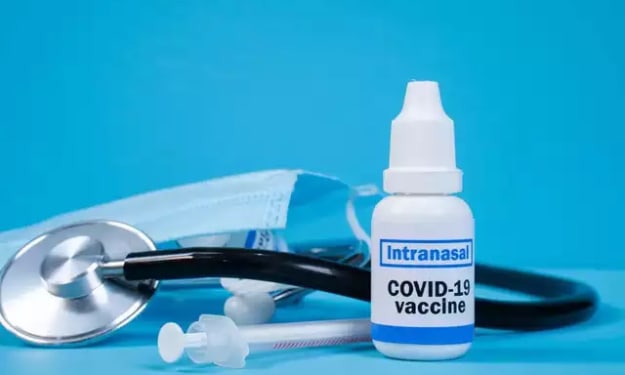
In a recent study published in the journal PNAS, researchers have formulated an intranasal vaccine called measles-mumps-SARS-CoV-2 spike (S) protein vaccine (MMS) that provides extensive and long-lasting safeguarding against prominent variants of Severe Acute Respiratory Syndrome Coronavirus 2 (SARS-CoV-2). This innovative vaccine takes advantage of the well-established safety profile of the measles-mumps-rubella (MMR) vaccine platform.
By Krishnendu Dey2 years ago in Humans
Hidden Secrets Of belly button
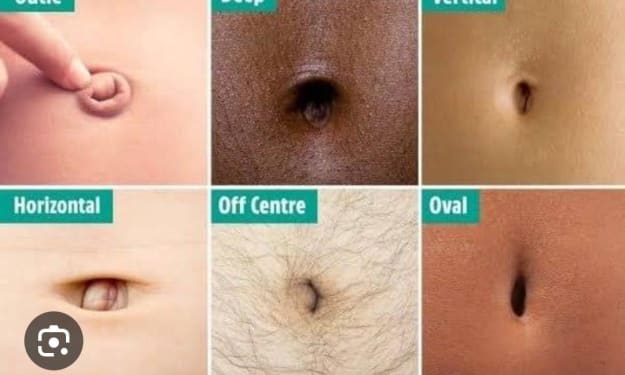
The belly button may seem useless but this passage once kept you alive and this is what remains of the most profound connection you've ever shared between you and your mother so what would happen if you poked it too hard and this piece of your history came undone what would happen to your organs would you constantly be leaking fluid and could you be yourself oh man someone grab a towel now please this is what if and here's what would happen if you could untie your belly button while you as a fetus developed inside your mother's womb your two bodies were attached through this the umbilical cord able to grow up to 70 centimeters this tube fed nutrients to you from the placenta and after you were born a doctor clamped and cut the cord leaving you with this scar it's useless now but without this tiny bit of flesh your body would fall apart but if you have an belly button are your organs already at risk a small number of people have omphalophobia the fear of belly buttons so for those people let's clear something up your belly button isn't the knot it just looks coiled up but it's a scar so nothing can come unraveled but it could get dissolved and if it did an infection could run rampant throughout your body and now you can be afraid in this area you can find direct links to the liver and the bladder if these connections to your organs became exposed an infection could be lethal so what could make this area fall apart well if the umbilical cord didn't heal properly the tissue could wear down over time and if that happened your belly button could start to leak yeah and if you think having it is any better in most cases an belly button is the natural result of the tissue healing in this protruding shape some women have their navel flatten or even stick out further during pregnancy due to the pressure building within their bodies their could balloon into but for infants this could be a sign of an umbilical hernia their intestines and body fat pushing through the stomach muscles under the belly button this condition usually heals itself after the baby is over 18 months but if you live with this abnormality it would leave your skin red swollen and oozing with pus yeah good luck getting that pierced when you were a baby you had a canal between your bladder and belly button which usually disappears when you get older but in rare instances this canal can remain and it can cause urine to leak out of your navel a surgery after birth can repair this condition but if your belly button unraveled you could be leaking urine all the time oh man it's everywhere now you may think your life is the only one on the line but if you had an inner you could have up to 67 different species of bacteria in your belly button biologists studying the relationship between humans and bacteria could even create cheese from the microbes living inside here and a cheese made from your belly button could taste different than anyone else's cheese let me explain that researchers studying dozens of belly buttons found that some people had bacteria unique to them there could be microbes on your body that can't be found anywhere else in the universe but with the constant infections and treatments you would endure you could eradicate entire species of bacteria in your body forever after you're born this tissue doesn't have a vital function anymore but if it disappeared you and everything around you would be a complete mess with all these fluids draining out of you. Hope you enjoyed this article.
By Risper Nyawira2 years ago in Humans
what would happen if everyone were to stop eating meat
Let's talk about a hypothetical situation. Livestock outnumbers humans by a factor of over 4. The aggregate weight of all wild mammals is about ten times more than that of farm cattle alone. So picture a wizard of meatless dining appearing out of nowhere and wiping out all of the meat on our shelves—along with the urge to eat it—with the wave of a wand. Animals raised for food disappear and are transported to another world. What will occur during the ensuing days, years, and possibly millennia? Emissions of greenhouse gases connected to food decrease by roughly 63% over night. The almost 70 billion chickens, 1.5 billion pigs, 300 million cattle, and 200 million tons of fish and shellfish that are processed for human consumption each year no longer provide us with protein and essential elements. In order to fill this nutritional gap. Our desire for fruits, vegetables, and legumes rises as a result of the nutritional gap; this diet, according to the majority of dietitians, provides all the nutrients necessary for a healthy existence. However, there aren't enough of these foods available at first. Costs of produce increase due to the increase in demand. People in places like Mongolia, where the severe climate makes it impossible to grow vegetables, are left with little to eat when there is a sudden shortage of meat. Cultures that are based on meat fall apart. For instance, those who belong to salmon-eating tribes in the Pacific Northwest of the United States lose not just their means of subsistence and livelihood but also a significant aspect of their religion. When fish populations decline, tens of millions of anglers lose jobs that were already in danger. The meat industry is failing, and many households in developing nations historically derived from raising cattle is now in short supply. Some meat producers switch to growing agricultural crops, which reduces the risk of respiratory illnesses in both the workforce and surrounding areas. Down. Finally, in the majority of nations. Fortunately, we can raise all of this food without destroying any new acreage. Land that had previously been used to grow feed is now open due to the absence of livestock bred for meat. In the grand scheme of things, our new diets use less water and land. Due in part to lower incidence of heart disease, cancer, and other illnesses linked to red meat eating, millions of deaths are prevented each year. We no longer catch novel diseases from wild animals that are hunted for food, or novel influenza viruses from farmed pigs, or antibiotic-resistant superbugs that grow in beef cattle. As time goes on, habitat loss, pesticide use, and other pressures from agriculture decrease, resulting in an increase in global biodiversity. There is more woodland for Amazonian birds to fly over. Cheetahs who stalk animals too closely are shot less frequently. As natural areas grow, bee, wasp, and butterfly communities prosper. Crops that are pollinated by insects consequently yield more. Overfishing causes many ocean species to recover. In historically vegetarian locations, humans have developed a genetic mutation that improves their ability to metabolize plant-based lipids. Our bodies may have evolved over thousands of years to maximize the benefits of our vegetables. Alternately, humans could lose some adaptations, such as the capacity to get iron from meat. Of course, a wizard won't make the globe vegetarian. Despite the fact that many people are opting to become vegetarians, meat consumption is still rising on a global scale. Our climate is in jeopardy because of this trend. Even if we abruptly ceased using fossil fuels, the current food system and population growth would result in a rise in global temperatures of over 1.5°C by the end of the century. The main offender is cattle. Despite only providing about 18% of the world's calories, the production of beef and dairy products is responsible for more than 60% of all emissions related to food. In actuality, diets with moderate amounts of meat, such as chicken, generally result in lower greenhouse gas emissions than vegetarian diets with a lot of dairy. Many of the advantages of a meatless world may be attained without any magic by consuming less milk, cheese, and beef.
By Naledi Motlatla2 years ago in Humans