
Cellular Damage
Can mobile phones affect a human's bone structure?
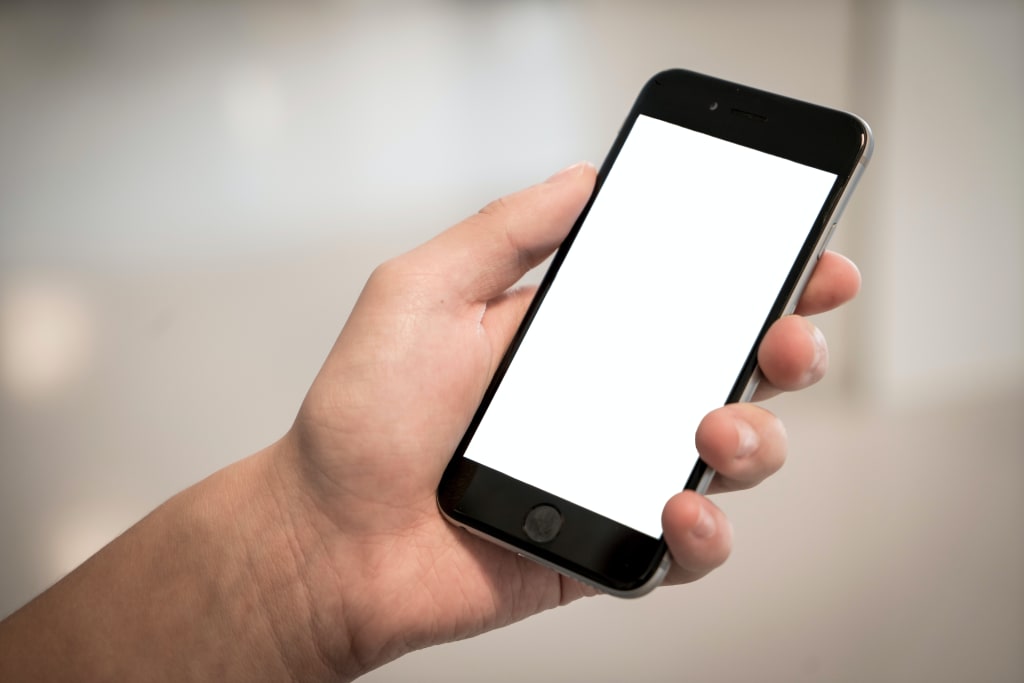
What if mobile phones possessed such extraordinary power that they could actually reshape our bones? This intriguing topic has recently gained considerable attention in the media. It all stems from a scientific report proposing that the use of phones and tablets might lead to profound and enduring alterations in our bodies, but not in the way you might initially assume.
Over the past few years, David Shahar and Mark Sayers, experts in biomechanics at Australia's University of the Sunshine Coast, have conducted a compelling study. Biomechanics examines how mechanical principles apply to living organisms, ranging from how humans run to how insects flap their wings. Shahar and Sayers' study also delves into osteobiography, a method used to deduce a person's life history from their bones.
It has long been understood that skeletons adapt to an individual's way of life, with each set of bones telling a unique story. For instance, notably large skeletons were discovered on the Pacific island of Tinian in 1924, and nearby stone structures explained the robust nature of the islanders' bones. By working with heavy stones, they naturally developed larger arms, legs, and collarbones.
Shahar and Sayers believe that modern technology is similarly shaping the skeletons of young people. So, how is this transformation occurring? It revolves around something called an EOP, or external occipital protuberance. Some experts and commentators have humorously likened it to a "foam ball" or a "devil-like horn," but in reality, the EOP is a bony growth located at the back of the skull, connected to the nuchal ligament, which plays a crucial role in connecting neck muscles to the skull. The EOP functions somewhat like an anchor at the top of the nuchal ligament.
Now, let's revisit the researchers' primary objectives in conducting this study. By analyzing X-rays from chiropractors of individuals ranging from 18 to 86 years old, they sought to gain updated insights into how skeletons change. Many of these X-rays were taken to investigate issues like neck pain. The researchers observed that in young people, the EOP appeared to be more prevalent. Their hypothesis was that the posture adopted by young people while constantly checking their phones and tablets puts additional strain on the neck, causing it to crane forward. To compensate for this, the EOP gradually elongates, growing by several millimeters. This effect is often referred to as "text neck."
The study also revealed that text neck was more common in men. In 2016, Shahar and Sayers reported that 67% of men exhibited a larger EOP, compared to only 20% of women, within a test group of 218 individuals. By 2018, they had expanded their study to include 1,200 people, with males being five times more likely to develop these enlarged text necks.
But what could be the potential consequences for humanity? While we frequently hear about concerns regarding phone radiation and its potential links to cancer, could using a mobile device genuinely result in significant health problems within the body? This new report has sparked debates on this topic because it's the first instance where experts are explicitly highlighting how technology is impacting our bodies.
Shahar and Sayers have described the elongation of the EOP as a degenerative process, implying that things might only worsen for young people if they continue using their devices. There's also something known as "text thumb" or thumb arthritis, where the thumb can develop severe issues akin to carpal tunnel syndrome.
However, it's worth noting that the study of EOPs and their characterization as "horns" or "spikes" has faced criticism from other quarters of the press. Some experts argue that the report isn't conclusive and that, like any scientific paper, it makes certain assumptions. Archaeologists, for instance, assert that longer skull bones are not a new phenomenon and are especially common in males. The general view among the study's critics is that there isn't sufficient solid evidence to support the claim that mobile phone use is causing individuals to transform into something resembling Hellboy.
So, are Shahar and Sayers onto something groundbreaking, or have they simply taken well-established facts and molded them to fit their own explanation? Regardless, the profound impact of technology on our lives is undeniable. The notion that forthcoming generations are undergoing physical changes due to constant interaction with their devices raises a serious concern that warrants attention. Ultimately, it will be the archaeologists of the future who determine the veracity of these claims. Perhaps they won't have prominent spikes protruding from the backs of their necks in the future – who knows? So, perhaps a bit more time spent outdoors and a bit less time on Angry Birds isn't a bad idea after all.
About the Creator
Keep reading
More stories from Andreas Georgiou and writers in Humans and other communities.
Valuing Asteroid 16 Psyche
Asteroid 16 Psyche, often referred to as the "celestial titan," has been the subject of intense scrutiny, fueled by the staggering claim that this space rock holds an astronomical worth of $100,000 quadrillion. The prospect of such unfathomable wealth residing in the vast expanse of our solar system sparks curiosity, and the question arises: How can we truly ascertain the monetary value of an asteroid?
By Andreas Georgiou2 years ago in Humans
Instructions Included Challenge Winners
For the Instructions Included challenge, we asked writers to tell a story through instructions and to trust the form to carry what could not be said outright. Across the top entries, that trust paid off in many different ways.
By Vocal Curation Team3 days ago in Resources




Comments