

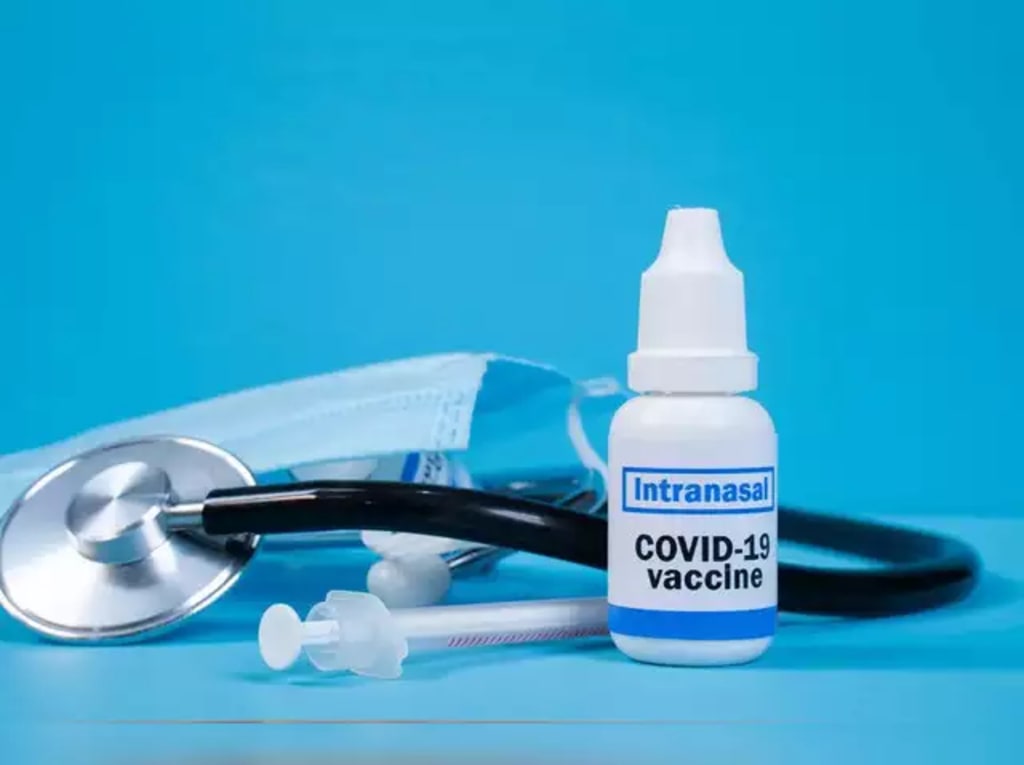
In a recent study published in the journal PNAS, researchers have formulated an intranasal vaccine called measles-mumps-SARS-CoV-2 spike (S) protein vaccine (MMS) that provides extensive and long-lasting safeguarding against prominent variants of Severe Acute Respiratory Syndrome Coronavirus 2 (SARS-CoV-2). This innovative vaccine takes advantage of the well-established safety profile of the measles-mumps-rubella (MMR) vaccine platform.
Background:-
The COVID-19 pandemic caused by SARS-CoV-2 has resulted in a staggering global toll of over 6.96 million deaths and more than 771 million infections as of October 2023. Despite the development of several vaccines utilizing the prefusion spike (S) protein as an immunogen, these vaccines have certain limitations, including reduced efficacy against evolving SARS-CoV-2 variants, short-lived protection, and the absence of mucosal immunity. The emergence of various variants, particularly the Omicron variant with its multitude of mutations, presents challenges to the effectiveness of current vaccines. Therefore, the urgent requirement for more potent vaccines is evident. Given the persistent emergence of SARS-CoV-2 variants and the shortcomings of existing vaccines, further research is necessary to develop next-generation intranasal vaccines that confer broader mucosal immunity and adaptability to evolving strains.
About the study:-
This study focused on comprehensively analyzing and developing modified measles and mumps viruses (recombinant Measles Virus (rMeV), recombinant Mumps Virus (rMuV-JL1), and rMuV-JL2) capable of expressing the SARS-CoV-2 six prolines (preS-6P) proteins. Various procedures, such as growth curves, virus preparation, purification, and various assays, were employed. These assays encompassed Measles Virus (MeV), Mumps Virus (MuV), and SARS-CoV-2 plaque tests, ribonucleic acid (RNA) extraction, Reverse Transcription Polymerase Chain Reaction (RT-PCR), Western blotting, and others. The animal studies conducted received approval from The Ohio State University's Institutional Laboratory Animal Care and Use Committee, referencing protocol numbers 2009A1060-R3 and 2020A00000053. Immunization and challenge experiments were carried out on IFNAR1−/− mice and golden Syrian hamsters.
Subsequent stages of the study involved protein purification, T cell assays, flow cytometry, and Enzyme-Linked Immunosorbent Assay (ELISA) tests to identify specific SARS-CoV-2 Immunoglobulin G (IgG) and Immunoglobulin A (IgA) antibodies. Additionally, investigations were conducted on SARS-CoV-2's neutralization capacity, pseudotype neutralization, and the determination of SARS-CoV-2 concentration in animal tissues. Histological examinations were performed, and all results underwent meticulous statistical analysis.
Study results:-
Researchers have recently discovered that the preS stabilized with preS-6P variant induces a higher neutralizing antibody response compared to other variants. To further investigate, the preS-6P gene from the SARS-CoV-2 Delta variant was integrated into a different genome, resulting in an altered strain. This modified strain showed differences in growth and cellular effects, while maintaining strong protein expression similar to the Delta variant. Similarly, a gene from the SARS-CoV-2 Omicron BA.1 variant was integrated into a separate vaccine genome, with comparable observations.
The recovery and characterization of rMuV-JL1-Delta-preS-6P, which expresses the six proline-stabilized prefusion spike of the SARS-CoV-2 Delta variant, were conducted. A strategy was implemented to insert preS-6P of the Delta variant into the P and M gene junction in the MuV-JL1 genome. The plaque morphology of rMuV-JL1 and rMuV-JL1-Delta-preS-6P was examined in Vero CCL81 cells on day 5. It was observed that rMuV-JL1-Delta-preS-6P exhibited delayed syncytia formation in Vero CCL81 cells at an MOI of 0.1. The replication kinetics of recombinant viruses in Vero CCL81 cells at the same MOI were also analyzed. Moreover, the expression of preS-6P in rMuV-JL1-Delta-preS-6P or rMuV-JL2-WA1-preS-6P-infected Vero CCL81 cells was assessed. For infection, an MOI of 0.1 was utilized, and cell lysate and supernatant were collected for Western blot analysis.
The SLAS EU highlights the most noteworthy interviews, articles, and news from the previous year in their 2022 eBook Compilation. You can download the latest edition from their website.
A trivalent vaccine was developed and tested against a single-strain vaccine in mice using these modified viruses. Results showed that the trivalent vaccine prompted a broader immune response and generated neutralizing antibodies against multiple SARS-CoV-2 variants. Both the trivalent and single-strain vaccines maintained antibody responses for four months and stimulated tissue-resident memory T cell responses in the lungs, which are crucial for defending against SARS-CoV-2. However, the trivalent version exhibited a more comprehensive protective capacity.
Seven weeks after immunization, the T-cell responses in the mice's splenocytes were analyzed. It was observed that the trivalent vaccine activated T-helper 1 (Th1) cells to a greater extent than its monovalent counterpart and notably stimulated the production of Interleukin-4 (IL-4)-producing T-helper cells. Both vaccines induced significant numbers of T-helper cells producing IL-21 and IL-17. However, the trivalent vaccine demonstrated a superior systemic T-cell immune response.
In experiments conducted on Golden Syrian Hamsters, the trivalent vaccine demonstrated broader neutralizing activity against various SARS-CoV-2 variants. In contrast, the monovalent vaccine exhibited specificity towards the Omicron BA.1 variant. When exposed to SARS-CoV-2, the trivalent vaccine provided enhanced protection, particularly against the WA1 and Delta strains.
Moreover, separate tests involving the intranasal administration of the trivalent vaccine showed complete protection against SARS-CoV-2, triggering a more potent serum IgG antibody response compared to subcutaneous administration. Additionally, intranasal delivery induced a robust mucosal IgA antibody response, which was not observed in the subcutaneous group. These findings highlight the significant impact of delivery methods on immune responses, suggesting that intranasal immunization may offer superior protection against respiratory viruses such as SARS-CoV-2.
Conclusion:-
To summarize, a trivalent MMS vaccine has been developed by researchers to combat measles, mumps, and various SARS-CoV-2 variants. Observations indicate that this vaccine elicits robust immune responses both systemically and specifically in the lungs, providing protection against multiple SARS-CoV-2 strains, including the Delta and Omicron BA.1 variants. Unlike monovalent vaccines with limited protective scope, this modified version of the MMR vaccine exhibits broad neutralizing capabilities against multiple virus strains. The intranasal administration of the MMS vaccine stimulates strong immune responses in both systemic and mucosal regions, potentially offering superior protection against SARS-CoV-2 variants. Notably, the vaccine's design allows for convenient modifications to address the emergence of new variants. In essence, this next-generation COVID-19 vaccine candidate demonstrates extensive and long-lasting protection, underscoring its potential as a significant tool against SARS-CoV-2 variants.
About the Creator
Keep reading
More stories from writers in Humans and other communities.
Autonomy Is The Real Privilege
Good morning, freedom-seekers! Today we’re gonna be looking at autonomy. A strange word, I know; one many would probably look at blankly and run away from on sight. We’re gonna figure out what it actually means, consider how it’s achieved, and decipher just how deeply most of us are tangled up in dependence without realising it.
By That ‘Freedom’ Guyabout 6 hours ago in Humans



Comments
There are no comments for this story
Be the first to respond and start the conversation.