science
The Science Behind Relationships; Humans Media explores the basis of our attraction, contempt, why we do what we do and to whom we do it.
CHILD & TEEN HEALTH Chronic stomach pain in children: What's the most common cause?
The most common cause of chronic stomach pain in children isn't anything you can find on a test or cure with a medicine. And that can make it very challenging to diagnose — and treat.
By Jahangir Alam2 years ago in Humans
STAYING HEALTHY How well do you worry about your health?
Don't worry. It's good advice if you can take it. Of course that's not always easy, especially for health concerns. The truth is: it's impossible (and ill-advised) to never worry about your health. But are you worrying about the right things? Let's compare a sampling of common worries to the most common conditions that actually shorten lives. Then we can think about preventing the biggest health threats.
By Jahangir Alam2 years ago in Humans
DISEASES & CONDITIONS The wide-ranging effects of psoriasis
Decades ago, advertisements waxed on about the "heartbreak of psoriasis" — a skin disorder marked by noticeable patches of scaly skin — to the point that even people with garden-variety dry skin or dandruff worried they might also have the condition.
By Jahangir Alam2 years ago in Humans
Being Mortal: A Compassionate Exploration of Aging and End-of-Life Care
Atul Gawande’s book “Being Mortal: Medicine and What Matters in the End” delves into the topics of aging, death and end of life care in today’s society in a thought provoking manner. As a writer and practicing surgeon, Gawande explores how we perceive aging and mortality within the healthcare system. Through anecdotes, patient stories, and research findings he advocates for a reexamination of conventional beliefs, about aging, and end of life care to promote a more empathetic and patient focused approach.
By Gabriel Diaz Pagan2 years ago in Humans
How Taylor Swift’s tour de force is a call to a New Era
Taylor Swift's outstanding achievements are a part of a progressive cultural transformation — Taylor's work is leading the political empowerment of women. The joy Swift has brought forth must be the currency that guides us in the future.
By Josh Clements2 years ago in Humans
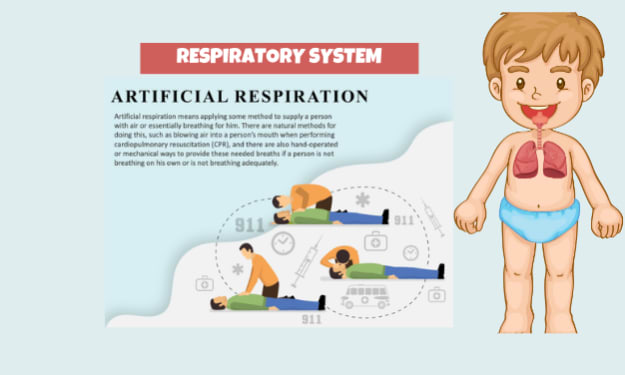
A Comprehensive Guide to the Human Artificial Respiration Process
lungs which is an important part of life. Drowning Traffic accidents Being buried in mud or debris Fires Being trapped in crowds of people. Davis Method Breathing difficulties can be caused by toxic gas or electric shock. Or breathing may stop, in this situation, breathing should be restored by artificial respiration. natural way of life.
By Muhammad Khan2 years ago in Humans
Are Humans Still Evolving?
Evolution is a fascinating process that continues to shape the human species in remarkable ways. While on the surface, it may seem that humans have not changed much from our early ancestors, a closer look reveals the intricate ways in which we are evolving. One striking example of human adaptation can be seen in the Bajau people of Southeast Asia. These skilled divers have developed extraordinary breath-holding abilities, allowing them to stay submerged for up to 12 minutes, far surpassing the average person's 30-second limit. This exceptional skill is not only a result of training and experience but is also linked to a genetic mutation that has led to their spleens being 50% larger than average.
By Sanjana Dixit2 years ago in Humans
Zeta Potential: A Fundamental Measure for Colloidal Behavior
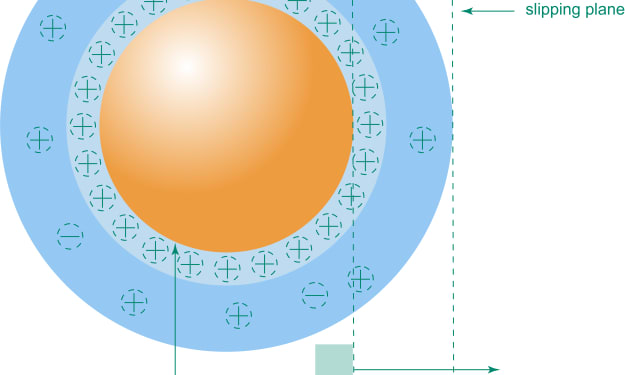
What is Zeta Potential? Zeta potential (ZP) is a physical property exhibited by any particle in a suspension, macromolecule or material surface. ZP is an analytical technique used to determine the surface charge of nanoparticles in colloidal solutions. The surface of a charged particle attracts and binds firmly to a thin layer of opposite charge, forming a thin layer of liquid called the Stern layer; as the particle diffuses in the solution, it will be replaced by a thin layer of loosely bound ions. The outer diffusion layer is involved, resulting in an electric double layer (Figure 1). Zp is named after the potential of the electric double layer and is determined by measuring the speed of charged particles moving through the sample solution toward the electrode in the presence of an external electric field. ZP values are typically in the range of +100 to −100 mV. The magnitude of the ZP gives a prediction of colloidal stability. The ZP of NPs with values >+25 mV or <−25 mV is generally highly stable. Lower dispersion ZP values can lead to aggregation, coagulation or flocculation due to van der Waals attraction between particles. Zeta potential can be used to optimize the formulation of suspensions, emulsions and protein solutions, predict interactions with surfaces, and optimize the formation of films and coatings. Understanding zeta potential can reduce the time required to produce pilot formulations. It can also be used as an aid in forecasting long-term stability.
By CD Bioparticles2 years ago in Humans
What is Herpes Simplex Virus
Herpes simplex virus (HSV) belongs to the herpesvirus alpha subfamily and has a unique 4-layer structure. The core of HSV is a linear double-stranded DNA of about 152 000 bp, surrounded by an icosahedral capsid. The outer capsid is a membrane, which contains more than 20 important proteins that can regulate the virus replication cycle. It is a characteristic structure of herpes viruses, can connect the capsid and envelope to form a complete virus particle. The outermost layer of HSV is the lipid bilayer envelope, which contains at least 12 viral membrane proteins (gB, gC, gD, gE, gG, gH, gI, gJ, gK, gL, gM, gN). Entry into host cells and viral immune evasion are both critical.
By Creative Diagnostics2 years ago in Humans
How Your Memory Works.
Recollections are the compass focuses that assist us with exploring the complicated labyrinth of the human cerebrum and make the texture of our reality. Our memorable capacity — or neglect — shapes our feeling of the real world, as exhibited by the distinguished analyst Sherlock Holmes and the fascinating instance of Jill Cost. Be that as it may, how does memory work? Furthermore, what secrets are concealed in our cerebrums? Show up on an investigation of the fascinating universe of memory as we work through its intricacies and consider the huge impact it has on our lives.
By Abdur Rahman 2 years ago in Humans
Night Vision Telescopes Explore: Learn the Basics of Night Vision
Night vision telescopes are remarkable instruments that empower us to see clearly in conditions close to total darkness. Distinct from traditional telescopes and binoculars that depend on reflected or direct light to function, these advanced telescopes amplify even the faintest light, offering visibility where none seems possible. Often perceived as tools exclusive to military operations, the application of night vision technology extends far beyond, playing a crucial role in search and rescue missions, wildlife monitoring, navigation, and enhancing security measures.
By Settall sale2 years ago in Humans
The language of lying — Noah Zandan.
An exemplary part of human association is trickery, going from little lies we utter to safeguard our sentiments to huge scope smoke screens that sabotage certainty. The capacity to isolate reality from fiction becomes basic as we arrange the intricate snare of human connections. Traditional strategies for distinguishing contemptibility, for example, polygraph assessments and mind imaging, have for quite some time been the norm.
By Abdur Rahman 2 years ago in Humans