science
The Science Behind Relationships; Humans Media explores the basis of our attraction, contempt, why we do what we do and to whom we do it.
The Hunger
I'm not saying it's a conspiracy, but it is kind of interesting that first there's a Pandemic and quote-unquote everyone has to get the shot. The shot (and to be fair, the virus itself) seems to have far-reaching unknown and known side effects including potential fertility consequences, cardiac symptoms, and ... weight gain.
By Christa Leigh2 years ago in Humans
The Role of Blockchain in Decentralized Autonomous Organizations (DAOs)
The world is going through a never-seen-before transformation thanks to revolutionary technologies that have recently come into play. It includes technologies like artificial intelligence, data science, machine learning, metaverse, virtual reality, and, of course, the famous blockchain consulting services.
By MoogleLabs2 years ago in Humans
MIND-BLOWING FACTS: THE TRUTH BEHIND COMMON BRAIN MYTHS
MIND-BLOWING FACTS: THE TRUTH BEHIND COMMON BRAIN MYTHS Myth: We only use 10% of our brains. This is not true. We actually use all parts of our brain, although not simultaneously. This myth originated in the early 1800s when people were trying to understand brain injuries and their effects. Modern techniques like PET and functional MRI scans show that various parts of the brain are active even during simple tasks.
By Moyinolorun Ajiboye2 years ago in Humans
The Hidden Fountain of Youth. AI-Generated.
Early in the morning, faint sunlight filtered through the lush green leaves of towering oak trees, casting a serene and tranquil ambiance over the landscape. In a small house nestled on a hillside, an elderly man named John sat on a long chair on the porch, his weathered hands resting on the armrests as he gazed out towards the distant expanse of cloud-covered valleys.
By Alex Nguyen2 years ago in Humans
Pediatricians Debunk 16 Baby Myths
Let's address this statement based on current understanding and medical advice:Aliza Pressman: "Baby walkers help babies walk."This statement is incorrect. Baby walkers do not actually help babies learn to walk. In fact, they can delay motor development and pose safety risks. The American Academy of Pediatrics (AAP) advises against the use of baby walkers due to the potential for accidents, such as falls down stairs or collisions with objects.
By wassim mem2 years ago in Humans
Paramedics Debunk 12 First Aid Myths
Absolutely, let's debunk this misconception:You should clean your wounds with rubbing alcohol:Using rubbing alcohol (isopropyl alcohol) directly on wounds can actually be harmful. It can delay healing, damage new tissue, and cause pain and irritation. Instead, clean wounds with mild soap and water to gently remove dirt and bacteria. If necessary, use an antiseptic solution recommended by healthcare professionals.
By wassim mem2 years ago in Humans
ENT Doctors Debunk 11 Ear And Nose Myths
Let's clarify this point:To stop a nosebleed, pinch the bridge of your nose and tilt your head back.This is partially incorrect. Tilt your head slightly forward, not backward, to prevent blood from flowing down your throat. Pinch the soft part of your nose, the nostrils, just below the bridge. This helps apply pressure to the bleeding point and usually stops the bleeding within a few minutes. Tilting your head back can cause blood to flow down your throat, which can be swallowed and potentially cause choking or stomach upset.
By wassim mem2 years ago in Humans
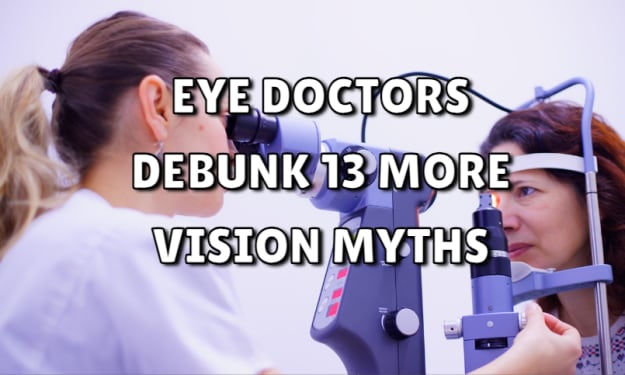
Eye Doctors Debunk 13 More Vision Myths
Let's clarify this myth:"Eye exercises will improve your vision":This is a myth. While eye exercises may help with eye muscle strength and coordination, they do not significantly improve or correct vision problems such as nearsightedness (myopia), farsightedness (hyperopia), or astigmatism. Vision problems are typically caused by the shape of the eye or the length of the eyeball, and exercises cannot change these structural issues. Corrective lenses, such as glasses or contact lenses, or surgical procedures like LASIK are more effective for vision correction.Hi my name is dr ronnie banik i'm a board certified ophthalmologist and neuro-ophthalmologist and i'm dr jennifer sci practicing optometrist in new york city i specialize in medical and aesthetic eye care and today we will be debunking myths about vision 2020 means you have perfect vision ah that's a good one a lot of people think 2020 means perfect vision but there is so much to vision beyond just reading the eye chart and reading down to 2020. and when we say 2020 vision it means that this chart is at 20 feet away from the patient and they can read all the way down to this line right here there are other lines below that some people can actually read even better than 2020 but there are so many other components of vision for example there's color vision there's peripheral vision there's contrast and we also check for near point vision which has to do with reading up close and technically you could have 20 20 vision but have a condition such as glaucoma which can cause peripheral vision loss which means you have perfect 20 20 vision in the center but you might have side vision loss blue light will damage my eyes oh my gosh i don't know what to think about that back in 2018 there was a study that came out that the media picked up on and they said oh blue light is going to damage your retina it's going to cause permanent blindness what the researchers did in the study was they took cells they put them in a petri dish and they exposed those cells to high high levels of blue light and they found out that those cells died the truth is that the cells that they put in that petri dish were not even eye cells they were cervical cancer cells so our retina cells have pigments that protect us against blue light they're called lutein and zeaxanthin they're like our natural blue blockers and they protect our eyes against blue light so there is no proof that blue light damages your eyes and if it were really true we would actually have a pandemic of blindness because all of us are on devices all the time children adults and it's just not true we do know that it affects our sleep and it does cause insomnia because it changes our circadian rhythm so when you wear like coating on your glasses it does help with light sensitivity and glare and just generally making you feel more comfortable when you're doing work so there is no downside to it the tint does make a difference because if you put on the lighter tint blue blockers and if you look at your screen if you can still see the color blue it means that that blue blocker is not blocking out 100 of the blue light maybe it's blocking out a certain lower percentage maybe 30 to 40 percent versus if you put on these these are the super duper blue blockers if you look at a screen with these on you don't see any blue whatsoever so for example if i'm having trouble sleeping and i need to use my computer at night i'll wear these at night time two hours before bed so it doesn't really interfere with my sleep the other thing that can happen when you're on a screen for a long time is probably you're not blinking enough so you're probably also getting dry eye and that's probably also contributing to the eye strain you will lose your vision as you age i hear this all the time for my patients i have patients who are older your 60s 70s 80s even 90 year old patients who still have 20 20 vision sometimes the dinner menu gets harder to read at the restaurant and i tell them that's absolutely normal that's not losing your vision it's just that our vision starts to change in the other direction sometimes so when we're referring to presbyopia that is the gradual change when our eyes are not able to accommodate or focus on near objects as well and we tend to hold things further back so why does this happen well it's because inside the eye we have a lens now normally the lens is very flexible and it can change shape sometimes it can get thicker or thinner in the middle that allows us to focus at different distances as we get older though this lens just doesn't change shape as well it becomes more stiff and when it becomes more stiff that is called loss of accommodation or presbyopia and again that usually happens to most people sometime in their 40s or 50s we also notice that over time our eyes start to improve as we get older it has to do with the fact that as we grow our eyes elongate and that can lead to myopia or near-sightedness and over time just like our body can shrink our eyes can shrink shorter and that can lead our prescription to go the opposite way there's lots that can go wrong but as long as you see your eye doctor regularly you get checked for it you get it taken care of you can still maintain good 20 20 vision into your golden years lasik means no glasses forever i wish that were true but there is no guarantee with any kind of procedure that your vision will be what you hope it to be lasik is just resetting your prescription back to zero so lasik can provide sharp clear vision but that doesn't mean it can prevent myopia regression or the need for reading glasses sometimes there can be regression which means that after six months or a year the cornea may start to change back into its natural shape for the most part it is very very safe but just make sure you talk to your surgeon about it first to make sure that you're a good candidate because not everyone is a good candidate okay color blindness equals seeing in black and white this is an interesting one a lot of people think that if you have color blindness that's all you're going to see is like monochrome but it's not true most people who have color blindness or what we call color deficiency have issues with seeing different shades of reds and greens and sometimes also oranges and yellows it's not that they can't see those colors they just see those colors differently so we have cells in our retinas called photoreceptors the rods are responsible for light and dark vision the cones are responsible for color visions we have red cones green cones and blue cones and these cones are all tuned into certain wavelengths so in people who are color blind it's not that they don't have those cones it's just that those cones are set to a different wavelength so instead of seeing a red is bright red they may see it kind of as a muted color or maybe as like an orange or yellow actually it's pretty common in the population to have color blindness i think it's like eight percent of the population if you go to the eye doctor they can do a color test on you it shows you numbers within patterns of color and it tests the intensity or density of how much colorblindness there is over a spectrum but it really doesn't impact someone's life at all people with colorblindness function completely normally and there is no long-term issue with that eye exercises will improve your vision what do you think about that this is a myth can i just do this please yes so there is just so much misinformation out there when it comes to eye exercises many people think that if they do certain exercises that will help them decrease their myopia or their hyperopia or their astigmatism i wish that were true but there is no truth to that our eyes are shaped in a certain way our corneas are shaped a certain way the length of the eye is a certain way and what you do in terms of exercises will not change that so it is probably one of the biggest myths out there you may have heard of the 20 20 20 rule which is every 20 minutes take a 20 second break to look at something 20 feet away and really the whole goal of that is just to allow your eyes to relax often to the distance so that does help relieve a little bit of that strain but it certainly isn't something that corrects for your vision there is one condition where eye exercises can help it's a condition called convergence insufficiency where if we're looking at something up close for a long time the eyes get fatigued and start to drift out a little bit so there is one exercise called pencil push-ups where people can help strengthen those muscles and help them focus longer and not feel that fatigue maybe it'll prevent them from seeing double but it won't actually change the power or the refraction of the eye i think the best way to improve your vision is simply to go to the eye doctor find out what the issue is and get it taken care of wearing glasses will make your vision worse i get this all the time for my patients like doctor really do i need to wear these glasses isn't it going to make things worse the truth is no what happens is when people are seeing blurry they wear their glasses and then they see clearly but then they take their glasses off all of a sudden they're saying blurry again wearing them or not wearing them does not cause progression the change has more to do with genetics and just natural axial elongation of your eyeball so an analogy i like to use with my patients is let's say you hurt your ankle and you can't walk properly so use a crutch it's going to help you but it's not actually going to worsen your ankle so if your eye doctor thinks you need glasses or contacts and prescribes them for you it's for your benefit it will help you see better so please wear them dry eyes aren't very serious that's a tricky one most of the time dry eyes might not be serious but it could cause potential issues that lead to scarring on the cornea i would say 80 percent of the population might deal some sort of dryness in fact children are experiencing at a much younger age we're noticing that statistically speaking about 125 million people ages 18 to 50 experience dryness but they don't report it or do anything for it so if you can imagine when we are looking at our phones or reading a book we tend to just stare and that means our blink rate decreases by at least a half so we lose our blink completeness and over time our tears can evaporate much much quicker but when you go see your eye doctor usually they'll use different dyes or colored strips or that can help to stain the cornea to see exactly how much dryness you have and where the dryness is and there are actually ways to also image the glands the truth is you really need to use the drops very often it's not just once a day you need to use them multiple times during the day dry eyes like dry skin so lubricate frequently it's okay to get generic as long as you look at the ingredients and there's no ingredient called polyvinyl alcohol if you see anything with alcohol in there please don't buy it because that can actually irritate your eyes even more it's not fully ph balanced to your eye it could actually make things worse in most cases dry eyes are not serious but sometimes they can be so don't let it get to that level where it becomes serious if you sneeze with your eyes open they'll pop out i'll let you take it yeah i i don't know where to start with this myth there's a certain condition that can cause proptosis which is the bulging of the eyes though it's rare it just has to do with the elasticity of the lid itself if you have more relaxed lids and the eyes when you sneeze it can pop out a bit but certainly they don't fall out you don't have to search for them on the floor or anything like that we actually have in our eye socket it's a really intricate network of muscles and connective tissue that keep the eye in its place so you can see that there's one two three there's some on the bottom four and then there's two others in the back so there's six eye muscles behind each eye these eye muscles are connected to the back of the eye socket they hold everything in place so there is no way that the eye could actually come out of the eye socket it's a good thing our eyes actually automatically close when we sneeze as a natural reflex and it has to do with our body's way to really expel what it thinks is an issue or bacteria so it's probably impossible to sneeze with your eyes open so just let your body do its thing contact lenses can get lost behind your eye uh no definitely a myth because you have a protective barrier called the conjunctiva it's to prevent things from getting dislodged back there i've had a patient who came in and she kept thinking that the contact lens got lost or it fell out and when she came in the third or fourth time i saw that she had four contact lenses on her cornea and that's because she thought it fell out but it was still on there but she just kept putting in a fresh pair every single time all you really have to do is just make sure you blink a few times put in some artificial tears to get that contact lens to loosen up and eventually it should come out and you should be able to find it and pull it out of the eye most of the time i notice that patients just actually rub their eyes in the contact lens falls out and they think that it's so back in the eye and when i check it's not there that's happened to me yeah sunglasses aren't necessary myth total myth you do need sunglasses because we always want to protect our retina and our macula our lens and our cornea so these are mine um do you have yours i do i have mine i'll go ahead put them on honestly they make you look fashionable and cool while protecting your eyes at the same time we are constantly exposed to sunlight exposure even on cloudy days and when that happens even though the progression might be slow it can put our eyes at risk in the future for other issues or long-term consequences the uva and uvb rays are so powerful they can burn their cornea they can burn your retina they can lead to growths on the surface of the eye they can even lead to eye cancers or eyelid cancers here are some tips for sunglasses all sunglasses are not made the same darker does not always mean better so you want to make sure the label says 100 uva uvb protection or it might say absorption up to 400 nanometers you also want to make sure that you go for oversized or even one that wraps around because you actually are constantly exposed to sunlight from top and from the sides things like polarized lints doesn't always equal more uv protection same thing like mirror lenses or tinted lenses yeah they can definitely help they can cut the glare especially if you're skiing or out in the water snowboarding etc but you want to get the uv protection in addition to the polarization or the tint floaters are always harmless floaters are actually very very common but they're not always harmless there are a lot of different structures inside the eye but this structure here it's clear plastic but inside the eye it's actually a jelly called the vitreous that helps to keep the shape of the eye so it doesn't just collapse but this jelly is made out of lots of different things water and collagen and hyaluronic acid as we get older the jelly instead of being firm like jello starts to break down and when it breaks down into more of a liquid form we start to see little pieces of collagen floating around inside of it and these little pieces of collagen you know when light comes in through the front of the eye it hits those little collagen strands and creates a shadow on the retina and that's what we see as a floater i think it's estimated that about 80 percent of people have floaters in most cases they're benign but sometimes they can be associated with more serious eye conditions if you have a shower of new floaters it may be an indicator that you're developing a retinal tear or retinal detachment which is really an emergency you really need to get that checked out right away or sometimes people have floaters because they have inflammation inside the eye and that usually is associated with blurred vision flashes of light sometimes pain or redness definitely get it checked out if they're new if you've never had floaters before two blue-eyed parents can't have a brown-eyed kid that's a great one genetics is a complicated topic and even though you think that blue eyes are recessive and if you have two blue-eyed parents they're guaranteed to have a blue-eyed child it's not always the case there's a particular gene called oca2 it helps determine if someone's eye colors can be brown or blue but there are different ways the gene expresses itself so sometimes the gene is truly dominant but sometimes only partially dominant so there's a lot that goes into determining a baby's eye color but definitely it is possible not common but it is possible for two blue eyed parents to have a brown eyed child and also babies when they're born they tend to have lighter eye colors and then usually over the first couple of years of life usually by the age of two that color may darken to its ultimate final colors the pigment migrates into the iris sometimes it takes a while for that pigment to fully migrate and then fully kind of settle use your eyes when you first wake up to when you go to sleep so you want to protect it by making sure you wear sunglasses keep your eyes lubricated and to wear your correction and so definitely start early you know eat healthy exercise see your eye doctor if you do all these things you can hopefully maintain healthy vision for a lifetime you want to be proactive about it and prevent it from happening.
By wassim mem2 years ago in Humans
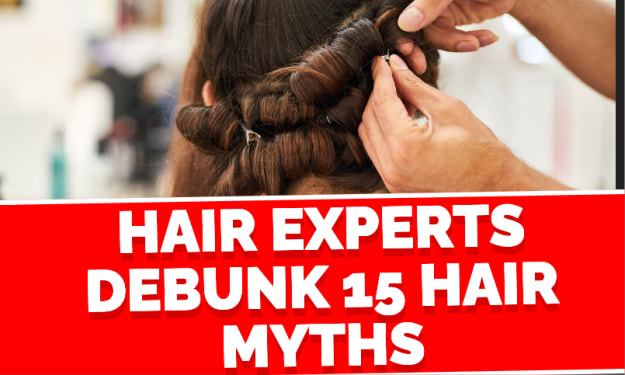
Hair Experts Debunk 15 Hair Myths
Let's address this statement:"Hair grows faster when you constantly cut it":This is a myth. Hair growth occurs from the hair follicles in the scalp. Cutting the ends of your hair doesn't affect the rate at which hair grows from the scalp. Hair growth rate is primarily determined by genetics, age, health, and hormonal factors.Hi i'm annabelle kingsley i'm consultant psychologist and brand president at philip kingsley and a trichologist is a scientist of the hair and scalp hi i'm dr howard i'm a new york-based board-certified dermatologist and the founder of girl and hair dermatology is the study of the skin scalp hair and mucous membranes and today we will be debunking myths about hair hair grows faster when you constantly cut it myth hair grows around half an inch a month and cutting it won't speed up that process on average we have around 120 000 hair follicles on our scalp and they're all going through different phases of the hair growth cycle right correct so there's anagen catagen telogen and oxygen and right now on your scalp generally up to 90 of hairs will be in the growth phase and then the rest are waiting to fall out and then some are shedding so hair is not going to grow faster if you cut it but it will look nice if you get your trims regularly you have dandruff because your scalp is dry dandruff isn't a dry scalp problem it's actually almost always oily dandruff is also known as seborrheic dermatitis an overgrowth of naturally occurring yeast on your scalp called the malassezia yeast and they are lipophilic which means they love oil yes they gobble it up and the more oils on your scalp the harder they are the happier they are the more flakes you tend to see yes you might find it's behind your ears on the side of your nose eyebrows so it can be right here even yeah wherever the yeast likes the sebum some things to treat dandruff are targeted shampoos scalp toners scalp masks and also look at what you're eating washing your hair every day is bad for you it's a myth but there is some fact in there you want to treat your scalp just as you treat your skin so you want to make sure it's properly cleansed you want to make sure you have good hydration on the scalp if you are a very active person maybe you want to cleanse some more fine hair like mine if i don't shampoo daily my roots get very greasy and flat and the reason for this is that when you have fine hair you have more hairs on your scalp and therefore you have more oil glands on your scalp because every hair is attached to an oil gland whereas coarser hair textures sometimes you know the sebum has a hard time leaving the scalp to the tip of the hair and it's counterintuitive because you think that maybe coily hair or textured hair you don't want to wash it a lot but actually the washing process is a part of the hydration process so the more you wash the more you hydrate shaving causes hair to grow back thicker and darker so hair naturally grows tapered so when you shave you just make the ends blunt and you're cutting the hair at a thicker point along the hair shaft so shaving may appear to make your hair grow thicker and darker but it actually doesn't if you were wax you're taking the hair out of the foam out of the follicle so it's still going to grow back tapered if shaving did make our hair grow back thicker i'd shave my hair air drying your hair is better than blow drying it depends on your method again so if you are air drying but your method of air drying is really scrunching or constantly tugging and you know yeah that's going to be more damaging well you know what i know some people who like air dry but they're like running out of the house and they'll swoop their hair in a ponytail but it's like wet in the middle but dry on the outside that could be a problem with that wet hair all the time in the middle or at the base of your scalp yeah so if you just brush your hair gently and let it dry without really touching it much without roughly towel drying it that's fine but equally blow drying doesn't have to be damaging if you do it properly in the right way and using a heat protectant great you should hold it at least six inches away like around this far away you can start on a medium heat setting and then reduce to low as you go you use the back of your hand as a reference if it feels too hot it's too hot for your hair especially with curly or coily or zigzag pattern hair a hooded dryer may be a good choice if you like to wear wigs weaves box braids and sometimes air drying it might not be the best option because you can get mold and mildew within the braids if it's not dry properly one isn't necessarily better than the other all method dependent shampooing causes extra hair loss myth this is something that i hear all the time what shampooing does is it simply dislodges hairs that were sitting loosely in their hair follicle and were ready to come out so you're not actually causing hair loss it's normal to lose up to 100 hairs a day but i really do encourage my clients who are experiencing excessive deadly hair shedding to shampoo regularly because it's really important in terms of keeping your scalp healthy and the healthier your scalp is the better able it is to support new 100 agree focus on your scalp when you shampoo and just the suds that run down through the lengths of your hair will be enough to cleanse them only shaving causes ingrown hairs myth waxing can cause ingrown hairs with any hair removal method if you break the hair instead of pulling it out right from the root you're more likely to get an ingrown hair because the end will be blunt as opposed to tapered it's all about like when you cut the hair the angle in which you're cutting it goes back into the skin so you have a curling but what happens when that curling occurs there is an inflammatory response that happens with that curling so that's where you get the red bump and sometimes that red bump can become a pus fill bump and you can have a real situation there perhaps shaving after shower i'm using a blade designated for sensitive skin could be helpful or a fresh sharp blade yes and also exfoliation so gentle exfoliation you know maybe once twice a week yes absolutely stress makes you have gray hair well there are elements of truth and myth to this so when you go gray is largely dependent on genes so if your mother or your father went gray early it does increase the chances that you will too but stress can certainly speed up the process your hair's color is determined by something called melanin which is pigment and the color of your hair ranging from blonde hair which will have less melanin to darker hair which will have a lot more melanin when your hair bulb stops producing these pigment cells is when you start to turn gray i think embracing the grays totally um it can look beautiful or you can color over them whatever works for you if you pluck a gray hair two more will grow in its place myth what i find happens is that when you notice one gray hair you go searching for others so maybe you're just looking more as you're saying yeah so you start like a private eye yeah and you find them everywhere there's a strand screw tonight you're saying it's all in your mind there is no data that shows that if you pluck a gray hair you have two yeah sprout up this myth is really common but i just think maybe it's it's a word of caution because you shouldn't pluck gray hairs out because over time if you continuously pull a hair out of its follicle you can damage the hair follicles you don't want to damage your no we love them so much and you think well one isn't going to make a difference but when one turns into 30 and you're constantly plucking 30 or more then you can get you know patches of hair loss on your skin that's never good no you can repair a split end myth once it's split that's it it's split yeah nice thanks split ends happen because of general day-to-day weathering so blow drying brushing towel drying it roughly wind exposure uv exposure holy hat that you bought that you think is so cool that you want to wear all winter so hair doesn't regenerate itself treat your hair like your favorite cashmere sweater yes but if you want to cure for a split and you have to cut it baldness is only passed down through your mother losing your hair has some genetic components but it's not only because mom lost her hair the boldness gene could be passed from your mother's side it could be passed from your father's side it could even be inherited from a grandparent or a great-grandparent there are many different types of hair loss so hereditary hair loss or boldness which i i don't really like it's called androgenic alopecia or reduced hair volume so androgenic alopecia is a genetic type of hair loss that can be inherited from either your mother or your father's side but it's also dependent on your hormone levels specifically your androgens so anything that impacts your hormone levels can then impact your hair so it can potentially make density changes worse so things like polycystic ovary syndrome menopause oral contraceptives puberty pregnancy so the best thing is to speak to a trichologist or a dermatologist so that they can speak to you about all the different options that are available the more you brush your hair the healthier it will be so brushing or over brushing can actually cause micro tears along the hair shaft and be potentially bad for your hair especially when it comes to textured coily or zigzag pattern hair and there's actually something where there's finger detangling in the coily or natural hair community where you use your fingers to detangle your hair so you should detangle your hair regularly just so that those tangles don't accumulate and mat together look for a brush with rounded plastic prongs so these aren't going to scratch your hair or your scalp and a vented cushion base do the back of hand test so gently run your brush over the back of your hand if it leaves red marks if if it feels harsh or scratchy it's going to be damaging your hair for curly or textured hair there are actually two brushes that i really love one is called the felicia leatherwood brush it has openings so when you brush coily hair the brush actually expands it's like a spring and then there's another one called the cosmology brush they have really big teeth you know so you can definitely get it through really coarse and thick hair oils will make hair grow faster and longer oh this is a good one no oh i cannot stand when i see magic growth oils jordan rip that one up oils do not make your hair grow faster and longer but eating enough oils in your diet important to scalp yes so rather than you know putting olive oil on your scalp put on your salad i have to tell you about what's going on in the curly community there's a whole big discussion about no oil so there's some stylists who said absolutely no oils on the hair i never really suggest applying pure oil to your hair but using a cream it contains things like olive oil or castor oil or coconut oil those can be really beneficial to the aesthetic appearance of your hair wigs weaves and braids always protect your hair myth not all the time i sometimes wear my hair out naturally sometimes i put it in a bun sometimes i wear box braids sometimes i wear a wig or weave it all depends on my mousse so it's a part of just changing hairstyles but in that with curly textured hair you can experience some hair loss with the frequent changing some people use protective styling as a way to minimize the manipulation on their hair but if it's too heavy if it's in too long if you neglect your scalp while you have your weave or if your wig braids are too tight you're putting too much traction on your hair follicle or your hair it can cause breakage exactly exactly i like to call it responsible protective styling you know not only relying on one style for too long so letting your hair breathe and just wearing your hair as is you should not neglect your scalp you should be cleansing you should be hydrating finding someone who really understands responsible protective styling so if you're going to a salon and making sure he or she understands that tight is never good tenderness is never good because it hurts if it hurts it's never good tenderheaded is just that myth and it's a phrase that we hear all the time right if you say ouch you know you might get a little pang of the comb to be still and you hear phrases like tenderheaded when you're super small so you grow up thinking it's just a part of life that you're just sensitive in certain areas because you've always been told that you're sensitive in those areas and while that may be true for some people as far as just like scalp sensitivity for many people actually the tenderheadedness could mean something else there could be inflammation there on a microscopic level that if we catch early especially scarring alopecia it can do good tenderness isn't necessarily normal and you don't want to dismiss it never suffer in silence and be really discerning when it comes to choosing your products if you're experiencing hair loss or a scalp concerned you can either see a trichologist or a dermatologist or even a really experienced stylist who's all about education hair education can take you a long way
By wassim mem2 years ago in Humans
Sleep Experts Debunk 13 More Sleep Myths
Let's address this statement:"Hitting snooze will give you extra meaningful rest."Hitting the snooze button can disrupt your sleep cycle rather than provide meaningful rest. When you hit snooze, you typically fall back into a light sleep stage, which isn't restorative. It can lead to grogginess and sleep inertia when you finally wake up. It's generally better to aim for uninterrupted sleep rather than fragmented snooze-button sleep.
By wassim mem2 years ago in Humans
Neurologists Debunk 11 Brain Myths
It seems like you're presenting some common misconceptions, so let's clarify each point:"We only use 10% of our brains."nothat's not true that's very not true actually hi i'm dr santoshi bilakota i'm a clinical assistant professor in neurology at the nyu grossman school of medicine i'm dr brad kamitaki i'm a neurologist and assistant professor at rutgers robert wood johnson medical school and today we'll be debunking myths about the human brain the bigger the brain the smarter the creature size actually does not matter when it comes to the brain because there are creatures out there with bigger brains than us but probably not as complex your brain is really determined by your body proportion right so when you think of like a big brown bear that's way bigger than us their brain is going to be bigger but that doesn't necessarily mean that they are smarter than us we don't know that for sure because it hasn't been fully studied but we've seen that in instances such as chimpanzees they do have smaller brains but we do know for a fact that chimpanzees are probably as smart as we are certainly it's not the size of the brain that matters but probably how complex it is and how well developed certain areas are certain areas in humans are for example our language centers are just much more developed than a cow or even a chimpanzee yeah that's important in determining intelligence rather than the size itself and also how do we measure intelligence that also becomes tricky because not everyone is intelligent in the same way non-cognitive factors also play a role like what's your social intelligence what's your emotional intelligence all of that i think is very complex and really difficult to measure iq tests are always an accurate measure of intelligence so this is false there's so much that goes into intelligence normal intelligence tests might measure things like executive function or planning verbal skills reading skills things like that but it's only an approximation of what you can do and highly influenced by the conditions of the test how you're feeling at the time of the test your educational level it'll be nice to say that there's one test or one way that we can determine how intelligent someone is but there's so much that goes into intelligence that one test or even multiple different tests can't measure that very well so the popular iq test was developed in the early 1900s and it was a way to determine which french students were cognitively delayed so we could offer them better resources that got adopted in america at stanford where for all the reasons brad laid out it doesn't take all of those things into account so i think although it is nice to say hey i am smart i did well on an iq test really don't think that means too much neither of us were born being doctors right we had to learn and develop those skills under many years of training i think that education is the best way to kind of make that happen education very broadly that might not necessarily be school for everyone definitely some people are savants some people are prodigies it's really hard to say what determines that they might be better at certain things but not necessarily good at others we're all individuals we all have different talents and different aptitudes for different things so iq tests just kind of measure your intelligence in that one specific area not how overall intelligent you are we only use 10 of our brains so this is not true we actually use all of our brain not all of the time but most of the time we're using some percentage of her brain this myth came into fruition i think in the early 1800s where people were trying to figure out why injuring different parts of the brain caused disabilities in people so a bunch of psychologists came up with the theory that we only use about ten percent of our brains versus people who are smarter who use more now we simply know that that is not the case we know that because we have something called a pet mri and a functional mri study we have the frontal lobe which we use for a lot of different purposes motor function language function executive functioning or planning activities behind that our parietal lobe here which is our sensory cortex in the back of the brain we have the occipital lobe which is our visual processing center and then here on the side we have the temporal lobe which is involved in memory language comprehension on the left side so to give you an example if you are reading something you're going to be using your temporal lobes for comprehension you're going to be using your frontal lobes for comprehension you'll also be using the back of your head where your visual cortex sits because that's where information from your eyeballs travel and your body kind of makes sense of it that way and then also if we take the brain apart a little bit we have our brain stem over here which is kind of our lizard brain it's our primitive brain that controls things like level of arousal breathing respirations heart rate blood pressure we have some deep motor functions here in the brain as well another part of the brain that we have is our cerebellum kind of on the bottom which is also involved in motor control and motor planning in doing one task you could be using multiple parts of your brain but you're not using everything at the same time video games rot your brain so this is a myth video games in and of themselves don't actually rot your brain it's something that i definitely heard a lot when i was younger from my grandma my mom a lot of our literature has shown that video games especially the ones that focus on team building on solving riddles solving puzzles building strategy are actually pretty good for you they actually do build up those centers of your brain especially when you're a child you know games can be used for other purposes for example our colleagues in surgery when they do scopes they practice those skills with things like video game simulators looking at the trials no one has actually defined what too much video games is every literature study that i've looked at quotes between 12 hours to 90 hours a week is okay i feel like 90 hours might be a little excessive but i think in reality the bigger signs of someone withdrawing from social activities and wanting to just stay at home and play video games and they'd prefer to do that then do other things that's more of a red flag i always say everything in moderation like if it's affecting your social life if you're just stuck in front of the tv all day that's not good psychologically memory gets worse as you age so this is false in fact there are some types of memory that improve as you get older for example things like semantic memory your vocabulary reading procedural memory for example people that are very good at musical instruments like can play the piano often will retain those skills some people will notice some changing memory that's often things like episodic memory which is kind of our memory of recent events episodic memories basically like the who what where and when so where did i put my keys where did i park my car those kind of things do tend to decline and i think a lot of it is because we just aren't as focused on things it's not necessarily something that's pathological or suggests dementia not everyone will get dementia but that risk does increase as you get older right now we don't have any medications or treatments that can prevent someone from getting alzheimer's disease there are some environmental risk factors that if you address can prevent you from getting dementia or at least prevent your memory from getting worse so some of those things include just general health eating healthy foods taking care of your heart moderate exercise making sure that you stay healthy cardiovascularly which is also going to help your brain left brain people are logical and right-brained people are creative i think this myth came from the 1800s when as neurologists are trying to figure out different functions of the brain they discovered that the left side of our brain and most people is dominant for language verbal memory whereas the right brain was much more of our visual spatial functions but there's no structural brain difference in people who are more logical or versus more creative rather it's more their environment the way that they were raised in neurology when we talk about brain hemispheric dominance we typically are talking about language and verbal memory dominance where does that live and for most people that's on the left side of the brain so if you're right-handed about 90 of the time you're going to be left hemisphere dominant which means a lot of your memory and speech production and understanding comprehension that kind of stuff is going to sit on the left side of your brain whereas if you're a left-handed it can kind of go both ways so i think the reality is we say that someone is left brain dominant or right brain dominant and it doesn't really mean that one person is more creative and the other one is more logical these are just talents and sort of skills that people develop whether inherently or through their personalities but it really has nothing to do with the side of their brain that they use more you can't prevent a stroke no that's not true that's very not true actually you can definitely prevent a stroke how to do that is by really addressing all the factors that could result in a stroke we know very clearly that things like high blood pressure smoking high cholesterol diabetes unfortunately increase your risk for a stroke which is basically when there's sign of blood flow going to your brain because of a blood clot or bleeding in the brain there's no quick and easy fix again it's about maintaining your cardiovascular and brain health over time so that you never get into a situation where a stroke will occur if you do ever have symptoms of a stroke and we often tell people this fast mnemonic so facial droop arm weakness slurred speech or language problems and then t is time call 9-1-1 and get to the hospital right away emergency medicine physicians can give you plot-busting medications to break up the clot that's causing the stroke so there's things that we can do to address it and prevent it from getting worse and i think there's a misconception that stroke is an old person's disease we know this isn't true anyone of any age can have a stroke the reason why you're going to have it is going to be different if you're older versus when you're younger but a big cause of stroke in young people is brain bleeds if you have a family history of aneurysm you should definitely get screened i think that's actually recommended eating fish makes you smarter so i actually don't know where this one came from but maybe it's like an immigrant household thing but i heard this a lot yeah yeah i mean in asian households for sure this is tricky because fish doesn't necessarily make you smarter but it is good for you and some fish more than others have omega-3s which we know are good for heart health good for brain health and just good for your overall body health so i think maybe that's why this one came into place but i don't think it makes you smarter what do you think yeah no i think it was my parents way of getting more efficient you do have to be careful about eating too much fish we know that certain types of fish have more mercury than others like tuna you don't want to overdo it i should add that fish is part of a mediterranean diet which we advocate for all of our patients mediterranean diets are diets that are rich in good fats like fish for example olive oils vegetables healthy grains and that is going to be helpful for stroke prevention it's going to be good for cholesterol for hypertension for diabetes all kinds of stuff so fish as part of a healthy diet is good for you but it will not make you smarter you can always trust your senses i'd say that's a myth our senses can play tricks on us and cause things like illusions or even sometimes hallucinations for example people with schizophrenia might hear voices of people talking that aren't actually there our senses are not 100 objective they're dependent on how well our brains and you know eyes ears are functioning at that time everyone is different my pain tolerance might be lower than rats or vice versa i don't think we have a really good neurological way of explaining why that might be that's still something that we don't fully understand also your senses can be a little influenced by emotions and memories i think if you see something that reminds you of someone the way you're going to react to it might be a little different i don't know if what i'm seeing is the same thing that everyone else is seeing like how can we ever it's like when they had that blue dress and the black dress and people were saying different things different sexes have different brains so no that's not true and i'm going to rip it again because that was funny i should start with saying that we're all born with the same brain regardless of what your gender identity is regardless of what your sexual orientation is there's really no structural differences so if a neurosurgeon was looking at two different brains they wouldn't know who was assigned male at birth and who was assigned female at birth there have been studies out there that have shown that those have been assigned female at birth might have more robust emotional pathways versus those who've been assigned male at birth are more executive thinkers we now know that that's not true as you get older if you've been exposed to different things how you relate to the outside world that's what develops the structures of your brain and the connectivity it has really nothing to do with what gender you were assigned at birth it's more nurture it's not necessarily nature and how you're made if you have a seizure you have epilepsy no i'm going to rip this a few times because i want to make my point what a seizure is is hypersynchronation of brain cells so what is that your brain talks to itself using electricity if something goes wrong with electricity in your brain you have a seizure basically when all of your neurons freak out and fire at once your body hyper synchronizes and we have a seizure seizures can be due to a lot of things not necessarily epilepsy which is a lifelong neurological condition you have to have multiple unprovoked seizures and that's the difference between a seizure and epilepsy also if you have epilepsy you have to take daily medication to keep your brain from having seizures so if you have had your first seizure of lifetime or if you're someone with seizures there are a few things that you should do one definitely get checked out by a neurologist there are tests that we can order that can be helpful for you one of them is an eeg we put stickers on your head look at your brain waves and see where the abnormalities are and the second one is the imaging that we have mris and pet mris are both used and if a diagnosis of epilepsy is made the most important thing for you to do is take your medications and lastly keep communicating with your doctor because you're not going to get to that period of seizure freedom unless you communicate with your doctor you only get one brain you're born with all the brain cells that you are going to have and it's up to you to take care of them there's a grain of truth in a lot of these myths but they're just not fully accurate just make sure that you do your research and take care of yourself
By wassim mem2 years ago in Humans