literature
Whether written centuries ago or just last year, literary couples show that love is timeless.
Why People Return to Toxic Relationships
Toxic relationships are complex and heart-wrenching. Despite the undeniable pain, many individuals find themselves repeatedly drawn back into these harmful dynamics. Rather than a simple matter of weak will or poor decision-making, returning to a toxic partner is often a manifestation of deep-rooted psychological patterns, emotional dependencies, and a yearning for familiarity—even when familiar means suffering.
By Edge Alexander8 months ago in Humans
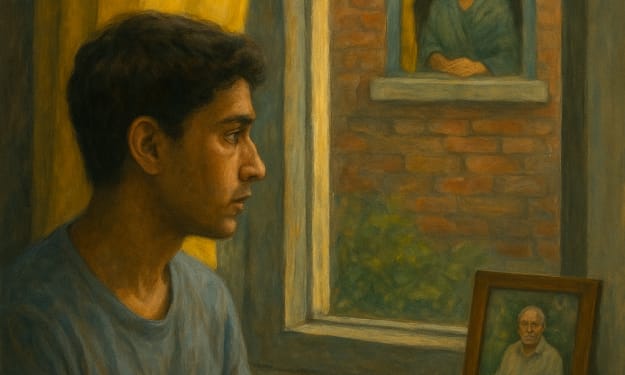
The Window with the Yellow Curtains
The apartment across the street had always been empty. I could see the entire structure from the window in my bedroom: sun- and time-worn brick, chipped and crooked balconies, like teeth that had forgotten how to bite. However, a particular second-floor window stood out. The bright yellow curtains had been drawn shut for a long time.
By Ahmed Rayhan8 months ago in Humans
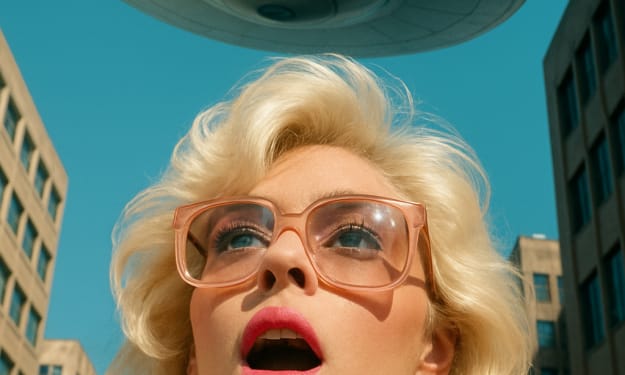
Glamour Beneath the Future Skies
The image tells a story in a single frame—a story suspended in time where past dreams of the future collide with fashion, fantasy, and flight. “Glamour Beneath the Future Skies” is more than an aesthetic—it’s a cultural artifact, a visual poem, and a cinematic vignette wrapped into a hyper-realistic editorial snapshot. It combines the essence of 1980s retrofuturism with the visual clarity and surreal elegance of modern photorealistic rendering, producing a scene that feels both nostalgic and ahead of its time.
By Anees Kaleem8 months ago in Humans
The Ones Who Walk Away From Our "Perfect City". Top Story - June 2025.
In Ursula K. Le Guin's haunting story "The Ones Who Walk Away from Omelas," citizens live in a perfect city of prosperity and joy. The streets are clean, the people are happy, children play in sunlit squares. It is, in every way, an ideal society very similar to what many Americans wish our country to be.
By G. A. Botero8 months ago in Humans
The Hearts Whisper and Shadows Linger. Content Warning.
On a rain-soaked evening in a city that had seen too many heartbreaks and fleeting romances, Lena found herself wandering under the warm glow of streetlights. Each droplet that slipped down the cobblestone resembled tiny memories of a past too painful to bury. Lena had once believed love was the answer to every ache, a promise of tomorrow’s magic. Yet now, haunted by the echo of promises broken, she wondered if trust in love was nothing more than a fairy tale spun to soothe aching hearts.
By Edge Alexander8 months ago in Humans
Rethinking Justice and Revenge: Echoes from the Oresteia
The stage opens with blood and ends with law. Aeschylus’ Oresteia, a trilogy of ancient Greek tragedies, charts a world suspended between the emotional and the institutional. At its heart lies a question that still haunts us: What is justice, and how does it differ from revenge? The plays present a cyclical, generational pattern of violence: Agamemnon sacrifices his daughter Iphigenia. His wife Clytemnestra murders him in return, and their son Orestes, in turn, kills her. Each act is a response to a prior harm, each justified by the language of duty, loyalty, and moral outrage. But then, something shifts. Athena intervenes, and the cycle halts. Not through more blood, but through judgment, argument, and law. What began as vengeance ends with justice, or so it seems. While the trilogy is often seen as a celebration of justice triumphing over revenge, a deeper reading reveals how both impulses share a common emotional and neurological origin. Drawing on philosophical insights from Plato and contemporary thinkers like Martha Nussbaum and Jonathan Haidt, as well as findings from neuroscience, the piece argues that justice and revenge are not opposites but reflections of the same human desire to restore moral balance. This article explores the fragile boundary between justice and revenge, using Aeschylus’ Oresteia as a philosophical lens.
By Sergios Saropoulos8 months ago in Humans
The Hidden Psychology Behind Who We Fall For
My Heart’s Weird Taste Two years ago, I fell hard for Alex—charming, spontaneous, and a total chaos magnet. Dates were electric, but drama followed like a shadow. Friends asked, “Why him?” I shrugged; my heart didn’t explain itself. After we crashed and burned, I wondered: why do I always fall for the wild ones? At 27, I dove into psychology blogs to decode my attraction patterns. Turns out, who we fall for isn’t random—it’s wired into our brains, shaped by biology, past, and sneaky biases. Whether you’re swooning or single, understanding this can save you heartbreak. Here’s the hidden psychology behind who steals your heart and five ways to love smarter, no PhD required.
By F. M. Rayaan8 months ago in Humans
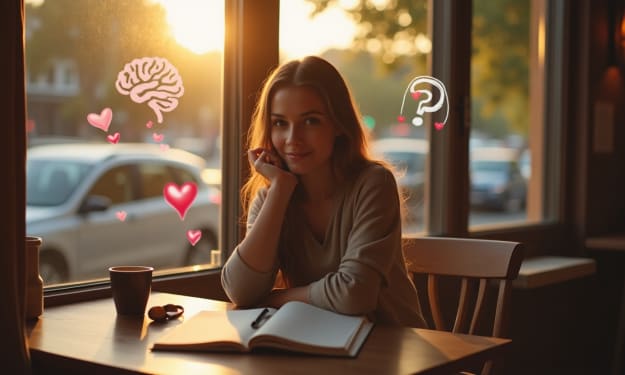
When the Soul Whispers: Answering the Questions That Keep Us Awake at Night. AI-Generated.
There are questions we rarely say out loud. Not because they’re unimportant—because they’re too important. They live deep within us, surfacing in quiet moments—just before sleep, or in the middle of a long walk, or when something in life breaks unexpectedly.
By mahdi sajadi8 months ago in Humans