humanity
For better or for worse, relationships reveal the core of the human condition.
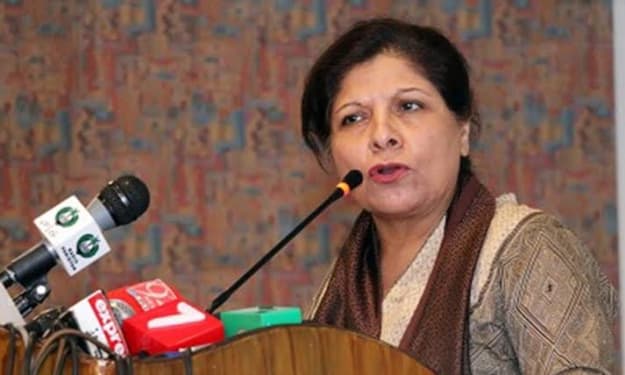
Pakistan's first female central bank head Shamshad Akhtar dies at 71. AI-Generated.
Pakistan and the wider international economic community are mourning the loss of one of its most distinguished and trailblazing leaders, Dr. Shamshad Akhtar, who passed away at the age of 71. Her death marks the end of an era for a figure whose contributions spanned national monetary policy, international finance, and economic governance. � Reuters +1 Shamshad Akhtar was widely known as the first and only woman to lead the State Bank of Pakistan (SBP), the country’s central bank, a position she held from 2006 to 2009. She later served twice as Pakistan’s caretaker finance minister—first before the 2018 general elections and again leading up to the 2024 polls—a rare role that positioned her at the crossroads of fiscal policy and political transition. At the time of her passing, she was serving as chairperson of the Pakistan Stock Exchange (PSX), reflecting her unparalleled career across almost all tiers of economic leadership. � Khaleej Times A Pioneer in Economics and Policy Born in Hyderabad, Sindh, Shamshad Akhtar pursued a distinguished academic path that laid the foundation for her future impact on economic policy. She earned a Bachelor’s degree in Economics from the University of the Punjab, followed by a Master’s from Quaid-i-Azam University, and advanced degrees in Development Economics from the University of Sussex and a PhD from Paisley College of Technology in the UK. Her academic credentials were further bolstered by a Fulbright fellowship and a visiting fellowship at Harvard University’s Department of Economics—an extraordinary achievement for a woman from Pakistan during her time. � Pakistan Today Her career began in earnest at the Asian Development Bank (ADB), where she climbed the ranks to senior leadership roles. Akhtar also worked with the World Bank as Vice President for the Middle East and North Africa and served as the Executive Secretary of the United Nations Economic and Social Commission for Asia and the Pacific (UN ESCAP)—positions that highlighted her global stature as an economist. � Khaleej Times Breaking Barriers in Monetary Policy When Dr. Akhtar became governor of the State Bank of Pakistan, she defied entrenched norms in a sector traditionally dominated by men. Her appointment was groundbreaking in Pakistan’s economic history, not only because she was a woman, but because she brought global insight and rigorous analytical skills to the country’s central bank. During her tenure, she worked to strengthen financial regulation, enhance institutional credibility, and navigate complex monetary challenges. � Pakistan Today Economists and policymakers have noted that her leadership helped improve Pakistan’s standing in international financial circles and laid the groundwork for future reforms in fiscal management and banking oversight. Leadership During Political Transitions Akhtar’s role as a caretaker finance minister placed her at the heart of some of Pakistan’s most sensitive political transitions. Tasked with steering economic policy during election cycles, she displayed a reputation for integrity, professionalism, and steady leadership. Finance Minister Muhammad Aurangzeb described her as a “principled and dignified voice in Pakistan’s economic history,” praising her integrity and decades of public service. � Khaleej Times Her repeated selection for critical caretaker roles reflected both bipartisan respect and confidence in her ability to manage fiscal affairs impartially during times of uncertainty. National and Global Tributes Tributes poured in from national leaders following the announcement of her death. Pakistan’s President Asif Ali Zardari and Prime Minister Shehbaz Sharif publicly expressed their sorrow, calling her a “devoted public servant” whose contributions to economic governance were profound and lasting. The Chief of Army Staff and other senior officials also extended condolences, highlighting her role in building institutional strength. � Pakistan Today International organizations echoed this sentiment. UN ESCAP recognized her work in strengthening regional cooperation and sustainable development, while global financial communities noted her influence on economic policymaking across borders. A Legacy of Trailblazing Leadership Shamshad Akhtar’s legacy is multifaceted. She was a pioneer for women in economics, breaking glass ceilings not just in Pakistan but on the global stage. Her career demonstrated that leadership grounded in competence, integrity, and vision can profoundly influence both national policy and international cooperation. She also served in a rare spectrum of roles—from central banking to fiscal policy, international finance, and capital market governance. Such breadth is unusual even in the careers of top economists, underscoring her exceptional capability and dedication to public service. Beyond Title: A Role Model For many young Pakistani women aspiring to careers in economics, finance, or public administration, Dr. Akhtar was more than a title. She was a role model whose achievements proved that talent and hard work can transcend systemic barriers. Her passing is not only a loss for Pakistan’s economic institutions but for the global community that benefited from her knowledge, perspective, and leadership. Final Reflection As Pakistan mourns the passing of one of its most respected economic minds, the impact of Shamshad Akhtar’s work will continue to be felt in policy frameworks, institutional reforms, and the generations of professionals she inspired. In a career that spanned decades, disciplines, and continents, she remained unwavering in her commitment to service—a legacy that will shape economic thought and public leadership for years to come. � dailyindependent.com.pk
By Fiaz Ahmed Brohi28 days ago in Humans
We’re Not As Divided As We’re Told
Spend enough time online, and you’d think the country is permanently at war with itself. Every feed scrolls with outrage, every headline screams conflict, every trending topic seems designed to pit one group against another. Opinions are treated like battlefields, and nuance feels like a weakness.
By Megan Stroup28 days ago in Humans
To You Who Keep Growing With Grace.
Life is a tapestry woven with threads of joy, sorrow, challenge, and triumph. Some threads shine brightly, drawing the eye with their brilliance, while others are muted, adding depth and complexity to the overall design. But every thread, no matter its color or texture, plays a crucial role in creating the unique and beautiful masterpiece that is your life. And to you, who navigate this tapestry with grace, who continue to grow and blossom even amidst the shifting seasons, this is for you.
By Wilson Igbasi29 days ago in Humans
Virgo Woman and Aquarius Man Compatibility Score. AI-Generated.
The pairing of a Virgo woman and an Aquarius man is one of contrasts, curiosity, and continuous adjustment. On the surface, these two may seem intellectually compatible—both are ruled by logic rather than raw emotion—but their approaches to life, love, and relationships are quite different. Virgo is grounded, methodical, and detail-oriented, while Aquarius is innovative, unconventional, and fiercely independent.
By Inspire and Fun29 days ago in Humans
To the One Who Finally Chooses Peace.
The path to peace is rarely a straight line. It’s a winding, often overgrown trail, littered with the debris of past hurts, anxieties, and self-doubt. It’s a path that requires courage, resilience, and a willingness to look inward, to confront the shadows that dance just beyond the periphery of our awareness. To the one who finally chooses peace, I see you. I see the weariness in your eyes, the subtle tension in your shoulders, the quiet strength that has carried you this far.
By Wilson Igbasi29 days ago in Humans
The World Through Different Eyes
We often believe that reality is fixed, that the world exists exactly as we perceive it. But the truth is, reality is much more flexible than we realize. It’s shaped by our thoughts, our experiences, and the lens through which we choose to view life.
By Yasir khan29 days ago in Humans
A Child Is Born: Italians Celebrate a Village’s First Baby in 30 Years. AI-Generated.
In a small Italian village long accustomed to silence, shuttered homes, and an aging population, the sound of a newborn’s cry has brought something extraordinary—hope. After three decades without a single birth, residents gathered to celebrate the arrival of a baby who has become far more than a child. For this rural community, the newborn represents renewal, survival, and the promise of a future. A Village on the Brink of Disappearance Like many villages across Italy, this small settlement has spent years battling depopulation. Young people left for cities in search of jobs, education, and modern lifestyles, leaving behind elderly residents and empty streets. Schools closed, local shops disappeared, and festivals that once defined village life became memories. For 30 years, there were no births recorded. Weddings became rare, playgrounds stood abandoned, and homes slowly fell into disrepair. Many feared the village would eventually vanish from the map, becoming another symbol of Italy’s rural decline. A Birth That Changed Everything The birth of the baby—widely celebrated by villagers—instantly altered the mood. Church bells rang, neighbors gathered, and congratulations echoed through narrow streets. Some residents admitted they never thought they would live to see another child born in the village. For locals, this wasn’t just a family milestone; it was a collective victory. People brought homemade gifts, flowers, and traditional foods to welcome the newborn. Elderly residents, some with tears in their eyes, described the moment as “a miracle” and “a sign that the village is still alive.” Why Rural Italy Is Losing Its Young Italy has one of the lowest birth rates in Europe, and rural areas are feeling the impact most strongly. Economic challenges, limited job opportunities, and lack of services have pushed generations toward urban centers like Rome, Milan, and Turin. Small villages struggle to offer: Stable employment Modern healthcare facilities Schools and childcare Digital connectivity As a result, many couples choose not to raise children in these areas, accelerating the cycle of decline. A Symbol of Hope Beyond One Village This baby’s birth has sparked national attention because it highlights a larger issue facing Italy and much of Europe: how to preserve rural communities. Demographers warn that without intervention, hundreds of villages could disappear within decades. The celebration reflects a growing realization that every birth matters, especially in places on the edge of extinction. Local officials see the event as proof that revival is possible if the right conditions exist. Government Efforts to Revive Villages In recent years, Italy has launched several initiatives to combat depopulation, including: Offering financial incentives to families who move to rural towns Selling abandoned homes for symbolic prices Supporting remote work to attract young professionals Providing child benefits and housing assistance While results have been mixed, stories like this one renew confidence that such policies can make a difference when paired with community support. The Emotional Impact on Residents For older villagers, the baby represents continuity. Many had resigned themselves to the idea that they would be the last generation to call the village home. Seeing a newborn stroller roll down familiar streets reignited memories of their own childhoods. One resident reportedly said, “Now we have someone to leave this place to.” That sentiment captures the deep emotional weight of the moment—this birth restores meaning to preservation efforts, traditions, and shared history. Can One Birth Lead to Many More? Optimism is cautiously growing. Local leaders hope the attention will encourage: Former residents to return Young families to consider relocating Investment in services like schools and healthcare The presence of a child creates new needs—and new reasons to improve infrastructure. Even one baby can justify reopening a daycare, restoring playgrounds, or expanding internet access. Why This Story Resonates Globally Beyond Italy, this story speaks to communities worldwide facing aging populations and rural decline. From Europe to Asia, small towns are searching for ways to remain relevant in a rapidly urbanizing world. The birth reminds us that demographic challenges are deeply human, not just statistical. Behind population charts are real people, real places, and real emotions. Final Thoughts The birth of a child in an Italian village after 30 years is more than a headline—it is a powerful symbol of resilience. It shows that even in places written off as dying, life can return unexpectedly. For the villagers, the baby represents laughter returning to quiet streets, festivals with future participants, and a reason to believe that their home still has a tomorrow. In a world often focused on loss and decline, this small miracle offers something rare and precious: hope reborn.
By Fiaz Ahmed Brohi29 days ago in Humans
Pastor Justin McLane on Paganism to Christianity, Combat Faith, Church Hurt, and the Black Robe Regiment
Justin McLane is a lead pastor, author, and workshop facilitator whose writing explores Christianity as a personal, everyday relationship with God. A combat veteran with two deployments, he describes earlier years in pagan practice, paranormal investigation, and later conversion following an experience he interprets as supernatural. His ministry emphasizes direct language, boundaries in interfaith friendships, and pastoral care for people harmed by churches. McLane discusses denominational disputes, civic engagement, and the role of faith in public life through initiatives such as the Black Robe Regiment and Gideon's Pledge. He shares resources via www.justinmclane.com. He lives in Tennessee and speaks widely.
By Scott Douglas Jacobsen29 days ago in Humans
Integration and Application
When we take in new knowledge it is very important to take the time to integrate that which is learned before continuing down the path of compulsively taking in more knowledge. When you allow yourself the time to integrate that which you learn, and come to fully understand that knowledge through it's application in your daily life, it becomes part of you. I have been studying spiritual principles that pertain to the elevation of conscious awareness, and the utilization of different levels of energetic shadow work into my daily routine, to better myself in an all encompassing way.
By Kaylon Forsyth29 days ago in Humans