fact or fiction
Is it a fact or is it merely fiction? Fact or Fiction explores relationship myths and truths to get your head out of the clouds and back into romantic reality.
Why Are We Here? Finding Our Purpose in Life
Why Are We Here? Finding Our Purpose in Life By Hazrat Umer A Simple Guide to Understanding Our Journey on Earth Have you ever looked up at the stars at night and wondered, "Why am I here?" Or maybe you've just woken up on a normal morning and thought, "What is the point of all this?" These are big questions, and every human being, young or old, asks them at some point. It's like being given a toy without instructions and trying to figure out what it's for.
By Hazrat Umerabout a month ago in Humans
Catching Fish
Anyone who fishes, knows, there is an art to catching fish. You need the right environment and weather, the right, bait or lure, and a bit of wisdom and finesse, in the way you cast out. It’s an art really. Not everyone can catch fish, and be good at it. Then there is the whole question of ethics.
By Alexandra Grantabout a month ago in Humans
What Floats When No One Carries You
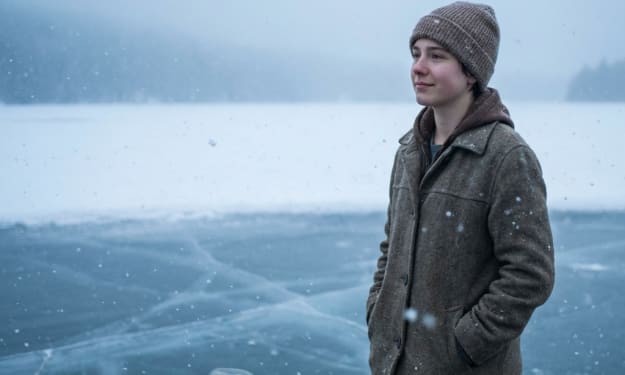
Some pain doesn’t ask for attention. It doesn’t scream or leave marks behind. It stays quiet, tucked inside you, moving slowly—like something drifting under water. You don’t always notice it until you’re too tired to pretend it isn’t there. I learned that kind of pain early. The morning always started the same way. Silence in the house. A half-finished cup of tea on the table. My mother’s door closed. My father already gone. The day waiting for me whether I was ready or not. That morning, my foot still hurt. The doctor had called it “nothing serious.” People say that easily when the pain doesn’t belong to them. Walking, however, reminded me with every step that “nothing serious” could still be exhausting. “Take the bus,” someone had suggested. Buses require money. And money has a habit of disappearing when you need it most. So I walked. The air was cold enough to sting. I tried not to limp, not because it didn’t hurt, but because people stare when they notice weakness. Cars passed. People passed. Conversations floated by without touching me. No one asked how I was. And that’s the strange rule of the world—you’re invisible as long as you keep moving. Halfway to my destination, I stopped by a small pond. Winter had frozen most of it, leaving only a thin layer of clear ice. Beneath the surface, something drifted slowly. A jellyfish. Its movement was gentle, effortless, almost careless. It wasn’t swimming forward or sinking down. It was just floating, letting the water decide where it should go. I stood there longer than I should have. Something about it felt familiar. I thought about how often I felt the same way—moving without direction, surviving without support. Not strong enough to fight everything, not weak enough to give up. Just… floating. School was loud, but I felt distant from it. Sitting hurt. Standing hurt. Thinking hurt. My body carried pain while my mind carried questions I didn’t know how to ask. The teacher spoke. I listened. I understood. But I didn’t raise my hand. Silence had become safer than speaking. When you’ve learned that no one really listens, words start to feel unnecessary. At lunch, everyone gathered in circles. I sat by the window, staring at the sky. I remembered being younger—when my mother used to walk me to school, holding my hand tightly like she was afraid the world might take me away. Back then, the road felt shorter. Back then, pain didn’t follow me everywhere. Back then, I didn’t feel like I had to earn the right to exist. Time changed things. Responsibility arrived without permission. Expectations grew heavier. And somewhere along the way, I learned how to smile even when I was tired of pretending. On the walk home, snow began to fall. Soft at first, then heavier. My foot had gone numb, but I kept going. Stopping felt dangerous. Like if I paused too long, I might never move again. When I reached home, the silence greeted me once more. I dropped my bag and sat on the floor. That’s when the tears came—not dramatic, not loud. Just quiet tears, like they had been waiting all day. I didn’t fight them. People think strength looks impressive. Loud. Confident. Unbreakable. But sometimes strength is just endurance. Showing up when no one notices. Walking when every step hurts. Floating when sinking would be easier. The next morning, my foot still hurt. But something inside me felt different. I realized I wasn’t weak because things were hard. I wasn’t broken because I felt tired. I had been surviving without support, without comfort, without anyone asking the simplest question: Are you okay? And yet, I was still here. Later that day, someone finally noticed. “You look exhausted,” they said. Not judgmental. Just honest. For once, I didn’t smile automatically. “I am,” I replied. The world didn’t fall apart. They didn’t walk away. They just nodded and listened. It didn’t fix everything. It didn’t erase the pain. But it reminded me that being seen doesn’t require being loud—it requires being real. I still have days when I feel like that jellyfish beneath the ice. Drifting. Quiet. Unnoticed. But I’ve learned something important. Floating isn’t failure. Sometimes, floating is how you survive until you’re strong enough to swim again. And maybe—for now—that’s enough.
By Inayat khanabout a month ago in Humans
The One Habit That Quietly Changed My Entire Life
There are many habits people talk about waking up at 5 AM, journaling, meditation, exercising daily, reading books, cold showers, and more. I tried many of them. Some worked, some didn’t. But there is one habit that quietly changed my entire life, and surprisingly, it is not something dramatic or trendy.
By Sathish Kumar about a month ago in Humans
The Woman Who Sold Her Seconds
The shop was tucked between a baker smelling of burnt sugar and a dry cleaner that hissed steam onto the sidewalk. It was a narrow, unassuming slice of architecture, recognizable only by the faint, rhythmic thrumming that seeped through the brickwork—a sound like a thousand heartbeats out of sync. There was no neon sign, only a gold-leaf inscription on the glass: WE BUY THE MOMENTS YOU DON’T WANT.
By noor ul aminabout a month ago in Humans
The Sweetness of Waiting: A Story of Patience
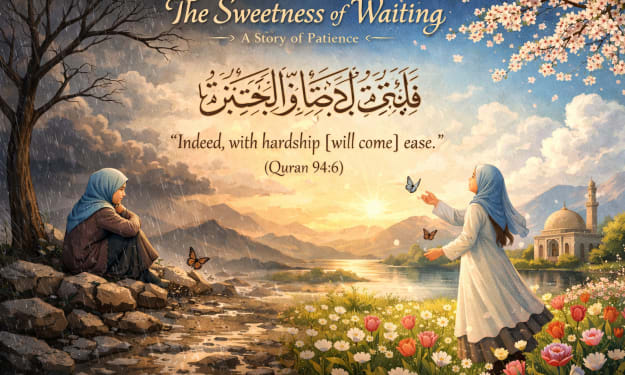
By Hazrat Umer "Indeed, with hardship [will come] ease." (Quran 94:6) Life. It’s a journey, isn't it? Sometimes it’s a smooth, open road under a bright sky. Other times, it’s a rocky path through a dark forest, where every step is a struggle. We all face these struggles. Business losses, sickness, family problems, or simply the long wait for something we deeply desire. In these moments, there’s one word, one powerful concept, that often comes to mind: Patience. We are told, "The fruit of patience is sweet." But oh, how difficult it is to believe that when you are in the middle of a storm.
By Hazrat Umerabout a month ago in Humans
Gen Z Is No Longer Getting their Driver’s License
For decades, learning how to drive was a rite of passage. Turning 16 meant freedom, independence, and your first taste of adulthood behind the wheel. But something has shifted. A growing number of young people — especially Gen Z — are delaying getting their driver’s licenses or skipping it entirely. Instead, they’re tapping a screen, booking an Uber, and letting someone else handle the road.
By AnthonyBTVabout a month ago in Humans