
Shadows of Childhood: A Journey Through Poverty and Hope
The Untold Story of a Young Girl Forced Into Early Marriage and Struggling Against Life’s Harsh Realities

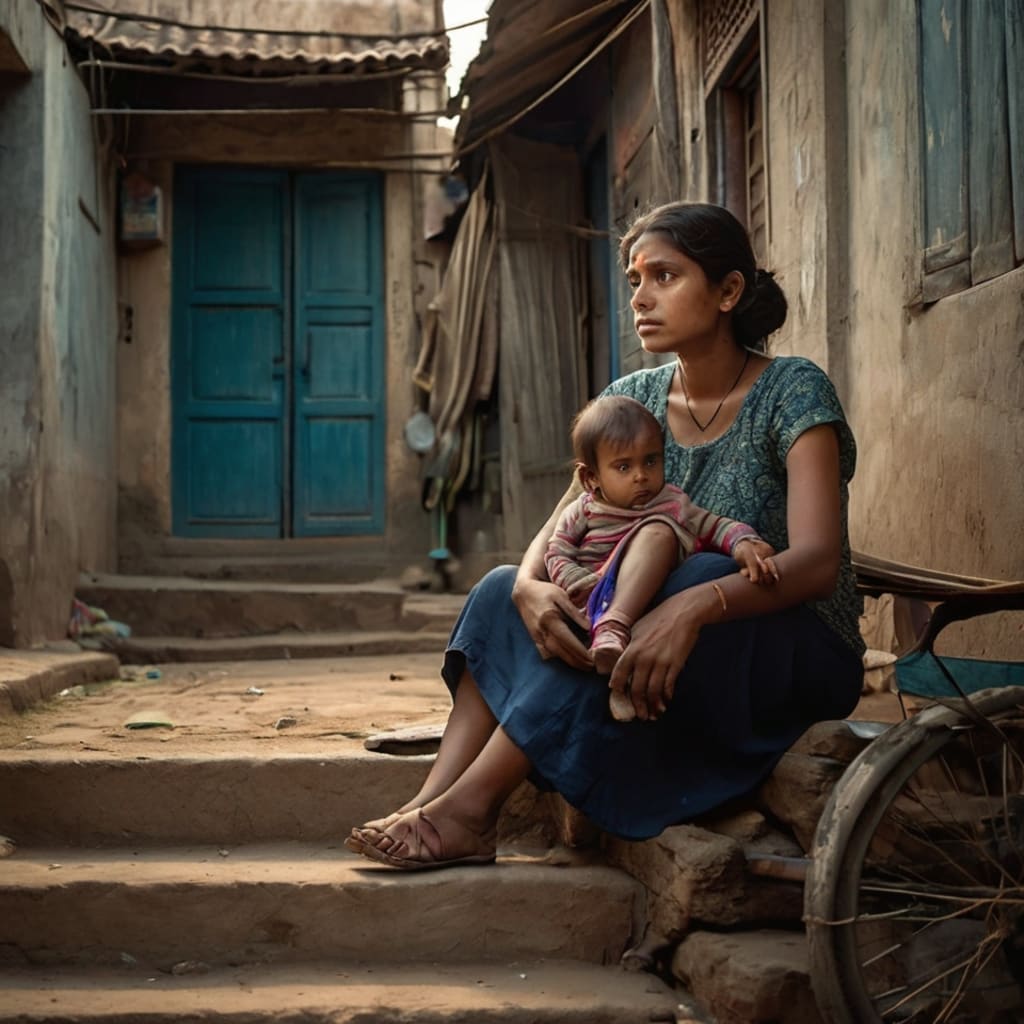
The Unending Struggle: A Young Mother's Tale
BY:Khan
I was sitting with Shagufta Khaksar, a professor, who was narrating her story with tears in her eyes. I had heard snippets of her life in our previous meetings, but this time, she poured her heart out, and I couldn't help but think of sharing her tale with the world. The weight of her words lingered in my mind, and I decided to retell her story in her own words.
"I lost my mother in my youth, and my father started seeing me as a burden. I had no brothers, and before I knew it, I was married off to a middle-aged rickshaw driver. I was just a child, playing with my friends in the streets, enjoying life without a care in the world. When I found out about the wedding, I was excited, thinking about the feasts and new clothes that came with marriage. For a few days, I ate to my heart's content, a stark contrast to my life at my father's house, where we struggled to make ends meet.
"But soon, reality dawned on me. My husband's rickshaw broke down, and he was confined to home. As my hunger for food increased with my pregnancy, I had to rummage through leftover bread for a decent meal. Some sympathetic neighbors and kind people would drop off food and milk, but it wasn't enough. We struggled to pay rent, and the landlord would threaten to throw our belongings out, gathering the whole neighborhood in the process. My suffering intensified, and I often thought of ending my life.
"Just when I thought I couldn't handle the burden of one child, another daughter was born. A childless relative adopted her, and I was left with a deep ache in my heart. At night, I'd wake up, tears streaming down my face, talking to myself to calm down. I consoled myself that at least my child was being taken care of, but the pangs of motherhood lingered.
"Our lives were a series of struggles, with hunger and despair looming large. My husband's rickshaw would sometimes work, sometimes not. Despite the setbacks, I held onto hope and prayed for a better life. Some people advised me to move to Karachi, where my in-laws lived, hoping that I'd find work and a better life for my children. But how could I ask for help from the few philanthropists in Multan for another child on the way?
"After listening to my plight, some friends and I thought that maybe I should be told about family planning. The burden of children was not just mine but also my husband's. I had heard that God takes care of every soul that comes into this world, but I couldn't help but wonder who was responsible for my situation. The pain and hardships were overwhelming.
"One day, I suggested that she meet Begum Farukh Mukhtar, a leader known for her compassionate heart. Maybe, just maybe, she could find shelter and support there for a couple of years until her son grew up. To our surprise, her tears stopped, and her story seemed to come to an end. We thought she had agreed to the plan. But she never showed up at the park again. All I have is her phone number now.
"I pray for her every day, hoping her struggles ease, but my heart remains restless. What can I do with this aching heart?"
I sat there, pondering the weight of her words, the depth of human suffering, and the resilience of the human spirit. Shagufta's story may have ended abruptly, but the questions lingered: What happens to those left behind? Who takes responsibility for their struggles? And how do we, as a society, respond to their pain?
As I looked around, I saw people from all walks of life, each carrying their own burdens. Some were fortunate enough to have support systems, while others, like Shagufta, were left to navigate the complexities of life alone. The disparity was striking, and the need for collective action was evident.
Perhaps, Shagufta's story can serve as a catalyst for change. Maybe, just maybe, it can inspire us to look beyond our own struggles and reach out to those in need. The question is, what can we do to alleviate the suffering of those around us? Can we find a way to make a difference, no matter how small? The answer lies in our willingness to listen, to empathize, and to act.
As I concluded Shagufta's story, I couldn't help but wonder about her fate. Had she found solace in the kindness of strangers? Was she still struggling to make ends meet? The uncertainty lingered, but one thing was clear: her story would stay with me, a reminder of the human condition and our collective responsibility to care for one another.
In the end, it is not just Shagufta's story but a reflection of our society. We can choose to ignore it or
About the Creator
Silver Screen Magic with Mae West
American actress and singer Mae West became a popular film actress during the Great Depression. She started entertaining in vaudeville, then performed on Broadway, and finally went to Hollywood. She signed up with Paramount Pictures and made her debut in the 1932 film “Night After Night.” She also starred in musicals, comedies, and crime dramas. The American Film Institute named her one of the best classic Hollywood actresses.
By Rasma Raisters5 days ago in Geeks



Comments
There are no comments for this story
Be the first to respond and start the conversation.