
RICH AND POOR
The income gap between rich and poor.
Introduction:
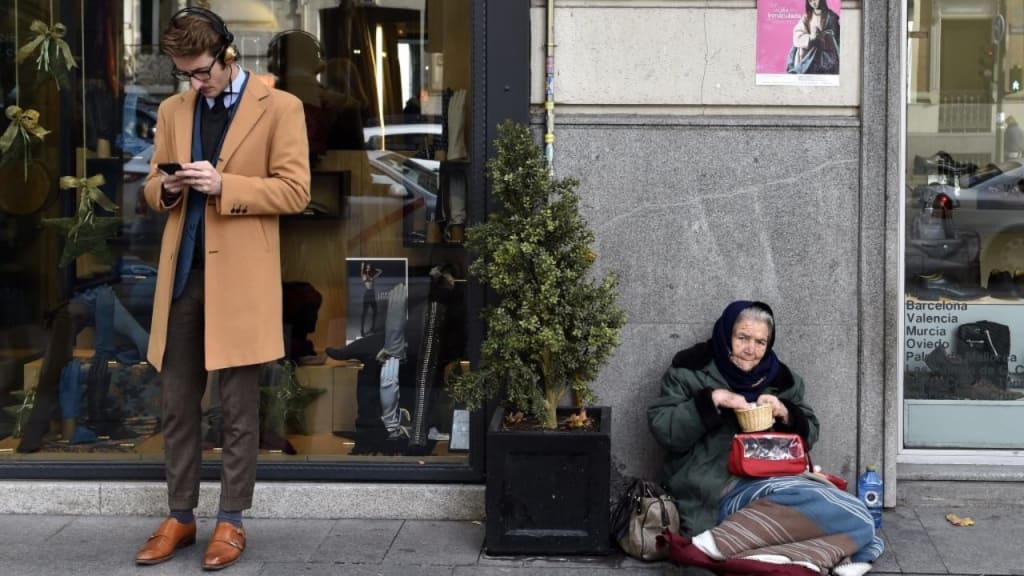
The income gap between the rich and poor has been a persistent problem in many societies, both developed and developing. The gap has widened over the years, leading to a growing sense of inequality and social injustice. This essay will explore the causes and effects of the income gap between the rich and poor and suggest some possible solutions.
Causes:
Globalization:
One of the primary causes of the income gap between the rich and poor is globalization. The process of globalization has brought about many benefits, such as increased trade and investment, but it has also led to increased inequality. Globalization has allowed companies to move their operations to countries with lower labor costs, leading to job losses in developed countries. The result is a decrease in wages and benefits for workers in developed countries while increasing profits for companies and their shareholders.
Technological advancement:
Another cause of the income gap is technological advancement. Technology has led to the automation of many jobs, reducing the need for manual labor. This has led to an increase in demand for highly skilled workers, who command higher wages, while lower-skilled workers are left with fewer job opportunities and lower wages.
Tax policies:
Tax policies have also contributed to the income gap. Tax policies in many developed countries favor the wealthy, allowing them to keep more of their income and accumulate more wealth. At the same time, the poor are burdened with regressive taxes, such as sales tax and property tax, which take a larger percentage of their income.
Effects:
Vicious cycle of poverty:
The income gap between the rich and poor creates a vicious cycle of poverty. The poor have fewer opportunities to improve their economic situation, leading to a perpetuation of poverty. This creates a large underclass that is unable to participate fully in society, leading to social unrest and increased crime rates.
Decrease in social mobility:
The income gap can lead to a decrease in social mobility. If a person is born into a poor family, they are less likely to have access to education and other opportunities that would allow them to move up the economic ladder. This can lead to a situation where a small group of wealthy individuals controls most of the resources in society, leading to a concentration of power and influence.
Decrease in economic growth:
The income gap can lead to a decrease in economic growth. If the poor have less money to spend, they are less likely to purchase goods and services, leading to a decrease in demand. This can lead to a slowdown in economic growth and an increase in unemployment rates.
Solutions:
Education:
Education is a powerful tool for reducing the income gap between the rich and poor. Providing access to quality education can help to break the cycle of poverty by equipping individuals with the skills and knowledge they need to improve their economic situation.
Job training:
Job training programs can also be effective in reducing the income gap. These programs can provide individuals with the skills they need to access higher-paying jobs and improve their economic situation.
Tax reform:
Tax reform can help to reduce the income gap by making the tax system more progressive. This can involve increasing taxes on the wealthy while providing tax breaks for the poor.
Social welfare policies:
Social welfare policies can also help to reduce the income gap. Programs such as food stamps, housing assistance, and healthcare can provide a safety net for those who are struggling to make ends meet.
Conclusion:
In conclusion, the income gap between the rich and poor is a complex issue that requires a multifaceted approach. Addressing the income gap requires a comprehensive approach that involves education, job training, tax reform, and social welfare policies that promote economic opportunity for all. It is important to recognize that the income gap is not only a problem of economic inequality but also of social injustice. Reducing the income gap is essential for creating a more just and equitable society that benefits all its citizens.
About the Creator
Keep reading
More stories from Asha nankani and writers in Humans and other communities.
WATER AND SANITATION
Water and sanitation are essential components of human life and health. Access to clean water and adequate sanitation facilities are crucial for human health and well-being. However, despite significant progress in recent years, many people still lack access to these basic necessities, particularly in developing countries. This essay will explore the importance of water and sanitation, the challenges associated with accessing them, and potential solutions to these challenges.
By Asha nankani3 years ago in Education
Autonomy Is The Real Privilege
Good morning, freedom-seekers! Today we’re gonna be looking at autonomy. A strange word, I know; one many would probably look at blankly and run away from on sight. We’re gonna figure out what it actually means, consider how it’s achieved, and decipher just how deeply most of us are tangled up in dependence without realising it.
By That ‘Freedom’ Guyabout 17 hours ago in Humans
Brooklyn Beckham and the Quiet Weight of Growing Up Famous
Growing up is rarely simple, but growing up in public is something else entirely. Brooklyn Beckham has lived most of his life under watchful eyes, long before he had the chance to decide who he wanted to be. To many, his name brings images of famous parents, magazine covers, and headlines that never seem to rest. But behind that name is a young man trying to find direction, purpose, and peace while the world comments on every step. Brooklyn Beckham’s story is not just about fame. It is about expectation, identity, and the quiet pressure of becoming yourself when everyone already thinks they know you.
By Muqadas khanabout 17 hours ago in Humans




Comments
There are no comments for this story
Be the first to respond and start the conversation.