
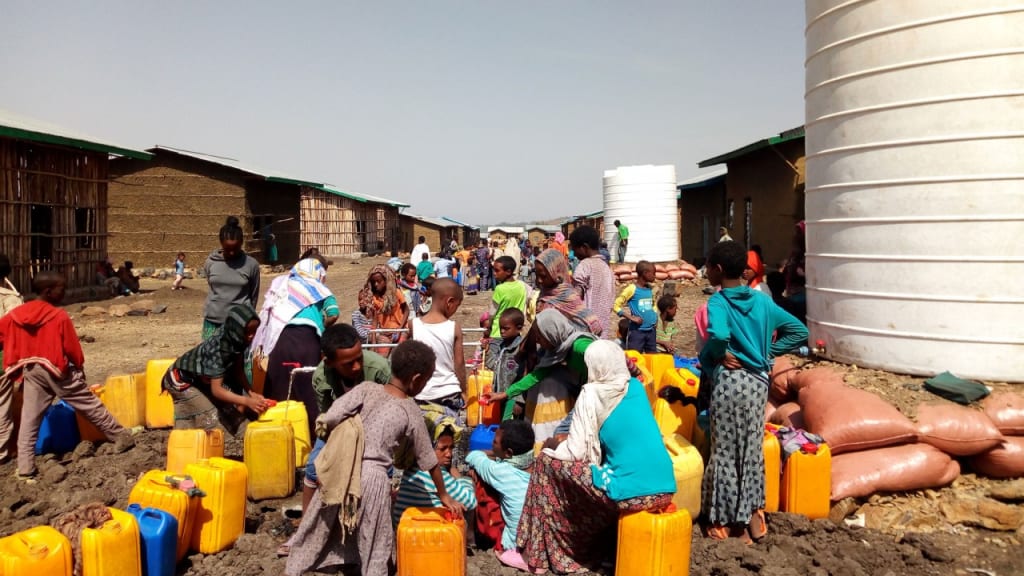
Water and sanitation are essential components of human life and health. Access to clean water and adequate sanitation facilities are crucial for human health and well-being. However, despite significant progress in recent years, many people still lack access to these basic necessities, particularly in developing countries. This essay will explore the importance of water and sanitation, the challenges associated with accessing them, and potential solutions to these challenges.
Water is essential for human life. The human body is composed of approximately 60% water, and it is necessary for a variety of bodily functions, including digestion, absorption, and transportation of nutrients. Clean water is also essential for hygiene and sanitation. Without access to clean water, individuals are at risk of contracting water-borne diseases such as cholera, typhoid, and dysentery.
Access to clean water is a significant challenge in many parts of the world. According to the United Nations, 2.2 billion people worldwide lack access to safe drinking water, and 4.2 billion lack access to safely managed sanitation. The lack of access to clean water is particularly acute in sub-Saharan Africa, where 40% of the population lacks access to clean water.
The lack of access to clean water is caused by several factors. In many cases, it is due to a lack of infrastructure, including water treatment plants and distribution systems. In other cases, it is due to contamination of existing water sources due to human activity, such as industrial pollution and agricultural runoff. Climate change is also exacerbating the problem, with droughts and floods making it more challenging to access clean water.
Sanitation is another critical component of human health and well-being. Adequate sanitation facilities are necessary for hygiene and disease prevention. Without access to adequate sanitation facilities, individuals are at risk of contracting diseases such as diarrhea, cholera, and typhoid.
Access to adequate sanitation facilities is also a significant challenge in many parts of the world. According to the United Nations, 4.2 billion people lack access to safely managed sanitation. Open defecation is still practiced in many areas, particularly in rural areas of developing countries. The lack of adequate sanitation facilities is particularly acute in sub-Saharan Africa, where 75% of the population lacks access to adequate sanitation.
The lack of access to adequate sanitation facilities is caused by several factors. In many cases, it is due to a lack of infrastructure, including toilets and sewage systems. In other cases, it is due to cultural factors, where open defecation is still practiced due to a lack of awareness of the risks associated with it. Poverty is also a significant factor, as many individuals cannot afford to build or maintain adequate sanitation facilities.
Solutions to the challenges associated with accessing clean water and adequate sanitation facilities are complex and multifaceted. Infrastructure investment is a critical component, including the construction of water treatment plants and distribution systems, as well as the construction of toilets and sewage systems. However, infrastructure investment alone is not sufficient. Cultural factors and poverty must also be addressed.
Community education and awareness campaigns can be effective in addressing cultural factors that prevent the adoption of adequate sanitation facilities. These campaigns can help raise awareness of the importance of hygiene and sanitation and the risks associated with open defecation. They can also promote the adoption of affordable and sustainable sanitation solutions, such as composting toilets and latrines.
Poverty is a more challenging issue to address. The lack of access to clean water and adequate sanitation facilities is often a symptom of poverty, rather than the cause. Addressing poverty requires a multifaceted approach that includes education, economic development, and social safety nets. Improving access to education and economic opportunities can help individuals lift themselves out of poverty, while social safety nets can provide a safety net for those who are unable to do so.
In conclusion, access to clean water and adequate sanitation facilities is essential for human health and well-being. Despite significant progress in recent years, many people still lack access to these basic necessities, particularly in developing countries. The lack of access to clean water and adequate sanitation facilities is caused by a variety of factors, including infrastructure, cultural factors, and poverty. Solutions to these challenges require a multifaceted approach, including infrastructure investment, community education and awareness campaigns, and poverty reduction initiatives. It is only through concerted efforts at the local, national, and international levels that we can ensure that all people have access to clean water and adequate sanitation facilities, and ultimately, a healthy and dignified life.
About the Creator
Keep reading
More stories from Asha nankani and writers in Education and other communities.
TRANSGENDER AWARENESS
Transgender awareness is an essential topic that needs to be discussed in today's society. Transgender individuals are a marginalized community that faces significant challenges and discrimination. It is essential to increase awareness and understanding of transgender issues to create a more inclusive and accepting society.
By Asha nankani3 years ago in Education
Healing the Hidden: Healthcare for the World’s Most Remote Populations
Across the globe, millions of people live in areas where access to healthcare is limited or nearly impossible. These communities, often tucked away in mountains, deserts, forests, or on distant islands, face challenges beyond the scope of ordinary medical care. Isolation, inadequate infrastructure, and shortages of trained medical professionals create a situation in which even basic health services are hard to obtain. Addressing these challenges requires creative solutions, collaboration, and a commitment to ensuring that no population is left behind.
By Baitulmaal2 days ago in Education
Autonomy Is The Real Privilege
Good morning, freedom-seekers! Today we’re gonna be looking at autonomy. A strange word, I know; one many would probably look at blankly and run away from on sight. We’re gonna figure out what it actually means, consider how it’s achieved, and decipher just how deeply most of us are tangled up in dependence without realising it.
By That ‘Freedom’ Guyabout 23 hours ago in Humans




Comments
There are no comments for this story
Be the first to respond and start the conversation.