

The sun parted two palms of Luca’s banana tree, guiding him to the ripe bunch of fruits.
He plucked them—raised on his toes—and returned to the lounge on his crumbling balcony. It was a fine day under the Brazilian sky, the air a little too humid and the shouts loud enough to halt his siesta.
Still, he lay there, eating the fruits of his neighbour’s labour.
“Eita mano, que é isso!” a shout came from below.
The streets of Tijuca never had a dull moment, and Luca Paladan cherished that most of all. The streets of Brazil were yet to lose the sense of community to the mechanic and routine schedules of the west. ‘Outside your four walls, that is where life is lived,’ his mother once said, maybe the wisest words she’d spoken.
It was a good thing then, that Luca had spent the first twenty years of his life at a desk inside writing novels that did as much for his career as they did for his wallet.
Ding, ding.
Luca groaned with the chime of his doorbell. His empregada was early, again. But the place needed a good clean. Roaches kindly scattered from the kitchen floor for him to pass, moving as a wave in the direction of the leaning tower of dinner plates atop his sink. Not my problem now.
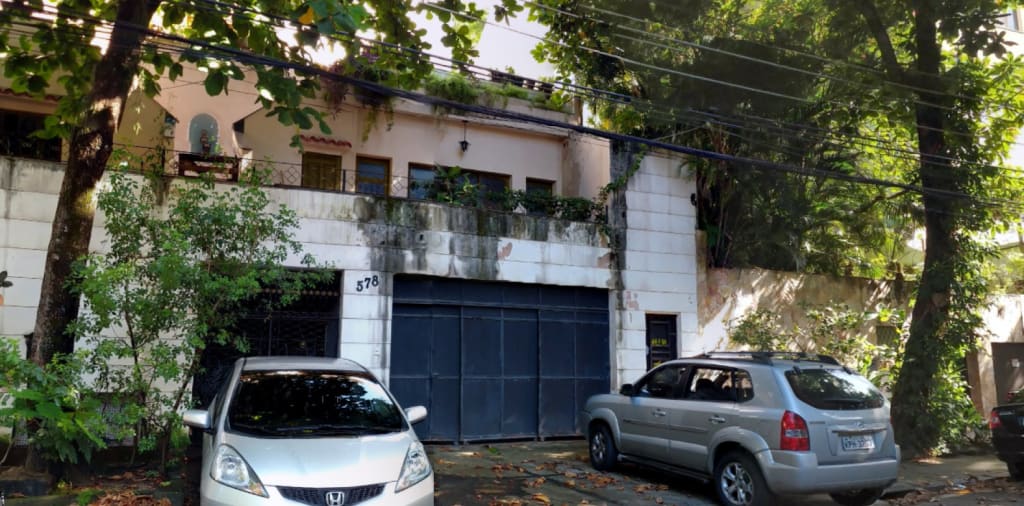
The front door to his single bedroom apartment in the derelict hills of Tijuca did its job well, giving a good impression of what one would find inside. Flaked paint and grime. He turned the nob and it too groaned at being disturbed from rest.
“Adeliaaaa—”
“Luca Paladan, may we come inside?” Two men, stupidly dressed in suits on a thirty-degree day, brushed past him and up the stairs to the kitchen Adelia was meant to start cleaning. One of them carried a briefcase. The other, a small black notebook. Trouble?
“Uhhhh, yes, do come in,” he said, frowning at the elderly man across the street. Luca closed the door with a wave, and leapt the stairs two at a time. “Please excuse the mess I… thought you were someone else.”
The men wandered around, inspecting photo frames on the bench and raising their eyebrows. They didn’t have Brazilian accents on their words. Should he worry, or be relieved? Whatever was about to happen, he was proud of his life so far. Actually that was a lie, he’d failed and given up on trying.
“Come Luca, outside.” They each grabbed a chair and waltzed onto the balcony.
“Do you mind telling me what this is about?”
“No, we were just going to enjoy an afternoon munching on a banana with you,” one said. “Sit.”
Luca lowered into the blue and white striped lounge, but remained sitting up. “You’re here to tell me my life is in danger, aren’t you?”
The men looked at each other, before one held up the black book. “No, this is why we are here. Because of your work.”
“I never wrote a novel with a black cover. You must have the wrong man. Also, how did you find me? I live in the middle of nowhere for a reason.” They didn’t offer so much as a smile. “Do I get your names at least? Seeing that you burst into my home without any introduction.”
The one with the large nose nodded. “Call me Velho,” he said.
“And me… Tio,” the one holding the book added.
“Old, and uncle? Really?”
“Luca this book has the names and signatures of every great writer that has ever lived since the 1st century AD,” Velho said, “beginning with Seneca under the reign of Hadrian of Roma.”
“Our organization has been working since then to document the greatest writers while they still live and put their names in this book,” Tio continued. “We keep history and protect it, and you have been selected by the orginisation to put your name here in this book.”
Two moments passed. A thought came to him, but he dismissed it and found another instead. “Of the seven novels I’ve written, none of them sold more than three-thousand copies globally. The average review is two and a half stars and I’ve never been invited to any event to speak or sign copies. Actually, this is a rather cruel prank, I don’t need further insults to my life, I’ve had enough. Obrigado e bom dia.”
The men stared at him.
“It means thank you and good day!” he shouted, pointing through the open doors of the roach-infested kitchen. They didn’t budge, not even to wipe the sweat from their foreheads.
Velho sniffled, and brought a hand to wipe his large nose. “I can tolerate your self-pity, really, we don’t care about you. But do not insult the orginisation. Your judgement is worthless, theirs however, we will follow into the ends of the earth to get what is asked for.” He looked around and wobbled his head. “They have deemed your last novel a critical text for humanity’s future.”
The first laugh came as a chuckle, then Luca thought about it some more and laughed away the twist in his gut. “One day we will love?” he said, wiping a tear from his eye. “Not possible, that was my least read book of—”
“Luca, we do not care about reviews, about stars nor about sales. Tell me, what do you know of Seneca’s work?” Tio said.
“I’ve read it all, you need not lecture me on it.” Now he lay back. It wasn’t the siesta he’d been after, but entertainment like this wasn’t to be found in the streets below.
“He was exiled.”
“For his success as an orator! Not as a writer. His books have been read—”
“Since the first century AD. We know.” Velho sighed. “The point is, the names in this book are not the most famous or loved writers. They are the best, and the most important to humanities future. Our CEO read 'One day we will love', and has simply asked for your name and signature. We will not leave without it.”
“Also, if you sign, we are obliged to give you this,” Tio said, opening the suitcase. “Twenty-thousand dollars. Might go a long way around here, don’t you think?”
Luca rose and strolled to the balcony. The view was nice here, a simple life away from status and being defined by success. “I’ve finally found peace, accepting that I wasn’t meant to write. Now you lot show up, telling me my work is crucial to humanities future? Forgive me if I need a moment.”
This was too ludicrous to be a joke, and even if he wanted to, he didn’t deserve their offer. He hadn’t thought about that book in years, probably because he’d pushed it from his memory.
“To bring forth love in humanity, first it must be found in oneself,” he recited the opening words of his book.
The men behind him stood up. “To let yourself receive someone’s love is tenfold as scary as giving it.”
Luca turned around.
“Your work will help bring the globe together, maybe not now, not for one hundred years, but the orginisation has deemed it worthy of our protection, and so it will live on well past the end of your life. As Seneca is still read today.”
It began in his stomach, just a little warmth, but it grew hot. The muscles of his neck tightened and he swallowed to clear the tension. The clouds, he looked at the clouds to stop the tears. Heat exploded inside, shooting through his limbs and back again. His work would be appreciated. It would be remembered and read. How could he have known all these years he been hiding, his work had value?
Luca Paladan glanced at each man. “I… thank you.”
Epilogue
Tio held out a pen and the small yet thick black notebook. Luca took them and lent against the balcony, flipping through the pages, reading name after name of historical writers.
He found the first empty page and wrote his name. Signing his name in someone's book for the first time—and the last.
About the Creator
Anthony Despotellis
Writer from Melbounre, Australia
Keep reading
More stories from writers in Humans and other communities.
Autonomy Is The Real Privilege
Good morning, freedom-seekers! Today we’re gonna be looking at autonomy. A strange word, I know; one many would probably look at blankly and run away from on sight. We’re gonna figure out what it actually means, consider how it’s achieved, and decipher just how deeply most of us are tangled up in dependence without realising it.
By That ‘Freedom’ Guy3 days ago in Humans
8 Quiet Patterns Showing How You Handle Responsibility.
Responsibility shows through patterns, not speeches. Organizational research focuses on quiet behaviors because they predict performance and trust over time. You reveal how you handle responsibility through repetition. Others notice even when nothing goes wrong. These patterns shape reputation, advancement, and reliability.
By Wilson Igbasiabout 4 hours ago in Humans




Comments
There are no comments for this story
Be the first to respond and start the conversation.