
Mental Health and Psychology
Understanding Mental Health Through the Lens of Modern Psychology

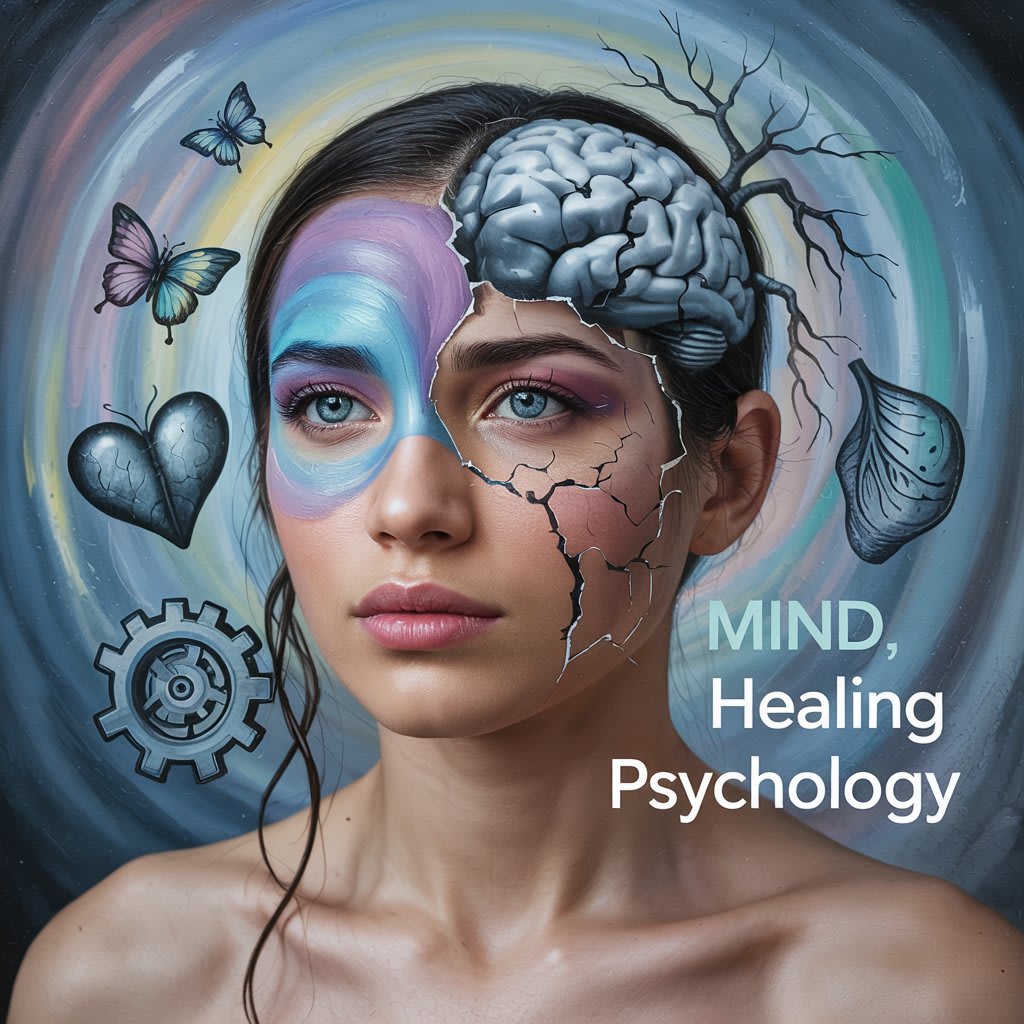
In a world that constantly emphasizes productivity, image, and outward success, we often neglect the one thing that silently shapes our every thought, emotion, and behavior—our mental health. Unlike physical injuries, the wounds of the mind do not bleed or bruise. They remain unseen, yet they can be just as painful, if not more so. Understanding these invisible wounds is the heart of psychology and the key to inner healing.
Mental Health: More Than Just a Diagnosis
Mental health is not just about avoiding illness—it’s about the state of our emotional, psychological, and social well-being. It affects how we think, feel, and act. It determines how we handle stress, relate to others, and make choices. Mental health is dynamic; it changes over time and is influenced by life experiences, biology, environment, and relationships.
Many people associate mental health with disorders like depression or anxiety. While these are critical issues, mental health is broader than clinical diagnosis. It includes self-esteem, resilience, coping strategies, emotional regulation, and the capacity for joy, connection, and purpose. Just like physical fitness, mental fitness is something we can build and strengthen over time.
The Hidden Nature of Mental Struggles
One of the biggest challenges in addressing mental health is that it’s often invisible. Unlike a broken bone, you can’t always see when someone is battling anxiety, trauma, or grief. People may look perfectly fine on the outside while silently carrying emotional pain.
This hidden struggle is why stigma remains such a problem. Many still fear being judged as "weak," "crazy," or "unstable" if they admit to needing mental health support. As a result, they keep their struggles to themselves, often until the pain becomes unbearable.
Psychology helps us understand that these internal experiences are not signs of failure—they are part of being human. Everyone, at some point in life, will face mental health challenges. The goal is not to avoid all suffering, but to learn how to cope, heal, and grow through it.
The Science Behind the Mind
Psychology offers powerful insights into how the brain and mind work. It studies how thoughts and emotions are formed, how past experiences shape our present behavior, and how we can retrain our minds to be healthier and more adaptive.
For instance, cognitive behavioral therapy (CBT), one of the most effective forms of therapy, teaches people to identify and challenge distorted thinking patterns. If someone constantly thinks, "I’m a failure," CBT helps them examine that belief, find evidence against it, and replace it with a more balanced thought.
Neuroscience also shows how experiences can physically change the brain. Traumatic experiences can increase stress responses, but healing experiences—such as therapy, mindfulness, or connection with others—can help rewire the brain toward calm, focus, and resilience.
Healing Begins with Awareness
Healing begins the moment we acknowledge that something is not right. It takes courage to confront our emotions, face past wounds, and seek help. But that courage opens the door to transformation.
Therapy, journaling, meditation, and even talking to a trusted friend can be forms of healing. Each person’s path to mental wellness is unique. There is no single solution—but the willingness to begin the journey is what matters most.
It’s also important to remember that healing is not linear. Some days will feel heavy. There may be setbacks. But even in the slow moments, progress is being made. Like physical rehabilitation after an injury, mental healing takes time, patience, and consistent effort.
The Role of Empathy and Community
Mental health doesn’t exist in isolation. Human beings are wired for connection, and our mental well-being is deeply tied to our relationships. A kind word, a listening ear, or simply knowing someone understands can be incredibly healing.
That’s why empathy matters so much. When we show compassion to others—without judgment—we create safe spaces where people can open up and begin to heal. And just as we extend compassion to others, we must learn to show it to ourselves. Self-compassion is not indulgence; it’s survival. It’s about treating ourselves with the same kindness we’d offer a friend.
Schools, workplaces, families, and communities all have a role to play in fostering mental wellness. By promoting awareness, reducing stigma, and providing access to support, we can help build a world where mental health is seen not as a weakness—but as a vital part of life.
Conclusion: A New Way Forward
The wounds we can’t see are no less real than those we can. They may not leave scars on the skin, but they leave impressions on the soul. Yet, within those wounds lies the potential for growth, understanding, and strength.
Psychology gives us tools to understand ourselves better, to heal old pain, and to live more fulfilling lives. Mental health is not a destination—it’s a continuous journey of self-awareness, balance, and compassion.
Let us normalize this journey. Let us speak about mental health as openly as we do about physical health. Let us listen more, judge less, and support each other in the process of becoming whole again.
Because when we begin to heal from within, everything around us changes too.
About the Creator
Muhammad Nouman
My name is Nouman. i am 23-year-old. i am a civil Engineer. i have 5-year experience in article making
Keep reading
More stories from Muhammad Nouman and writers in Humans and other communities.
The CEO of Everything
They say "jack of all trades, master of none," but they forgot to mention the part where the jack of all trades is also the camera woman, the makeup artist, and the person currently yelling at a tangled Wii microphone cable in a her own bathroom while recording herself singing and trying to make it look realistic and professional. (As professional as you can make it with nothing but a cell phone camera and a mic that doesn't work)
By Sara Wilson7 days ago in Humans
Five—One Grounding
Five—Locked in a perpetual battle against my failing senses and reason, I fight to survive, to get through; I am afraid of... nothingandeverythingallatonce—...—my mouth is dry, and my muscles seize up... what can I see? I can see the birdcage and birds; I can see the watercolour my beautiful wife painted many years ago and unlocked her journey into art; I can see the empty mug of tea as it sits perilously on the arm of the sofa; how many is that now? Three down, two to go; I can also see a jackdaw on the roof of our neighbour's house across the road and a bookcase of potential—Five things you can see.
By Paul Stewart6 days ago in Poets



Comments
There are no comments for this story
Be the first to respond and start the conversation.